• Welcome to Photrio!
    Registration is fast and free. Join today to unlock search, see fewer ads, and access all forum features.
    Click here to sign up

Gold-ish Tone

Fold

H
Fold

  • 0
  • 0
  • 0
Procession (2)

Procession (2)

  • 2
  • 0
  • 16

Recent Classifieds

Forum statistics

Threads
202,925
Messages
2,847,663
Members
101,539
Latest member
disami
Recent bookmarks
0

arigram

Member
Allowing Ads
Joined
Sep 21, 2004
Messages
5,465
Location
Crete, Greec
Format
Medium Format
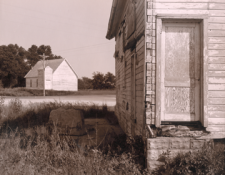
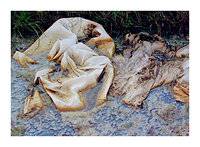
Any ideas how to get a gold-ish tone like any those two sample pics?
What kind of paper, developer or toner would work?
 
Last edited by a moderator:

I am definitely no expert on this! But the first one (on the left) I think I would make with Ilford Matt FB Varmtone, and a light sepia toning. Second one (right) seems colder in tonality and I would use the Ilford Matt FB and a slight gold tone, but I am not sure - maybe it would look too cold and blue?

Other than that, the first one reminds me a bit of albumen prints, and maybe Kentmere POP would do that better. Just some off-hand thoughts.
 
arigram said:
Any ideas how to get a gold-ish tone like any those two sample pics?
What kind of paper, developer or toner would work?
Dem looks like lith prints to me
Mark
 
arigram said:
Any ideas how to get a gold-ish tone like any those two sample pics?
What kind of paper, developer or toner would work?

Greetings Ari, really hate to send you to another link...but look here on Unblinkingeye there is some info about toning VDB with gold toner that has a look much like you show in your attachments. Scroll down, almost to the bottom and there is an image with books that seem to have gold lettering on them.

BTW, I like the look also...
 
The first one looks like copper toner - hard to get that reddish tone from anythng else. The second could be selenium plus partial thiocarbamide toner, but the yellow tone is unusually strong.
 
The first one looks like it could be replicated with a copper toner as mentioned above. The second (at least on my monitor) looks more like something you would get experimenting with a warm tone paper or maybe sepia and bleach.

Looking at the examples I am assuming from the subject matter that the prints the images come from are fairly old ( early 20s for the first and maybe 30s or 40s for the second?). Some of the color could be due to aging and poor processing but the uniformity in the examples leadds me to think toning.

Just out of curiosity, do you know the approximate year in which the photographs were made?
 
hi there

I would try a warm tone paper . Ilford wt, or forte wt

A medium bleach then sepia tone.
photospeed gold toner watch for the tone to come up.
Selenium toner 1:3 , watch for the tone to come up that you like

wash between each step. make a variety of prints so that you can change the times in each step. pencil the back of the print and make notes.
 
To me, the second one looks like a partially gold toned POP print. The first one could be POP too, even less toned or entirely untoned.

No developer - just wash, fix and optional gold tone. Or wash, tone and fix...
 
Thank you all guys for your suggestions.
There is definately a lot of things to try.
I will start with some of my paper (Ilford Warmtone, Forte Polywarmtone, Agfa Multicontrast), try it in warm tone developers (Agfa Neutol WA and Tetenal warm, unfortunately I don't have Ilford's) and try some toning (I have Kodak's sepia and Selenium and Fotospeed's copper). I have no gold toner and POP is far too adventurous for me at the moment.

Only the second photo appears to be old, 30s or 40s like you mentioned. The first one was found on the portfolio of a modern model so its recent. I am not sure if they used real chemicals or the look was immitated digitally. Both were discovered in my daily hunt for photographs on the net so there is no photographic information really.

How about Gregory Colbert's exhibition of Ashes and Snow? His pinkish gold tones look like selenium to me and maybe split with copper?
 
The first one looks like a partially gold toned POP print. I have been doing some prints on Chicago Albumen Works POP, and the tones are similar. I have attached a partially toned print that I did day before yesterday. This print was toned for 12 minutes in a weak gold toner. The scan looks more pink than the actual print, which has a combination eggplant/orange hue.

Allen
 

Attachments

  • norway center-png.png
    norway center-png.png
    182.5 KB · Views: 136
I agree with Allen - the first one looks like POP to me. The second has some pinks in it (on my monitor at least) that suggest to me that it could be a lith print.

Cheers, Richard
 
arigram said:
... The first one was found on the portfolio of a modern model so its recent. I am not sure if they used real chemicals or the look was immitated digitally. ...
There's also some evidence of a skewed plane of sharpness, still with a very shallow DoF that might indicate an 8x10" camera. The effect is too subtle to be convincingly faked, if my experience is anything to go by.

A photographer who uses fast lenses and skewed standards on 8x10" is a good candidate for POP and gold toning... :wink:
 
I would add to all the above the possibility of simply Thiocarbamide (thiourea) toner with a WT paper... The thiocarbamide toner can be used in different dilutions with different results, ranging from brownish to yellowish (goldish someone could say) warm tones...
 
The reality is that there are so many ways for getting brown and red/brown tones that, especially with a digitally copied image viewed on different monitors, guessing which process was used is something of a lottery.
The first looks like POP or copper toning. Copper can give anything in the range from cold brown to warm brown, orange, bright pink and many in-between. Gold after sepia or polysulphide can give from subtle warming up to strong reds or salmon colours. Partial gold on sepia gives many in-between hues too.
The second looks like simple sepia, which can also produce a huge range of colours, depending on the paper, the toner mix and also on the bleach - and whether duotoned with seleniium for example. It could be a lith print though - these can give colours like this and although they can be graphic they can also be very gentle and subtle - or a mixture of the two, which is why it is such an expressive printing technique. I would guess it is sepia (eg thiourea) though, but wouldn't put money on it!.
There are other brown and red/brown techniques too, so take your choice! :smile:
Tim
 
Photrio.com contains affiliate links to products. We may receive a commission for purchases made through these links.
To read our full affiliate disclosure statement please click Here.

PHOTRIO PARTNERS EQUALLY FUNDING OUR COMMUNITY:



Ilford ADOX Freestyle Photographic Stearman Press Weldon Color Lab Blue Moon Camera & Machine
Top Bottom