
• Welcome to Photrio!
    Registration is fast and free. Join today to unlock search, see fewer ads, and access all forum features.
    Click here to sign up

General question about BW MG paper

Filling In

H
Filling In

  • 1
  • 2
  • 9
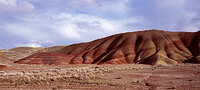
Painted Hills # 3.jpg

H
Painted Hills # 3.jpg

  • 4
  • 0
  • 71

Recent Classifieds

Forum statistics

Threads
203,208
Messages
2,851,378
Members
101,721
Latest member
rptn
Recent bookmarks
0

Mainecoonmaniac

Member
Allowing Ads
Joined
Dec 10, 2009
Messages
6,295
Format
Multi Format
I've been using multigraded BW paper for a long time. One thing I don't fully understand is the speed of the paper. I do know there are multiple color sensitive emulsions on the paper that is exposed with different color filters. The green sensitive layer and the blue sensitive layer. I'm wondering if the speed of the paper varies with the grade that I'm using? Does grade 0 have a different grade that of grade 5? I want to use my old color analyzer for BW printing and it's dependent on knowing the speed of the paper.

Thanks in advance.

Don
 
Yes, the two emulsion layers are different speeds but what you end up with is a combined paper speed for a particular grade. Read the fact sheet for the paper you want to use and it will give you the ISO for each grade.
 
There is a number of really good threads about this issue here on APUG. In particular, Nicholas Lindan and Ralph Lambrecht have posted with a number of useful observations.

One point that has stuck with me is that any attempt to match speeds will only be effective for a particular tone. In other words, if the exposure is matched for a mid-tone, the highlights and shadows won't be matched.

IIRC the paper manufacturers' tables match mid-tones, while Ralph prefers to adjust exposure to match highlights.
 
Thanks for the information

There is a number of really good threads about this issue here on APUG. In particular, Nicholas Lindan and Ralph Lambrecht have posted with a number of useful observations.

One point that has stuck with me is that any attempt to match speeds will only be effective for a particular tone. In other words, if the exposure is matched for a mid-tone, the highlights and shadows won't be matched.

IIRC the paper manufacturers' tables match mid-tones, while Ralph prefers to adjust exposure to match highlights.

I plan to meter the neg in zone III, shadow areas with full detail. I plan to measure the contrast ratio to calculate the grade. The funny thing is that when I was in photo school, I was taught to expose for the highlights then use the filter grade to adjust the shadow areas. I'll look for the threads. I don't like test strips and I hope using my old color analyzer will help get me in the ball park with exposure and paper grade.
 
As other threads have recently discussed, yes, you can speed match for a given tone by 'dialing ND in'
- say your desired contrast needs 40Y; you may end up with 52Y +12M to counter for the loss of speed when you need 105M on tits own for a had contrast.
Testing with a step wedge can sus the details of your setup out.

I use and analyser to determine the suspected contrast range I want to print at, and also to come up with a recommended exposure for highlight tone exposure.
After that I pick the nearest '1/3 stop' exposure time from the f/stop table I have copied and pasted to my enlarger head from Ralph's great "Way Beyond Monochrome".

I then dial in the filtration and pirint a series of 7 exposures, usually 2 under and 5 over the close to recommended time. I use a jig modelled also from Ralph's tome, that allows the same area of 1" x5" to be printed at 7 different exposures on a 5x7 piece of photo paper.

The subtleties this reveals far exceeds for me small the aded time that it takes to make this test print versus a full frame working print at the tiem and contrast the analyser recommends.

There is too much subtlety and interpretation in printing with b&w to leave it all to an analyser without engaging in more reflection on the subtleties that such a test strip can reveal.
 
Wow that was a load of useful info! I'm going to have to slowly digest it. I also have to get Ralph's book.

So do you take a highlight reading that has texture? ie zone VII?


Best,
Don
 
With VC paper, you are exposing two layers at once. Filters change the amount of exposure that each layer receives in relation to the other. So it would seem to make sense that changing filters changes the exposure time needed to achieve a certain tone. For instance, if you change your filter to raise contrast, you are blocking more of the light that exposes the low-contrast layer. Therefore the low-contrast layer receives less exposure, resulting in less density, and you need to expose longer to counteract this decrease in density. I don't know the technical details, but this seems like a reasonable assumption of how it works.
 
Wow, reading my last post again, you can see it was near the end of the work day- I must spell check more often.

Yes, I meter for the area where I want to place the first discernable tone of grey darker than paper base white.

So not the densest part of the negative, but the dense part where I want to keep tone.
 
Thanks Mike. Don't worry about the spelling. The posting was valuable for me. I'm going to run some test with my analyzer and take some notes. What you say does make sense because you're supposed to expose for the highlights when you print. However, it's the opposite what the Beseler PM2L manual suggest. I'm sure my drudgery of testing will pay off in the long run.

Best,
Don
 
Photrio.com contains affiliate links to products. We may receive a commission for purchases made through these links.
To read our full affiliate disclosure statement please click Here.

PHOTRIO PARTNERS EQUALLY FUNDING OUR COMMUNITY:


Ilford ADOX Freestyle Photographic Stearman Press Weldon Color Lab Blue Moon Camera & Machine
Top Bottom
