• Welcome to Photrio!
    Registration is fast and free. Join today to unlock search, see fewer ads, and access all forum features.
    Click here to sign up

FujiFilm Neopan NC 400 - What a superb film

Recent Classifieds

Forum statistics

Threads
203,041
Messages
2,849,029
Members
101,615
Latest member
charliepongo
Recent bookmarks
1

ted_smith

Member
Allowing Ads
Joined
Feb 19, 2008
Messages
493
Location
uk
Format
Multi Format
Hi

Just shot a couple of rolls of Fuji Neopan NC 400 of my new baby girl and good lady wife. Also shot a role of Ilford FP4 alongside.

Nothing against the Ilford FP4 - a great versatile film, but oh my - compared to the Neopan - the results of the Neopan was amazing. Really dark blacks, and really bright whites. The Ilford, by comparison, looked quite pasty and 'washed out'. If I just had the prints from the FP4 on it's own I'd not have noticed probably, but getting the Neopan results at the same time, and knowing that all rolls were shot in the same light, has given me a lot of faith in that film. I have just ordered a new batch to keep me going (http://www.silverprint.co.uk/ProductByGroup.asp?PrGrp=2224)

Ted
 
Ted

Did you do the developing and printing yourself of both films?

Congratulations on the new baby!

Mike
 
Ted
Did you do the developing and printing yourself of both films?

No mate - I didn't want to risk messing it up so I sent the films to my pro lab and asked them to produce 7" x 5" prints. Why? Do you think it's an 'automated' thing? I could always try running off a few prints of the Ilford using my enlarger.

Thanks for the congrats :smile: Fatherhood is an interesting change from my usual self-indulgant life-style!!
 
Wirelessly posted (BlackBerry 8300: BlackBerry8300/4.5.0.55 Profile/MIDP-2.0 Configuration/CLDC-1.1 VendorID/102)

Yes, you may want to try doing the prints yourself to compare also, since the lab ("pro" or not) has probably made adjustments to tweak all of the images. It would be interesting to see how they compare directly on your enlarger.

Nick
 
No mate - I didn't want to risk messing it up so I sent the films to my pro lab and asked them to produce 7" x 5" prints. Why? Do you think it's an 'automated' thing? I could always try running off a few prints of the Ilford using my enlarger.

Unless you know, understand of, and agree with everything the pro lab did, I wouldn't draw any conclusions on the relative quality of the films based on results from the lab. Quite a few things the lab did might have caused the results you've described, such as improper film development time or improper contrast settings when making prints.

As an illustrative anecdote, I'll say that I shot my first roll of 35mm B&W film around 1980, when I was a teenager. I never did get the results that I wanted, and it's only after I started doing my own processing that I really understood why: The prints I got back from the (non-pro) photofinisher were garbage. Specifically, they were severely lacking in contrast. It could be you're seeing something similar with the prints from Ilford film, based on your description. This isn't a feature of Ilford film per se, though; it's a matter of poor print contrast. There are lots of ways this could come about, and few of them have anything to do with the film per se.

All of this, BTW, is not meant as an attack on Fuji Neopan 400 film. I've used it and I like it, although I prefer Fomapan 400 or Agfa APX400 for most ISO 400 B&W shooting.
 
One thing that I've noticed, is that it's only available in the U.K. Not even Fuji Japan has it! Makes me wonder for just a bit if it might be XP2-Super or something.

Agfa had a similar film in the 80s which I used, that gave fantastic results. The only downside with the chromagenic films is that, (like color) the dyes will fade eventually, and the image lost. That's the main reason I only shoot CN b&w films very rarely. However, would be interesting to see some results from 120. May just have to place an order and try it for myself.


Rolleijoe
 
It does depend on if the lab you used is experienced with scanning/printing traditional B&W negs vs. the chromogenic - although I can't get it here, from what I've read I believe the 400CN has an orange mask like other colour C-41 films (and Kodak's BW400CN), so the lab can just scan it as a regular C-41. Assuming the lab you went to is printing from a digital scan like most labs these days, traditional films like FP4+ don't scan as well with straight automatic settings like those from a standard minilab (I've tried giving it to a couple of labs - the straight insert-and-scan looks odd, but pro labs used to scanning make some adjustments and it looks OK). The best results from Tri-X involve scanning it myself with a flatbed scanner and playing with it until it looks "right" - but that's outside APUG's scope.

So, in a nutshell, the prints may look better because it's easier for the lab to make it look better :smile:
 
Last edited by a moderator:
Dear All,

An interesting thread, mostly about the processing, at HARMAN I guess you know we are passionate about printing mono films on mono papers, so many D&P houses now print onto colour so we put our money where our mouth was and now offer our own service, proper processing, C41 mono as well as normal mono and printing using a converted FUJI Frontier ( with the great help and support of FUJI ) onto our monochrome paper. The results I think are unbelievable.....this is not an ADVERT for the service, just to say that we are
doing a lot of work in 2009 to encourage specialist D&P and Labs around the World to look at the system.

Its going so well we plan to widen the range of services this year.


Simon ILFORD Photo / HARMAN technology Limited :
 
It sound like your FP4 was underexposed, and therefore was automatically printed up. Under what lighting conditions were the pix shot? Were you pushing the limits of usability of a 125 film, or were you getting good exposures with plenty of room to spare? I agree that FP4 can get a tad flat on the high end of things if you are not placing and developing to suit, not to mention that it has less latitude. However, IMO when it is nailed it provides clearly "better" results than b/w C-41 film, from a technical standpoint. (Not that I believe the Fuji film is bad, mind you). Subjective opinion, of course, but it sounds to me like something went wrong with the FP4.
 
Last edited by a moderator:
I'll speak for myself but I suspect I speak for all of us who were on the recent Ilford tour when I say I was highly impressed by the trouble and care taken by Ilford in its dev and printing service and at an amazing price. Few labs do B&W on B&W paper these days and having seen B&W on RA4 paper, there is no comparison.

If I didn't have a darkroom and/or needed a fast reliable professional service, I'd certainly use Ilford. I can't quite work out how they do it for the price. The phrase putting its money where it's mouth is in terms of intent and execution springs to mind.

pentaxuser
 
Interesting stuff.

I have never used Ilfords processing, or HARMAN technology. Will have to try both. The lab I used was 'The Darkroom' based in Chelmsford, UK. I have been very impressed with their productions to date, service and turn around times, which is why I assumed it was the film (not being that experienced at using FP4).

They were shot on a Nikon F80 in a hospital ward mostly with about 50% of the light coming from a window on the far side of the ward. The rest was flurescent bulb light. Most shots where shot wide open(ish) - f2.8 or f4 without flash. The ISO was kept at the film ISO rating which was 125 I think.

Ted
 
I shoot a ton of NP400 for location work in which the goal is gritty realism. I develop in Rodinal and find the results sharp as razors, the look is very nice and everyone is pleased. I also have found that it is not appropriate for all occasions. I used some for portraits by mistake and they came out looking like mugshots, whereas a softer film looked more appropriate.

Hi

Just shot a couple of rolls of Fuji Neopan NC 400 of my new baby girl and good lady wife. Also shot a role of Ilford FP4 alongside.

Nothing against the Ilford FP4 - a great versatile film, but oh my - compared to the Neopan - the results of the Neopan was amazing. Really dark blacks, and really bright whites. The Ilford, by comparison, looked quite pasty and 'washed out'. If I just had the prints from the FP4 on it's own I'd not have noticed probably, but getting the Neopan results at the same time, and knowing that all rolls were shot in the same light, has given me a lot of faith in that film. I have just ordered a new batch to keep me going (http://www.silverprint.co.uk/ProductByGroup.asp?PrGrp=2224)

Ted
 
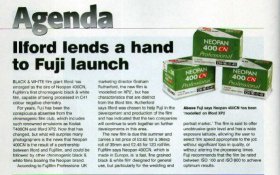
Some folks are understandably (given the naming and limited availability) confusing Fuji Neopan 400CN, a chromogenic C41 film, with Neopan 400 standard B&W film. As Rolleijoe pointed out, it may be a UK only product.

Just thought I'd post this for folks who haven't read the whole thread.

Lee
 
Whoops, indeed.

Some folks are understandably (given the naming and limited availability) confusing Fuji Neopan 400CN, a chromogenic C41 film, with Neopan 400 standard B&W film. As Rolleijoe pointed out, it may be a UK only product.

Just thought I'd post this for folks who haven't read the whole thread.

Lee
 
Some folks are understandably (given the naming and limited availability) confusing Fuji Neopan 400CN, a chromogenic C41 film, with Neopan 400 standard B&W film.

I would be interested to know under what circumstances someone would choose the C41 version over the B&W version. Is it a grain thing? Which is better for B&W work (which is what I like to shoot a lot of)
 
Out of curiosity, which model frontier are you using? And how did you get around the cartridge replenishment system? External mix tanks?


Dear All,

An interesting thread, mostly about the processing, at HARMAN I guess you know we are passionate about printing mono films on mono papers, so many D&P houses now print onto colour so we put our money where our mouth was and now offer our own service, proper processing, C41 mono as well as normal mono and printing using a converted FUJI Frontier ( with the great help and support of FUJI ) onto our monochrome paper. The results I think are unbelievable.....this is not an ADVERT for the service, just to say that we are
doing a lot of work in 2009 to encourage specialist D&P and Labs around the World to look at the system.

Its going so well we plan to widen the range of services this year.


Simon ILFORD Photo / HARMAN technology Limited :
 
I would be interested to know under what circumstances someone would choose the C41 version over the B&W version. Is it a grain thing? Which is better for B&W work (which is what I like to shoot a lot of)
The image structure in the negative is different. Both produce a monochrome negative, but the traditional negative has silver grains remaining in the negative, whereas the C-41 negative is formed by tiny dye clouds that remain after the silver is removed.

One reason for using the chromogenic C-41 film is that it can be processed and printed at a local one hour color negative lab. It can also be printed with your own traditional B&W darkroom setup and materials at home. At the one hour labs, it will be printed on regular color paper, but come out monochromatic (perhaps with some overall color tint if your lab isn't well calibrated).

The advantage of the traditional B&W film is that you can choose your chemistry and development parameters to suit your taste and preferences.

The grain will be different. The C-41 will likely appear smoother, without the "edge" of traditional emulsion grain.

Which is "better" is up to you.

Lee

BTW, my lab has no problem taking my traditional emulsion 35mm B&W negatives and doing very nice, neutral 4x6 prints for me on their Fuji Frontier.
 
Last edited by a moderator:
I would be interested to know under what circumstances someone would choose the C41 version over the B&W version. Is it a grain thing? Which is better for B&W work (which is what I like to shoot a lot of)

Comes in handy when you don't have access to a pro lab that handles traditional B&W films, or if you don't have the facilities or desire to process your own B&W. All the monochrome C-41 films perform better than their traditional B&W counterparts when scanned. If scanning for electronic output, for printing via inkjet printers at home, or for printing at the local 1 hr. minilab onto RA-4 papers, the results can easily be dramatically better than the results to be had from traditional B&W films. Ilford's XP2 Super is not only very good for all the reasons I've already mentioned, it also, unlike its competition from Kodak, delivers excellent results in a traditional B&W darkroom when printed onto variable contrast or graded papers. Kodak's monochrome C-41 offerings are not designed for this sort of application, but does deliver excellent results when printed onto RA-4 materials.
 
Interesting stuff.

Most shots where shot wide open(ish) - f2.8 or f4 without flash. The ISO was kept at the film ISO rating which was 125 I think.

Sorry to butt in, but I think any problem with the FP4 may be resolved by the quote above. A 400 film shot in lighting conditions where it is necessary to shoot at f2.8, will give far better results than a film which is a lot slower. Perhaps you have been expecting too much from a 125 ISO film shot indoors?
 
It sound like your FP4 was underexposed, and therefore was automatically printed up. Under what lighting conditions were the pix shot? Were you pushing the limits of usability of a 125 film, or were you getting good exposures with plenty of room to spare? I agree that FP4 can get a tad flat on the high end of things if you are not placing and developing to suit, not to mention that it has less latitude. However, IMO when it is nailed it provides clearly "better" results than b/w C-41 film, from a technical standpoint. (Not that I believe the Fuji film is bad, mind you). Subjective opinion, of course, but it sounds to me like something went wrong with the FP4.

I love the stuff.


Kiron Kid
 

Attachments

  • Neopan 400CN.jpg
    Neopan 400CN.jpg
    74.5 KB · Views: 166
Interesting stuff.

I have never used Ilfords processing, or HARMAN technology. Will have to try both.

Ted

Hi Ted - ILFORD is the brand name of Harman Technology Limited - ie the same company. They only use the Ilford brand for black and white products - Inkjet and other products carry Harman as a brand.

Ilford branded inkjet paper (eg. Galerie) and Ilfochrome products are from the other Ilford company, based in Switzerland.

Matt
 
Do you mean Neopan 400CN?


I use and very much like the Neopan 400CN & the traditional B/W Neopan 400.

Kiron Kid
 

Attachments

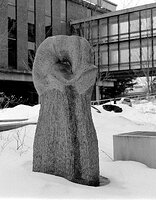
  • An Uncertain Dignity.jpg
    An Uncertain Dignity.jpg
    44.9 KB · Views: 161
  • Child & bread roll.jpg
    Child & bread roll.jpg
    90.1 KB · Views: 152
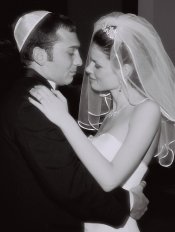
  • Jane & Oleg -dancingB-W.jpg
    Jane & Oleg -dancingB-W.jpg
    72.9 KB · Views: 143
I have to just add my two-pennyworth that I use the Ilford B&W service, and am totally impressed. Spotless negs and prints, lovely depth and pin-sharp prints....it has genuinely restimulated my interest in B&W! :smile:

(Usual disclaimers....just a customer, no connection with Ilford/Harman, etc. :wink: )
 
Photrio.com contains affiliate links to products. We may receive a commission for purchases made through these links.
To read our full affiliate disclosure statement please click Here.

PHOTRIO PARTNERS EQUALLY FUNDING OUR COMMUNITY:


Ilford ADOX Freestyle Photographic Stearman Press Weldon Color Lab Blue Moon Camera & Machine
Top Bottom