• Welcome to Photrio!
    Registration is fast and free. Join today to unlock search, see fewer ads, and access all forum features.
    Click here to sign up

fuji acros 4x5 and Pyrocat-HD

The Chicken

A
The Chicken

  • 3
  • 4
  • 57
Amour - Paris

A
Amour - Paris

  • 1
  • 0
  • 70

Recent Classifieds

Forum statistics

Threads
203,238
Messages
2,851,895
Members
101,743
Latest member
on1991525
Recent bookmarks
0

Willie Jan

Member
Joined
Jun 11, 2004
Messages
950
Location
Best/The Netherlands
Format
4x5 Format
Hi,
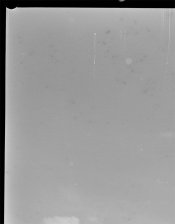
I did some development with fuji acros and pyrocat-HD.
(have a look at trhe attachment)
I got some strange fractals in the negative.
Next I tried development in rodinal, and this went fine. I also use the fuji acros in 120 format with pyrocat, until now always perfect.
I also use fp4+,ph5 and agfa apx100, which work fine with the pyro.
It's not my fingers, other negs have it on a different place. I never touch the neg in the middle.

Has anyone got the same result with acros and pyrocat???
Looks to me that this combo is not done.
 

Attachments

  • acros100small.jpg
    acros100small.jpg
    264.9 KB · Views: 285
Are you using a tray for processing your sheet film? Can we assume you don't have this problem with Acros 120?
 
Willie, I have just tried Acros and TMY2 (new TMax 400) sheets in Pyrocat with semi-stand development. I too found odd marks on some of my sheets (on both films), but I have attributed them the Combiplan tank. However, like yours they are darker areas in the print (lighter on the negative). This doesn't make sense if it was splashing developer which was my first thought with the Combiplan. My second thought is they are from touching the negative. Mine mostly appeared in the same spot on the negative (upper left corner, and a bit on the right). This corresponds with where I hold the sheets to load them. I don't think I touch the sheets in the center, but I don't try to avoid touching them either.

I also had my Graphmatic film holder scratch the film (not a good outing apparently). Interestingly these scratches turned black on the negative. This is actually a benefit, as I could now easily spot them on the print.

I haven't seen these issues on roll film, but I am much less likely to not touch the images on roll film.

I think the next step for me is to load a holder with gloves, and develop a few sheets loaded this way with some from the holder I have where I touched the film.
 

Attachments

  • 480 full shot.jpg
    480 full shot.jpg
    356 KB · Views: 246
Last edited by a moderator:
Really stumped!

I thought you might be tray developing and scum or some type of foreign matter settled on the neg, but using the Jobo and presoak would eliminate that possibility. Do all your negatives out of the jobo tank have these marks.
 
The all look different. This is the one with the most marks. Others have fractals more towards the side.
I yesterday developed 6 negs with rodinal, and they all looked fine without any fractal.
It's always the question if not some negs had some marks/failures and others didnot...

That's why i am interested to know if others use acros with pyrocat-HD.
 
I've been using this for the past two processing junkets but have yet to print. It's Acros 120 developed in a steel tank. I also did some 8x10s but did not see any artifacts on them on the light table. Shooting more 8x10s this week so I will see and I will be printing the 120s this week.
 
I am now convinced the marks on my film are from bubbles on the film with the semi stand development. So most likely unrelated to the marks you have on yours. However in testing to find the cause of mine I observer bubbles sticking to areas where I had finger prints much more than other areas. I do wonder if you somehow got oil on your film, or the factory did, and this blocked the development until it washed away. Though I would expect the prewet to wash that away.

The home mixed Pyrocat certainly seems to have more issues with bubbles than XTol in my darkroom. I have some LFN on order and I will see if that fixes my bubble issues. Maybe that could help you, if it is actually an oil issue.
 
I am now convinced the marks on my film are from bubbles on the film with the semi stand development. So most likely unrelated to the marks you have on yours. However in testing to find the cause of mine I observer bubbles sticking to areas where I had finger prints much more than other areas. I do wonder if you somehow got oil on your film, or the factory did, and this blocked the development until it washed away. Though I would expect the prewet to wash that away.

The home mixed Pyrocat certainly seems to have more issues with bubbles than XTol in my darkroom. I have some LFN on order and I will see if that fixes my bubble issues. Maybe that could help you, if it is actually an oil issue.

you could try to use demi water, to test if your water quality is bad which gives maybe bubbles.
 
I've been using this for the past two processing junkets but have yet to print. It's Acros 120 developed in a steel tank. I also did some 8x10s but did not see any artifacts on them on the light table. Shooting more 8x10s this week so I will see and I will be printing the 120s this week.

I never had any problems with the 120 format acros. I am using the acros about 10 years.
 
you could try to use demi water, to test if your water quality is bad which gives maybe bubbles.

That's a good idea. I'll test it out as well. Of course it will certainly add to the hassel having to buy and stock even more distilled water.

Doing some more research it also could be residual photo flo on the plastic Combi Plan. I have a new tank on order to test this as well (also to double my process capability).
 
That's a good idea. I'll test it out as well. Of course it will certainly add to the hassel having to buy and stock even more distilled water.

Doing some more research it also could be residual photo flo on the plastic Combi Plan. I have a new tank on order to test this as well (also to double my process capability).

i cleaned it with bubble bath chloride tablets (put it for some hours) also the reels, after that with cheap sponge to brush the surface.
 
Sandy King should be able to point you to the problem, and the solution. As you might suspect, there is very little about Pyrocat HD that Sandy doesn't know. If he doesn't chime in then try to send him a message. Please keep us informed, and thanks very much for sharing your experiences.
 
Sandy King should be able to point you to the problem, and the solution. As you might suspect, there is very little about Pyrocat HD that Sandy doesn't know. If he doesn't chime in then try to send him a message. Please keep us informed, and thanks very much for sharing your experiences.


Most problems people experience with Pyrocat (and other pyro tanning developers for that matter) is related to water quality. Pyrocatechol and pyrogallol are both very sensitive to impurities in the water so the first recommendation I have if you experience some problem that can not be explained by the method of agitation is to use purified water to mix your working solution. You should *always* use purified water to mix the stock solutions (or glycol for Solution A).

If your tap water is of marginal quality you may get by adding a bit of a chelating/sequestering agent to the working solution, but be sure to add the alkaline (tetra) rather than di 9 (acidic) version. First mix a 5% solution by dissolving 5 grams of EDTA in 100 cc of water. Then add 1-4 ml of the 5% solution to a liter of working Pyrocat-HD before you begin developing the film. Repeat, use EDTA-Tetrasodium, not EDTA-disodium.

Sandy King
 
The marks look physical, I wonder if there's been a slight moisture issue where the films been stored. Others here have complained about the softness of the emulsion, reticulation etc. I'm told it's been very humid in England & Holland over the past few weeks.

Pyrocaterchin is a tanning developer so might exacerbate an existing issue more than another developing agent.

Ian
 
I always use demi water for the stock solution. Working solution is mixed with normal water. The water here is very good (mineral water) from belguim spa.

I always store the films in the fridge. When My working pack film is empty, i get a new one from the fridge, leave it for a day. Open the pack (aluminium foil) and leave the film in the room (not back in the fridge).

I have two packs of fuji acros left, so I will be using them in the next weeks and will see what happens...
If i see fractals again, i will try the demi water for the mixed solution.
 
One of the problems I experienced with the Combi Tank was defects (like yours) on my negatives when using Pyro PMK. It took me a few developing sessions to figure it out. The main problem was that a user can NOT fill the Combi tank fast enough with the Pyro solution, and defects occur. As a side note, the Combi tank always leaked with Pyro.

I then sold the tank, and upon a web user's advice, I purchased a Jobo 2521 tank and 45 reel, and used this setup with manual agitation. I filled the entire tank with solution, to decrease oxidation of the Pyro to practically nil levels. Also, I did not use stand development.

I found that the Jobo 2521 setup works the best. No question in my mind. No negative defects.
 
Photrio.com contains affiliate links to products. We may receive a commission for purchases made through these links.
To read our full affiliate disclosure statement please click Here.

PHOTRIO PARTNERS EQUALLY FUNDING OUR COMMUNITY:


Ilford ADOX Freestyle Photographic Stearman Press Weldon Color Lab Blue Moon Camera & Machine
Top Bottom