

• Welcome to Photrio!
    Registration is fast and free. Join today to unlock search, see fewer ads, and access all forum features.
    Click here to sign up

Framed RC prints: Seal contaminants in or out?

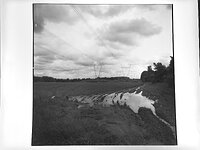
Puddle

Puddle

  • 2
  • 2
  • 70

Recent Classifieds

Forum statistics

Threads
202,728
Messages
2,844,711
Members
101,487
Latest member
Bmattei
Recent bookmarks
1

Dave Martiny

Member
Allowing Ads
Joined
May 24, 2006
Messages
122
Format
35mm
I use Ilford MGIV glossy paper and am committed to creating the highest quality, most permanent framed prints psoobile. I am aware of the VC/fiber debates regarding permanence ahd have chosen to continue alon the RC route. I currently use a two bath fixer protocol and follow with selenium toning with a 1:9 dilution for 2-4 minutes, producing a slight increase in Dmax and an almost imperceptible color shift. I dry mount the print directly onto acid free foam board, overmat with Artcare acid free 4 ply mats, use a glass window and place the print in my own handmade poplar wood frames, dyed black, and topcoated with spray laquer.

My question is regarding if or how I should seal the back of the framed print. After reading some opinions about wood frames being detrimental to a silver print, I began sealing the foam board/print/overmat/glass package in Lineco Frame Sealing Tape, as I found this easier than lining the frame rabbbet with tape, and also because I believed this would keep air pollution, dust and other contaminants from damaging the print. However, more reading has revealed some opinions saying that an RC print should be allowed to "breath", and not be sealed up with its own contaminants.


My options seem to be:

a) Continue to seal the foam board/print/mat/glass package with tape, protecting the print from outside pollution but causing the print to "stew in its own juices";

b) Seal the frame rabbet only with tape, protecting the print from the wood but allowing it to "breathe"; (this is more difficult to do cleanly than it sounds);

c) Seal the gap between the back of the foam board and the frame with tape, keeping dust and airborn popllution out but keeping the wood and print offgassing in;

d) Fix an acid free, brown paper seal to the back of the frame, with effect similar to (c);

e) Don't seal anything -- just pin the mounted package tightly into the frame, which is what I had been doing for years until I had the good fortune of becoming "educated".

Any comments or advice regarding these matters would be greatly appreciated.

Thanks and best regards,

Dave
 
Last edited by a moderator:
Hi Dave, I think you may be thinking into this too much. Selenium toning an RC print for 2-4 minutes at 1:9 is a very archival treatment. This will help protect the print from contaminants. Since you've mounted the print, the back of the print is protected from contaminants as well. I like option b, but you'll be risking dust getting in, unless you paper the back. I can understand your want to use your own hand made frames. So I say don't think about it too much. Just slap those nice prints in your wonderful home made frames and enjoy them!
 
Hi Dave, I think you may be thinking into this too much. Selenium toning an RC print for 2-4 minutes at 1:9 is a very archival treatment. This will help protect the print from contaminants. Since you've mounted the print, the back of the print is protected from contaminants as well. I like option b, but you'll be risking dust getting in, unless you paper the back. I can understand your want to use your own hand made frames. So I say don't think about it too much. Just slap those nice prints in your wonderful home made frames and enjoy them!

Sure, but why all the expensive acid-free, archival stuff then. Sounds to me that someone is trying to mount spoked wheels onto a Porsche.
 
This, to me, raises the question: How archivle is RC paper? After all, it is plastic with all it's problems and outgassing. We are told that the poly film sleeves are better than Glassine, and that's plastic too. As an Engineer, I know plastic is never a stable material, however, depending on it's composition, it can last a very long time.
Good questions for research - think I'll do some. Not that I'm worried about my prints - I treat them normally and if they last 50 years I'll be happily gone. I do question to black dye and spray laquer through. Today's laquer is a plastic too and should be of archivel quality.
 
This, to me, raises the question: How archivle is RC paper? After all, it is plastic with all it's problems and outgassing. We are told that the poly film sleeves are better than Glassine, and that's plastic too. As an Engineer, I know plastic is never a stable material, however, depending on it's composition, it can last a very long time.
Good questions for research - think I'll do some. Not that I'm worried about my prints - I treat them normally and if they last 50 years I'll be happily gone. I do question to black dye and spray laquer through. Today's laquer is a plastic too and should be of archivel quality.

I wouldn't worry about plastic in general. It's not around long enough to know for sure, but according to the Image Permanence Institute (IPI), an acetate film base has a life expectancy of 50-100 years, whereas a polyester base has a predicted life expectancy of over 500 years. Acetate is mainly used in rollfilm and polyester for sheet film. You can only do better with a glass film base, but if you don't take care of humidity and temperature, bacteria and mold will have your silver-gelatin for lunch anyway.
 
Lose the wood frames and switch to aluminum. Every thing else you are doing is good. Both the wood and paint outgas corrosive voc's.
Rick
 
Thinking about the wood frames, I suppose it might make a difference how they are made. If homemade frame = some kind of composite (as I imagine most commercially available frames are), that's probably bad. If it is solid hardwood with archival treatment, might that be okay?
 
To the best of my knowledge RC prints will bronze out if given enough time and there isn't much that can be done about it except to speed the process up and/or slow the process down by sealing the print in the frame or allowing the print to 'breath' or doing both or doing neither (insert smiley if you need one). Selenium, in my experience, provides no protection at all against bronzing.

It would seem that using fiber paper would be a lot simpler, easier and cheaper than all this jumping through hoops sealing this and/or venting that. Fiber paper has a proven 100+ year lifetime, something RC paper won't have for another 100 years at a minimum. Paper made 10 years ago had serious problems despite protestations at the time that RC paper was archival. There is not, and cannot be, any proof that paper made today does or doesn't have similar problems: it may, it may not - nobody knows.

Yes, fiber takes longer to wash and dry, but I would rather spend my time doing something productive or enjoyable while the print washes rather than use the same time in a futile attempt at curing an unknown longevity problem with framing techniques.

If archival properties are a top issue than the best choice would seem to be fiber base. If processing ease and cost are a top issue than RC material is the best choice and archival properties should be relegated to a non-issue: they simply don't come with a 'budget' grade print. There is no point in wasting anyone's money on archival mat board when framing RC prints, the cheapest chip-board will probably outlive the print.

==

Ah, my spleen feels so much better for being well vented.
 
Last edited by a moderator:
I completely agree with Nicholas on this.
My experience was that any rc print that was put into a frame started bronzing out. We produced rc prints in the first couple of years 91/92 of our business , most of the prints that were framed did come back to us for this issue, which lead us to stop making rc prints other than short term commercial purposes.
This would happen even with proper wash and selenium . Prints not put into frames did not bronze out.


To the best of my knowledge RC prints will bronze out if given enough time and there isn't much that can be done about it except to speed the process up and/or slow the process down by sealing the print in the frame or allowing the print to 'breath' or doing both or doing neither (insert smiley if you need one). Selenium, in my experience, provides no protection at all against bronzing.

It would seem that using fiber paper would be a lot simpler, easier and cheaper than all this jumping through hoops sealing this and/or venting that. Fiber paper has a proven 100+ year lifetime, something RC paper won't have for another 100 years at a minimum. Paper made 10 years ago had serious problems despite protestations at the time that RC paper was archival. There is not, and cannot be, any proof that paper made today does or doesn't have similar problems: it may, it may not - nobody knows.

Yes, fiber takes longer to wash and dry, but I would rather spend my time doing something productive or enjoyable while the print washes rather than use the same time in a futile attempt at curing an unknown longevity problem with framing techniques.

If archival properties are a top issue than the best choice would seem to be fiber base. If processing ease and cost are a top issue than RC material is the best choice and archival properties should be relegated to a non-issue: they simply don't come with a 'budget' grade print. There is no point in wasting anyone's money on archival mat board when framing RC prints, the cheapest chip-board will probably outlive the print.

==

Ah, my spleen feels so much better for being well vented.
 
To the best of my knowledge RC prints will bronze out if given enough time and there isn't much that can be done about it except to speed the process up and/or slow the process down by sealing the print in the frame or allowing the print to 'breath' or doing both or doing neither (insert smiley if you need one). Selenium, in my experience, provides no protection at all against bronzing.

It would seem that using fiber paper would be a lot simpler, easier and cheaper than all this jumping through hoops sealing this and/or venting that. Fiber paper has a proven 100+ year lifetime, something RC paper won't have for another 100 years at a minimum. Paper made 10 years ago had serious problems despite protestations at the time that RC paper was archival. There is not, and cannot be, any proof that paper made today does or doesn't have similar problems: it may, it may not - nobody knows.

Yes, fiber takes longer to wash and dry, but I would rather spend my time doing something productive or enjoyable while the print washes rather than use the same time in a futile attempt at curing an unknown longevity problem with framing techniques.

If archival properties are a top issue than the best choice would seem to be fiber base. If processing ease and cost are a top issue than RC material is the best choice and archival properties should be relegated to a non-issue: they simply don't come with a 'budget' grade print. There is no point in wasting anyone's money on archival mat board when framing RC prints, the cheapest chip-board will probably outlive the print.

==

Ah, my spleen feels so much better for being well vented.

To my knowledge, Nicholas is correct. Go fiber, lose the wood frames and rest easier.

Of course, if done right, there is no reason why RC should not last as long as FB (do you know what really is in fiber-base paper, I don't). The negative RC reports from ten years ago (Ctein) were based on a cost-cutting shortcut by Agfa (something to do with titanium oxide I think), and these reports are not representative of RC papers in general. But, it happened before, so, it can happen again.

The main issue with RC is the top PE layer. Silver ions, released by light, humidity and temperature are trying to leave the emulsion but cannot penetrate the plastic layer, so, they accumulate as metallic silver on top of the print. This is called 'silvering-out' or 'mirroring'. With FB paper, they simply vanish into the fibers (sorry, this is my non-chemist simplified way of putting it, others might be more scientific in their explanation). Nevertheless, a great way to prevent mirroring, is a silver stabilizer, such as Sistan.

The best way to protect any print (RC or FB) still is proper processing and toning. Untoned silver is vulnerable to oxidization and air-borne pollutants. Selenium is one way to protect the print, polysulfide is a far better way. Both change the silver to the more stable silver-selenide or silver-sulfide. Unfortunately, selenium toning needs to be very strong to be effective, polysulfide does wonders even if weak and short. But, if you can't or dont want to tone RC prints, at least make sure to use a silver stabilizer.

Alternatively, forget all of this, keep the wood frames, go to cheaper (just buffered, not truly archival) materials, and enjoy them as they are.

AA said, photographers fade before photographs do!
Ralph says, the first priority is to make great images, because mediocre one don't deserve our protection.
 
I just fetched two pictures I made in 1982 out of my wooden locker where they are stored for about nine or ten years now. I didn't know anything about archival properties of materials and processing when I made the prints. After fixing they were just thrown into the bathtub filled with water where the other prints of the session were waiting already. After finishing the session they were laid on spread out old newspapers for drying. I mounted them onto simple grey cardboard, which has a yellow tinge now, with a removable glue. The paper is a glossy graded Ilford RC Paper. The prints are, after nearly thirty years now like new. I would not bother too much about archival properties of RC-paper

Ulrich
 
Thank you for your anecdote. It makes me feel better to hear at least someone say something besides that RC prints will explode into dust ten minutes after drying.

Two things I personally note are that you didn't frame them, didn't display them, and you used Illford products instead of discount mystery .EDUultra paper from freestyle like I do.

I don't work with FB partly because I don't have running water or extra space in my darkroom and partly because I don't like it in the first place. I guess I'm one of those young lazy whippersnappers that has no appreciation for quality, but FB does nothing for me aesthetically either.
 
I just fetched two pictures I made in 1982 out of my wooden locker where they are stored for about nine or ten years now. I didn't know anything about archival properties of materials and processing when I made the prints. After fixing they were just thrown into the bathtub filled with water where the other prints of the session were waiting already. After finishing the session they were laid on spread out old newspapers for drying. I mounted them onto simple grey cardboard, which has a yellow tinge now, with a removable glue. The paper is a glossy graded Ilford RC Paper. The prints are, after nearly thirty years now like new. I would not bother too much about archival properties of RC-paper

Ulrich

Ulrich

You said, they are like new. This implies a comparison. How did you compare the print as it is now to the print it was then? Memory?

Not be be funny, but our memory for color is probably the worst we have. I tried this once and took two RC prints (Kodak Polycontrast RC II), exposed and processed together. One, I kept in the dark under lock and key. The other was exposed to the exhaust of a laser printer for 6 months (lots of ozone).

When I finished the experiment and took the print off the wall behind the printer, it looked OK, and I thought the experiment was most likely inconclusive. But, when placing it next to the other, virgin print, it looked terribly yellowed.

You cannot compare a print with the memory you have of it!

I still have these prints (looking at them right now), but I don't know how well the difference will scan.
 
Well by that logic, how does anyone compare old FB prints for deterioration? What about all those 100 year old prints that have "stood the test of time"? Nobody knows how they looked when they were new, either.
 
Well by that logic, how does anyone compare old FB prints for deterioration? What about all those 100 year old prints that have "stood the test of time"? Nobody knows how they looked when they were new, either.

Correct! Sobering, isn't it?
 
I understand that RC prints can "silver out" easily, but I don't understand why FB papers supposedly do not. What about all the many prints I've seen from before the 50s that have silvered out? There weren't any RC papers then, so how did this happen? Just bad processing?
 
Ulrich

You said, they are like new. This implies a comparison. How did you compare the print as it is now to the print it was then? Memory?
Of cause not. But I have - as any of us, I suppose - criteria to judge a print, like contrast, shadow details, highlights, sharpness and the like. Compared to these criteria the prints are ok. The prints were at least 17 or 18 years on the wall. That's where the yellow tinge of the cardboard is from. They weren't behind glass though.
Whether they alter over time doesn't matter. You are right in that. None of us can know but this applies to FB-prints either. What matters is that the prints do not degrade and to this I do not have any evidence for prints stored under usual household conditions. I have prints which were stored under the worst conditions you can think of. I will fetch them occasionally (if I can find them) and present the results here. May be this will give us some more insight.

Ulrich
 
Bronzing and silvering out issues do plague RC papers. The problem seems to stem from the titanium dioxide layer used to brighten the whites. I have found that RC prints always do this when framed, photos in my cupboard are not affected.
This would seem to hark back the OP regarding the photos stewing in their own juice so to speak. When I'm not photographing I'm a professional framer, and would concur regards the archival quality of timber frames. To be archival, you should use aluminium, a really good quality mat board, rag or Bainbridge Alphamat (which scavenges pollutants) should be a minimum. A good quality foamboard would suffice as a backing, sealed with framers tape.
When I sell a B&W print, I always use fibre paper, never had a problem with this in the 30 or so years that I have been doing it.
To get it all in perspective, I've seen some truly horrible techniques that were used on very old photos, but most seem to be ok!
Oh, fibre paper will silver out if it's not fixed correctly.
Tony
 
I have prints which were stored under the worst conditions you can think of. I will fetch them occasionally (if I can find them) and present the results here. May be this will give us some more insight.
A special incarnation of Murphy's law: Something never used in decades will be needed as soon it has made its way to the landfill.
Unfortunately the pictures were thrown away in February as we cleaned out a very humid room in our cellar. I once had the habit to collect all test-prints in a box. This box has bee stored for years in the attic, has survived a drowned cellar and the last few years was kept in a humid cellar room (95% rel. humidity during summers). As I have looked though the box last the only change I had noticed was that with some pictures the silver of the pictures had wandered a little over the edge of the printed area of the paper. Too bad that I can not show it anymore.

Ulrich
 
Of cause not. But I have - as any of us, I suppose - criteria to judge a print, like contrast, shadow details, highlights, sharpness and the like. Compared to these criteria the prints are ok. The prints were at least 17 or 18 years on the wall.

Sorry Ulrich, but that is a comparison by memory, isn't it? I have my doubts about that. A more reliable test would be two identical prints, one mounted and displayed, the other unmounted and in a dark box. But, even then, who says the print in the box did not fade over time. Only a densitometer reading might be more reliable, but I'm not aware of any long-time studies, so, we are left with subjective judgements. I started an experiment to test the effectiveness of Sistan and toning in 2001, unfortunately, I was dumb enough not to take densitometer readings either.

Obvious staining is easy to detect, but the absense of color changes does not mean that the print has not changed. Slight fading over time is hard to detect. Of course, one could argue that if it can't be detected, then it is not a problem. However, it could be an early warning sign that more trouble is on its way.

I'm not willing to make a statement about print stability, just because I don't see a change, without a comparison print.
 
Photrio.com contains affiliate links to products. We may receive a commission for purchases made through these links.
To read our full affiliate disclosure statement please click Here.

PHOTRIO PARTNERS EQUALLY FUNDING OUR COMMUNITY:


Ilford ADOX Freestyle Photographic Stearman Press Weldon Color Lab Blue Moon Camera & Machine
Top Bottom
