• Welcome to Photrio!
    Registration is fast and free. Join today to unlock search, see fewer ads, and access all forum features.
    Click here to sign up

FP4+ Rodinal Development, strange fog

Recent Classifieds

Forum statistics

Threads
201,860
Messages
2,831,261
Members
100,987
Latest member
Rubens Cavallari
Recent bookmarks
0

alex2293

Member
Allowing Ads
Joined
Aug 7, 2015
Messages
30
Location
Sherbrooke, Qc
Format
35mm
Hey guys,

I've been reading on this forum for more than a year, but this is my first post. I hope my question is not stupid.

I recently bought 100ft of FP4+ to load my own, to save a bit of cash, and I'm developing it with Rodinal, using Fomacitro stop bath and Fotospeed FX20 fixer.

Today I tought I'd do a test. I shot the same shot 12 times at different exposure time, using a tripod and cable release, at ISO 133, closest to 125 on my Pentax K1000 with the SMC-M 50mm F2.0 at f/8.

The longest exposure was 16 seconds, it should be +7 stops since my "correct" exposure was about 1/8. The shortest exposure was 1/125.

It showed me the effect of over and underexposure.

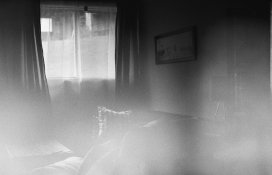
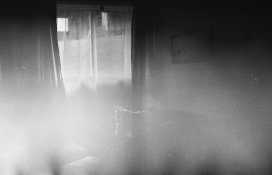
But I also had a problem somewhere in the developing sequence. It happened before. Some of the negatives are kind of foggy, not clear.

The roll was developed 6m30s in rodinal 1+25 at 22°C, which equals to 8min in 1+25 at 20°C. I followed Ilford agitation sequence, 10s every minute.
30s stop bath, continuous agitation.
4min fixing, slow continuous agitation
Ilford rinse sequence, fill, 10 inversion, fill 20 inversion, fill, 40 inversion.
Rinse with 2 drops wetting agent.


16 seconds
attachment.php


8 seconds
attachment.php


4 seconds
attachment.php


2 seconds
attachment.php


1 second
attachment.php


1/2
attachment.php


1/4
attachment.php


1/8
attachment.php


1/15
attachment.php


1/30
attachment.php


1/60
attachment.php


1/125
attachment.php


I understand the underexposed shots are white and foggy from the lack of exposure.

But what happened to the 2s, 1s and 1/2s. DO any of you have a clue why some portions are opaque?

It is my most common problem.

Any help is appreciated. I hope someone else can also learn something from this small experiment.
 

Attachments

  • 16seconds.jpg
    16seconds.jpg
    280.3 KB · Views: 390
  • 8seconds.jpg
    8seconds.jpg
    343.5 KB · Views: 395
  • 4seconds.jpg
    4seconds.jpg
    418.9 KB · Views: 367
  • 2seconds.jpg
    2seconds.jpg
    442.3 KB · Views: 333
  • 1second.jpg
    1second.jpg
    565.3 KB · Views: 382
  • 1_2second.jpg
    1_2second.jpg
    598.4 KB · Views: 405
  • 1_4second.jpg
    1_4second.jpg
    369 KB · Views: 375
  • 1_8second.jpg
    1_8second.jpg
    345.7 KB · Views: 379
  • 1_15second.jpg
    1_15second.jpg
    553.1 KB · Views: 394
  • 1_30second.jpg
    1_30second.jpg
    597.9 KB · Views: 389
  • 1_60second.jpg
    1_60second.jpg
    651.6 KB · Views: 376
  • 1_125second.jpg
    1_125second.jpg
    710.6 KB · Views: 418

MattKing

Moderator
Moderator
Joined
Apr 24, 2005
Messages
55,200
Location
Delta, BC Canada
Format
Medium Format
Welcome to APUG.

White and milky negatives = unfixed or incompletely fixed negatives.

What fixer are you using, at what dilution, and how much use have you made of it?
 

Paul Cunningham

Member
Allowing Ads
Joined
Mar 16, 2011
Messages
259
Location
Portland, OR
Format
Multi Format
This is not directly related to your question, but you should be aware that most film experiences what is called "reciprocity failure" with longer exposure times. With FP4+, what should be a 10 second exposure requires 1 min and 2 seconds to get the correct exposure. There are apps to calculate this or you can read the film manufacturer's data sheet.

Wikipedia Reciprocity (photography)
 

bernard_L

Member
Allowing Ads
Joined
Feb 17, 2008
Messages
2,133
Format
Multi Format
+1 incomplete fixing.
Your test is not lost. Just re-fix, with agitation, for twice the original time. And re-wash. You will notice that FP4 (as any negative film) tolerates a lot more over-exposure than under-exposure. Keep an eye for tonality and separation in shadows and highlights.
Congrats for doing your own testing; you will learn a lot more than reading second- or third-hand information on forums.
 

Xmas

Member
Allowing Ads
Joined
Sep 4, 2006
Messages
6,398
Location
UK
Format
35mm RF
Underfixing redo

fixing may be done on time but fixing time is dependent on temperature just like development and exhaustion. You need to overfix.

If you use an acid stop or acid fix after a few minutes in fix you can open the tank in daylight time how long it takes from the film being milky to clear and fix for the same amount of time again.

If you want to be able to print in five years best to use hypo clear after fix.

Washing is also temperature dependent really slows below 15c...


You need to look at negatives for faults -

The rebates should be clear of any silver except for the frame numbers.

If you read the zone system in abstract

zone 0 is black on print
zone 1 has just detectable detail on print
And so you need a trace of silver at least


Under exposure is when your zone 1 is clear film

You won't be able to judge the print you are going to get from the negative just how easy it is going to be to get a nice print.

In your case when the scan image as a positive is bad you need to scan as a transparency or look at the negative.
 

mnemosyne

Member
Allowing Ads
Joined
Jan 19, 2011
Messages
759
Location
Europe
Format
Multi Format
I have the impression that nowadays 99% of the "What is wrong with my developer?" and "What is wrong with my film?" threads turn out to be "How did I mess up the fixing stage?" threads and this was also very likely the problem here.

So, I agree the crucial questions are: What dilution was your fixer, how old and how cold? (Agitation was sufficient according to your description)

Good practice for film fixing:

Measure the time it takes the fixer to clear the film leader, double that time. This is your fixing time. Normally fresh rapid fixer in 1+4 dilution will take ~ 2-3 minutes to fix traditional b&w film, 4-5 minutes for Tmax type films.

It has been discussed before that the times given on the FX20 package ("2 min. in 1+9 dilution") are over optimistic:

(there was a url link here which no longer exists)
 

Xmas

Member
Allowing Ads
Joined
Sep 4, 2006
Messages
6,398
Location
UK
Format
35mm RF
Note Tmax is the Kodak name.
Ilford call their film Delta
Fuji Acros

All these fix distressingly slowly and exhaust the fixer more quickly because the silver halide has a different structure

Foma 200 seems to be a hybrid but fixes just as slow

Your FP is quick by comparison.

You need to read film data sheets and some are distressingly brief.
 
OP
OP

alex2293

Member
Allowing Ads
Joined
Aug 7, 2015
Messages
30
Location
Sherbrooke, Qc
Format
35mm
Thanks for all the answers, I was not expecting that much.

My fixer is some Fotospeed FX mixed 1+9. The total volume is 350ml. It was at room temperature, 23°C. It was used to fix 2 36 frames rolls previously. I fixed for 4 minutes.

I just did a clearing test. I dropped the leader from the same roll in the same fixer, it took 5 minutes without agitation.

It seems that the fixing time specified from Fotospeed is a bit optimistic for the 1+9 dilution. I think I will use the 1+4 dilution, do the clearing test and then double that.

Does over fixing can harm the negative, will 10 minutes do any damage?

Thanks a lot.

Alex
 

Rick A

Subscriber
Allowing Ads
Joined
Mar 31, 2009
Messages
10,031
Location
Laurel Highlands
Format
8x10 Format
Thanks for all the answers, I was not expecting that much.

My fixer is some Fotospeed FX mixed 1+9. The total volume is 350ml. It was at room temperature, 23°C. It was used to fix 2 36 frames rolls previously. I fixed for 4 minutes.

I just did a clearing test. I dropped the leader from the same roll in the same fixer, it took 5 minutes without agitation.

It seems that the fixing time specified from Fotospeed is a bit optimistic for the 1+9 dilution. I think I will use the 1+4 dilution, do the clearing test and then double that.

Does over fixing can harm the negative, will 10 minutes do any damage?

Thanks a lot.

Alex

You don't specify if you use FX-20 or FX-30, so I'll assume it's FX-20. manufacturer specs 2 minutes fix time at 1:9 dilution, and 1 minute at 1:4. Did you only mix 350ml, not an entire liter of fixer? If so, that would explain why it is already spent after two 36 exposure rolls. Mix a fresh one liter batch, then refix.
 
OP
OP

alex2293

Member
Allowing Ads
Joined
Aug 7, 2015
Messages
30
Location
Sherbrooke, Qc
Format
35mm
Yes it is FX-20, I only mixed 350mL. How many 36 exposures roll a liter should last? Ajusting the time of course after each roll.
 

Xmas

Member
Allowing Ads
Joined
Sep 4, 2006
Messages
6,398
Location
UK
Format
35mm RF
You need to fix twice the clear time at least.

Fixing x4 time the clear time won't cause any detectable difference.

x3 is recommended for the tabular grain films -like deltas by some.

You also need to wash proper.
 
OP
OP

alex2293

Member
Allowing Ads
Joined
Aug 7, 2015
Messages
30
Location
Sherbrooke, Qc
Format
35mm
I'll try that. I guess in the future I'll take the habit to clear the leader to know the time needed to clear. If I mix a 1 liter batch at 1+9, what is the shelf life of this solution?
 

Rick A

Subscriber
Allowing Ads
Joined
Mar 31, 2009
Messages
10,031
Location
Laurel Highlands
Format
8x10 Format
If you do clip tests, when the clear time becomes twice the original time (when it was first mixed), replace it. Keep it is a full tightly capped bottle between uses.
 

MattKing

Moderator
Moderator
Joined
Apr 24, 2005
Messages
55,200
Location
Delta, BC Canada
Format
Medium Format
I'll try that. I guess in the future I'll take the habit to clear the leader to know the time needed to clear. If I mix a 1 liter batch at 1+9, what is the shelf life of this solution?

Most fixers have a decent shelf life when mixed to working strength.

And all fixers require agitation.

You can perform the clip test while you are fixing the film. When the clip has cleared, you just multiply the time by 2 or 3 to get your full time.

Or you could follow my procedure, as indicated here: (there was a url link here which no longer exists)
 

R.Gould

Member
Allowing Ads
Joined
Apr 22, 2010
Messages
1,752
Location
Jersey Chann
Format
Multi Format
Thanks for all the answers, I was not expecting that much.

My fixer is some Fotospeed FX mixed 1+9. The total volume is 350ml. It was at room temperature, 23°C. It was used to fix 2 36 frames rolls previously. I fixed for 4 minutes.

I just did a clearing test. I dropped the leader from the same roll in the same fixer, it took 5 minutes without agitation.

It seems that the fixing time specified from Fotospeed is a bit optimistic for the 1+9 dilution. I think I will use the 1+4 dilution, do the clearing test and then double that.

Does over fixing can harm the negative, will 10 minutes do any damage?

Thanks a lot.

Alex

Alex,
I have used the fotospeed fixer and the times they give in there instructions are completely wrong, you nee the fixer for film at i/4 with fotospeed, 1/5 with Ilford and most others, and fix with fresh fixer for 3 minutes, I mix 600ml at a time as I do a lot of 120 film, and I reckon that 600ml at film strength will fix up to 10 Fomapan films at 3 minutes, with Ilford FP4 HP5+ you should get at least 8 films then discard and mix fresh, If you are using say 350ml for 35mm then 4 or 5 films then discard, using this method you should be fine, Fixer is fairly cheap compared to possible unrepeatable negatives, so just do not overuse, also, with fixer at 1/4 or 5 then the film should clear in about 3o seconds of constant agitation, I always invert for 60 seconds, then leave the tank to stand, as for fixing for too long, say ten you won't damage the negatives but you could lose fine detail as the fixer can attack the detail in a negative, so just be a little careful of the fixing time, twice the clearing time is fine,
Richard
 

pentaxuser

Member
Joined
May 9, 2005
Messages
20,342
Location
Daventry, No
Format
35mm
I see the fog referred to. Some frames seem to look OK to me and others have this foggy look. Given that all frames were on the same film and that same film was fixed in the same fixer I wonder why only some frames exhibit the foggy look?

Fixer may be the problem and all the advice given is good in terms of fixing and fixer but why are only some frames foggy?

pentaxuser
 

mnemosyne

Member
Allowing Ads
Joined
Jan 19, 2011
Messages
759
Location
Europe
Format
Multi Format
I see the fog referred to. Some frames seem to look OK to me and others have this foggy look. Given that all frames were on the same film and that same film was fixed in the same fixer I wonder why only some frames exhibit the foggy look?

Fixer may be the problem and all the advice given is good in terms of fixing and fixer but why are only some frames foggy?

pentaxuser

It's typical for underfixing that some areas are more affected than others.
 

pentaxuser

Member
Joined
May 9, 2005
Messages
20,342
Location
Daventry, No
Format
35mm
It's typical for underfixing that some areas are more affected than others.

Which areas and why? The fixer washes over the whole film and cannot, can it , distinguish between different areas?

The area showing the fog in some frames does not show it on the same area in other frames so is the fogginess there but simply disguised in some frames and if it is "masked/ disguised" then what is causing that?

Thanks

pentaxuser
 

MattKing

Moderator
Moderator
Joined
Apr 24, 2005
Messages
55,200
Location
Delta, BC Canada
Format
Medium Format
Areas of the film that have low amounts of exposed and developed silver halides require more fixing activity and tend to exhaust the fixer more.
 

Xmas

Member
Allowing Ads
Joined
Sep 4, 2006
Messages
6,398
Location
UK
Format
35mm RF
Areas of the film that have low amounts of exposed and developed silver halides require more fixing activity and tend to exhaust the fixer more.

And inadequate agitation...
 

Xmas

Member
Allowing Ads
Joined
Sep 4, 2006
Messages
6,398
Location
UK
Format
35mm RF
So, alex2293, have you been able to try the suggestions and if so what worked? Thanks

pentaxuser

Don't understand your query the most normal problem in negatives is inadequate fixing. For number two which also applies to prints - we have inadequate washing - but you only get this after several years.

People keep telling silver prints don't keep.
 
Photrio.com contains affiliate links to products. We may receive a commission for purchases made through these links.
To read our full affiliate disclosure statement please click Here.

PHOTRIO PARTNERS EQUALLY FUNDING OUR COMMUNITY:


Ilford ADOX Freestyle Photographic Stearman Press Weldon Color Lab Blue Moon Camera & Machine
Top Bottom