• Welcome to Photrio!
    Registration is fast and free. Join today to unlock search, see fewer ads, and access all forum features.
    Click here to sign up

FP4 and Delta

Shadow play

A
Shadow play

  • 4
  • 1
  • 12

Forum statistics

Threads
201,228
Messages
2,820,839
Members
100,601
Latest member
gamlate
Recent bookmarks
1

lhalcong

Member
Allowing Ads
Joined
Nov 26, 2012
Messages
245
Location
Miami, Flori
Format
35mm
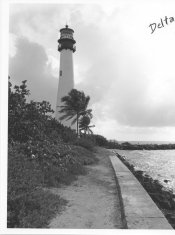
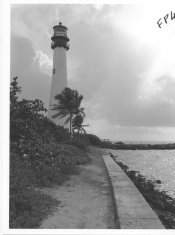
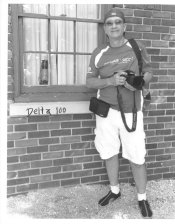
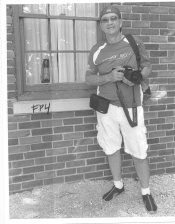
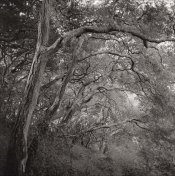
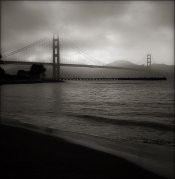
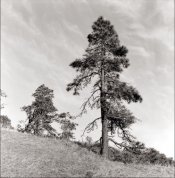
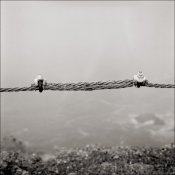
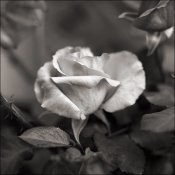
So I decided to do my own subjective little comparison of these films with the quick goal to see which one I like better. I had read the description of each film but seeing the final print is my own again; subjective way to see it for myself. Of course controlling all the possible variables as better as possible, I shot the same scene or subject with little time apart and developed both rolls (35mm) together in Paterson tank within the standard parameters for this film on Kodak D:76 . When Printing (see attachment), I also printed on to the same type of paper and developed exactly alike (Dektol 2:1) to avoid introducing more variables. To be honest , the Dektol on the tray was starting to lose its clear look because I had been sitting out for many hours. but were printed minutes apart so both are affected by the same variable.

The following are my subjective findings and I would like to ask out there if they are in sync with the scientific difference between these films.

- I found Delta 100 to be more contrasty than FP4 125.
- I found FP4 to have coarser grain than Delta . Delta grain is fine and almost imperceptible. ( I am viewing at 8X Loupe)
- I found Delta to be less tolerable to high contrast scene than FP4 (this of course taking in consideration that both were develop at Ilford standard N time on D:76 11min )
- I have the impression that Delta produces sharper print, probably due to finer grain.
- They both scan fairly well . No ICE, clean or sharpen functions were applied. They were scanned off of the paper final print.
 

Attachments

  • Scan-150814-0001.jpg
    Scan-150814-0001.jpg
    667.4 KB · Views: 323
  • Scan-150814-0002.jpg
    Scan-150814-0002.jpg
    644.6 KB · Views: 327
  • Scan-150814-0005.jpg
    Scan-150814-0005.jpg
    643.9 KB · Views: 300
  • Scan-150814-0006.jpg
    Scan-150814-0006.jpg
    685 KB · Views: 306

cliveh

Subscriber
Allowing Ads
Joined
Oct 9, 2010
Messages
7,711
Format
35mm RF
But which does your heart prefer?
 

phelger

Member
Allowing Ads
Joined
Nov 17, 2006
Messages
110
Location
Luxembourg
Format
Multi Format
thanks for showing us. Highly interesting.
Personally, I prefer the slightly contrastier version but maybe that could also be achieved on FP4 with a bit longer dev time?
On my screen its hard to tell the difference in grain and sharpness but from own experience I know that FP4 has more grain although only little moore
peter
 

Adrian Twiss

Member
Allowing Ads
Joined
Jan 19, 2004
Messages
618
Location
Wigan (oop N
Format
Multi Format
I also find Delta a bit punchier and less tolerant of poor exposure technique than FP4 but it does have excellent grain characteristics. I rate it at 64iso and develop it in Pyrocat HD for 15 minutes (thanks to Ian Grant for his advice on this). Overall I think I prefer it to FP4. Grain is not an issue for me as I shoot mainly 5x4 but I would be grateful for its lack of grain if I was shooting landscape in 35mm.
 

Richard S. (rich815)

Member
Allowing Ads
Joined
Jan 14, 2003
Messages
4,924
Location
San Francisco
Format
Multi Format
I find coarser grain to give more perceived sharpness myself.

That said unless you are doing product shots in a studio under very strict and consistent lighting and an equally controlled development regime you really are rarely going to be able to tell the difference, or perhaps better put both can be equally similar enough if you strive for that.

Three of the below are Delta 100, three are FP4. Do you really see such stark differences? Can you tell which is which? (And yes online it can be harder but who cares about printing and pushing your nose up to the print with a magnifying glass? I'm talking real world results here with varying exposures, contrasts, and various developers, temps, times and techniques). You can make it to where they can show some differences but doesn't have to be that way...I'll take either and be happy.

ImageUploadedByTapatalk1439660040.202372.jpg

ImageUploadedByTapatalk1439660053.371291.jpg

ImageUploadedByTapatalk1439660061.525749.jpg

ImageUploadedByTapatalk1439660069.228783.jpg

ImageUploadedByTapatalk1439660077.033527.jpg

ImageUploadedByTapatalk1439660085.570571.jpg
 
Last edited by a moderator:

RobC

Member
Allowing Ads
Joined
Nov 5, 2007
Messages
3,880
Location
UK
Format
Multi Format
wild stab in the dark...


  1. Delta
  2. FP4
  3. Delta
  4. FP4
  5. FP4
  6. Delta
 

Richard S. (rich815)

Member
Allowing Ads
Joined
Jan 14, 2003
Messages
4,924
Location
San Francisco
Format
Multi Format

RobC

Member
Allowing Ads
Joined
Nov 5, 2007
Messages
3,880
Location
UK
Format
Multi Format
Last shot

  1. FP4
  2. FP4
  3. FP4
  4. Delta
  5. Delta
  6. Delta
 

Richard S. (rich815)

Member
Allowing Ads
Joined
Jan 14, 2003
Messages
4,924
Location
San Francisco
Format
Multi Format

RobC

Member
Allowing Ads
Joined
Nov 5, 2007
Messages
3,880
Location
UK
Format
Multi Format
I like 1,3 and 6. Especially 3 and 6 so I think its not so much a question of one film better than the next but rather how any particular image grabs you. Most subjects benefit from more or less grain. It just depends on the subject and how its printed. You can't say one film is better than the next. They are just different colours in the available palette.
 

RobC

Member
Allowing Ads
Joined
Nov 5, 2007
Messages
3,880
Location
UK
Format
Multi Format
And to OP, they all look a bit washed out to me which I guess is the way they've been scanned so its impossible for me to make any firm conclusion without resorting to adjusting them all and that proves nothing except how I think the scans need correcting. But from what I can see in this case I'd say the delta is a tad better.
 
Last edited by a moderator:

john_s

Member
Allowing Ads
Joined
Nov 19, 2002
Messages
2,194
Location
Melbourne, A
Format
Medium Format
I've made a few good prints over the decades and nobody has ever said "nice print John, but it would have been so much better if you had used Delta/TMax/FP4/etc..)
 

q_x

Member
Allowing Ads
Joined
Jun 27, 2008
Messages
168
Location
Poland
Format
Pinhole
I've made a few good prints over the decades and nobody has ever said "nice print John, but it would have been so much better if you had used Delta/TMax/FP4/etc..)
Depends on who you listen to. Say it's Kodak. Put it somewhere on the Ilford-related part of the Internet, pretend to be a fanboy of Kodak, claim superiority over Ilford products and wait for yet another holy war :D

@OP:
lhalcong, sorry to be a complete jerk, but here it goes...

First, have you pre-rinsed your negatives? Ilford materials state clearly to avoid pre-rinse, as it results in uneven processing.

I've found your middle tones unpleasant with FP4, better with Delta, and it's not only the fact that the overall contrast is higher. Maybe there was something off with paper exposure? Delta landscape looks simply brighter.
One of the other photos is unsharp.
Also both photos made with Delta somehow got more light: shrubs and face have more reflexes. If that's a reason or a result of higher contrast/shorter than optimal paper exposure, I dunno, it's not me to know this, only you. I know with strong wind and partial overcast light can go up and down by two stops in a second, but I doubt it was the case. At the same time, I can't deny the fact, that weather and light changes constantly when it's cloudy and windy.

List of possible variables is huge and differences I see can be narrowed down to FP4 looking more grainy (in a very nice way though). I believe one can work with tonal values to make both negatives look more similar. No clues about shadow detail, nothing really to say about highlights too - both are really important, and there's very little of it shown. I can see FP4 handles bright areas well, lacks contrast overall, but Delta doesn't look like simply blown due to high contrast, cause it might have been also overexposed/overdeveloped, at least this is how I'm interpreting the lack of separation in middle tones of FP4. And Delta, unlike FP4, looks pretty robust in highlights. Just mishandled.

Dunno why or what you've really (objectively) tested, and 'to go by heart' is the only valid, wise answer I can think of.

These are two different emulsions that may perform best in various soups, two different sensitivities - not by much, but still, finally non-scientific subjects and uncontrollable conditions might have fooled our eyes and bias our thinking.

Using same dev for various emulsions is actually a variable, as various films may have various responses to a developer (D76 may be the most standard thing to think of, but still it's not made by Ilford, so they might have cared less for some minute differences in curve shapes). Also times stated by Ilford are rounded, and not tailored to any specific conditions, while it may be beneficial to change things a bit depending on what you want to do with a negative - like if you plan to use it on a condenser or diffuser enlarger or if the subject had more or less contrast.

I believe in practice we'll be both squeezing as much as possible out of what we have, optimizing every step. Proper materials, careful exposure, trusty soups, time and temperature control, agitation pattern, and a lot of fine-tuning. And only afterwards, after nailing down whole process, down to mounting and exhibiting or reproducing, which may take years, I can think of "subjectively testing" similar (yet different) processes (not negative material alone) one against another. But in this case I'd rather stare at other person's work, or work upon someone else's recipes, cause life is too short.

If you want to be more scientific, yet still feed your intuitive hemisphere with something substantial, you can use still subject, like a bunch of flowers in a vase. Different materials, different textures, big tonal scale, small details, delicate texture in shadows and highlights, huge dark and bright flat spaces - test subject can simply have it all. Use artificial lights, swap cameras on a sturdy tripod, so that it's perfectly the same point of view, develop it as well as humanly possible, measure and document every possible parameter, finally print it huge on a graded paper (with multigrade paper I'd have doubts personally if eg. the base color is not changing the grades).

This thread reminds me of a different one, several pages long, where a guy cut his film in four to test granularity of different Rodinal soups, noticing significant density variations, but neglecting the fact the light has changed from sunny to overcast, finally drawing (valid) conclusion, that the film that got least light had also smallest and most regular grain in brighter tones (pale license plate), and he, still confused, related this to soup he had used. I think it was entertaining:
(there was a url link here which no longer exists)

Anyways, your work is a good reminder for me, so thanks a bunch. Personally, I've not yet found my favorite 100-ish film, this thread helps me a bit to know what can I look for.

Cheers!

 

Richard S. (rich815)

Member
Allowing Ads
Joined
Jan 14, 2003
Messages
4,924
Location
San Francisco
Format
Multi Format
First, have you pre-rinsed your negatives? Ilford materials state clearly to avoid pre-rinse, as it results in uneven processing.

I read this here a lot and I know Ilford says this. Generally I do not pre-wash but lately for my 120 development I've switched to using a Jobo with constant agitation because of uneven processing issues using 120 in standard SS tanks. The Jobo process involves an imperative 5 minute pre-soak. Since switching to this method my uneven process issues particularly in open skies is a thing of the past, and that includes doing so with Ilford. No problems at all.
 

q_x

Member
Allowing Ads
Joined
Jun 27, 2008
Messages
168
Location
Poland
Format
Pinhole
Rinsing or not is a religious subject, treated like so will render Jobo processors incompatible with Ilford films :D
But I think we can agree on the fact, that optimal developing times may differ slightly between rinsed and not rinsed film, just as it differs between rotary processor and ordinary tanks or fresh and used soups.

Starting point was doing everything as Ilford says: box speed, box developer, temperatures and times. I guess also agitation pattern and method should be applied, together with washing in four (or they state three now?) changes of water. OP's Delta seems to be somehow denser and separates tones better, and I'm trying to guess what had happened.
 

flavio81

Member
Allowing Ads
Joined
Oct 24, 2014
Messages
5,240
Location
Lima, Peru
Format
Medium Format
Ive used FP4, Acros, and Delta.
Fp4 was cheapest, good film.
Acros was the finest grained but i didn't like the spectral response. Also appeared to be slower than 100.
Delta 100 was not the finest grained but had great spectral response, tones, and at 100 speed. So Delta won for me.
 

john_s

Member
Allowing Ads
Joined
Nov 19, 2002
Messages
2,194
Location
Melbourne, A
Format
Medium Format
....have you pre-rinsed your negatives? Ilford materials state clearly to avoid pre-rinse, as it results in uneven processing....

My choice about pre-rinse was made having regard only to the evidence of my own experience.
 

MattKing

Moderator
Moderator
Allowing Ads
Joined
Apr 24, 2005
Messages
54,731
Location
Delta, BC Canada
Format
Medium Format
In most cases, Ilford refers to a pre-rinse as being "not recommended", which apparently means " not necessary" rather than "recommended against" in their technical support department.

Or at least that is what Simon R. Galley of Harman has posted on APUG.
 
Photrio.com contains affiliate links to products. We may receive a commission for purchases made through these links.
To read our full affiliate disclosure statement please click Here.

PHOTRIO PARTNERS EQUALLY FUNDING OUR COMMUNITY:


Ilford ADOX Freestyle Photographic Stearman Press Weldon Color Lab Blue Moon Camera & Machine
Top Bottom