
• Welcome to Photrio!
    Registration is fast and free. Join today to unlock search, see fewer ads, and access all forum features.
    Click here to sign up

Forte Polywarmtone and Bromofort very slow?

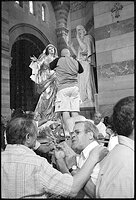
Procession

A
Procession

  • 3
  • 0
  • 74
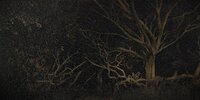
Millers Lane

A
Millers Lane

  • 5
  • 2
  • 95

Recent Classifieds

Forum statistics

Threads
202,906
Messages
2,847,323
Members
101,533
Latest member
rkw1786
Recent bookmarks
1

Matt5791

Member
Allowing Ads
Joined
Nov 15, 2005
Messages
1,007
Location
Birmingham UK
Format
Multi Format
I have recently started using FB paper and I have some Forte Polywarmtone and also some Bromofort which I had in a job lot off ebay.

It does look quite old to be honest, but I have had some really nice results, and I love the texture and base colour of both these papers a lot, expecially the polywarmtone.

However what suprised me is just how slow these papers are - I had heard that FB is slower anyway, but the polywarmtone, in particular, is extremely slow and for 9 X 12 prints I have foud myself having to use the lens wide open (f4.5 on my minolta e-rokkor lens).

What I was wondering is:

1. when paper gets old does the speed reduce?
2. How acceptable is it to use the lens wide open?

Thanks for any help,
Matt
 
g'day Matt
not a good idea to use the lens wide open, better to close down at least 2 stops and extend time to whatever is required

speed and contrast seem to reduce as paper ages, this might not actually be a bad thing
 
Forte Polywarmtone is a very slow paper.

You will get maximum sharpness stopped down a couple of stops. Unless it makes your exposure times really long (ie minutes) thats your best way to go.
 
Yes, Polywarmtone is about one and one half to two steps off the neutral toned papers.

A good lens can deliver good results used wide open if the enlarger is precisely aligned. It makes a great demand on everything else as being correct in order to use it this way, however.
 
I would say to do the best that you can @ f/5.6 and use a stronger bulb if that is an option for your enlarger.
 
Oh, I would point out that in my experience with the same problem I noticed that the loss of contrast wide open(F/4.5)on my Leitz Focotar negated any gain in aperture because I would have to print with a higher grade filter which in turn required more exposure!
 
Thanks for the helpful replies.

Sounds like I have a case of a slow paper which might have been made slower with age.

I am going to be buying some new soon anyway.

What about the reciprocity effect with long exposures? Supposing I am getting suitable highlights with, say, 50 seconds exposure, but I need more contrast so that pushes the exposure to 90 seconds, for example. Do I need to add another 20 seconds or something to accomodate reciprocity failure?

thanks,
Matt
 
I can't reall say with technical precission where reciprocity failure kicks in, but I will say that I am OFTEN exposing this and similar papers between 90 and 180 seconds. 45sec is what I would generally consider "normal" for my use.
 
If you like the paper and want shorter exposure times try using graded instead of VC. Contrast filters eat a lot of light.
 
On one occasion I had to open the aperture fully, and still had a six minute exposure with a further twelve minutes of burning in an irritating bright area.

All right - it was a lith print. "Normal" exposure would have been a lot less.

But the print was still sharp, so I guess it depends on your enlarger lens.
 
Graded Fortezo is similar to Polywarmtone. Look also at JandCphoto.com for their house brand papers which are the same emulsion as Forte's.

http://jandcphoto.com/index.asp?PageAction=VIEWCATS&Category=73

I'm not sure if they are the same paper base though, as I'm getting much more curl with the Jand C paper than I ever did with Polywarmtone. But the emulsions appear identical as promised.
 
Matt5791 said:
Do Forte do a graded paper with a similar look to
Polywarmtone? I just love the creamy whites. Matt

I've some 5x7 Arista EDU FB VC warm tone coming from
Freestyle. "Exact" "Exact" same as Forte's. That's what
the man said, "Exact".

Two suggestions: 1, save that paper for smaller prints,
2, print with no filter. Also, for contrast control if needed,
try Edwal's contrast control developer TST. Or at
home, compound Beer's A & B and/or Adams'
version of Ansco 130. Beer's A equals
Ansco 120; a good developer. Dan
 
I have had very long times with Polywarmtone in the past, but the paper I bought last month was much faster. Now, I used to buy it off the shelf at a local supply shop and it may have been old becuase not many use it here. The new paper I got is very fast, well, slower than ilford but faster than the paper bought here. Like I said maybe my first batch was old, or damaged in some way, but I had 1min or longer times.

No matter what, its worth the wait. The tones are lovely even un-toned. It has brighter base than ilford WT with is more creamy. I think it makees things snap a little more.

Be careful toning it though, I ruined some good photographs toning in a Se.
 
You might try shorter exposure and longer development using a brush for agitation. Pat
 
Matt5791 said:
What about the reciprocity effect with long exposures? Supposing I am getting suitable highlights with, say, 50 seconds exposure, but I need more contrast so that pushes the exposure to 90 seconds, for example. Do I need to add another 20 seconds or something to accomodate reciprocity failure?

I have no data for Polywarmtone, but I gather from an Agfa data sheet for MCC paper, that you would need to increase exposure by about 5% for a 100 sec exposure, compared to a 5 sec exposure. I don't think any compensation for reciprocity failure would be needed if you used a 90 sec exposure instead of a 50 sec exposure.
 
Matt5791 said:
I think the light is brighter - just to my eye I can see it is... Matt

Pick up Ilford's enlarging spot light meter. A very handy
device for regular printing and can be used for approximate
densitometric determinations. Dan
 
Photrio.com contains affiliate links to products. We may receive a commission for purchases made through these links.
To read our full affiliate disclosure statement please click Here.

PHOTRIO PARTNERS EQUALLY FUNDING OUR COMMUNITY:


Ilford ADOX Freestyle Photographic Stearman Press Weldon Color Lab Blue Moon Camera & Machine
Top Bottom
