
-
Welcome to Photrio!Registration is fast and free. Join today to unlock search, see fewer ads, and access all forum features.Click here to sign up
- Home
- Forums
- Analog Workflow Forums (100% Analog/Traditional)
- Analog Equipment
- Miscellaneous Equipment
You are using an out of date browser. It may not display this or other websites correctly.
You should upgrade or use an alternative browser.
You should upgrade or use an alternative browser.
For those who appreciate camera optics, what is your choice in binoculars?
-
A
- Thread starter cliveh
- Start date


Recent Classifieds
-
For Sale Jobo CPE 2 Plus with Lift, - Tanks, Reels, accessories
- Started by nbagno
-
For Sale Multiple Large Format Lenses for sale
- Started by nbagno
-
For Sale Canon 2X EF Telextender
- Started by davela
-
For Sale Olympus OM 24mm F2.8 Lens Hood
- Started by davela
-
For Sale Original Rolleiflex SL35, SL35M, and Contax G2 Manuals
- Started by davela
Forum statistics


Mick Fagan
Subscriber
Leica Ultravid 10x25 binoculars.
These have an eye relief capability, which allows spectacle wearers to adjust for a single person, then simply hand to another spectacle wearer with no further adjustment required to maintain perfect focus.
Other than pupillary distance adjustment, once one of us has adjusted the focusing, they are an adjustment free pair of binoculars as we hand them back and forth between us; something we wish we'd known about once we purchased these binoculars about 12 years ago.
These have an eye relief capability, which allows spectacle wearers to adjust for a single person, then simply hand to another spectacle wearer with no further adjustment required to maintain perfect focus.
Other than pupillary distance adjustment, once one of us has adjusted the focusing, they are an adjustment free pair of binoculars as we hand them back and forth between us; something we wish we'd known about once we purchased these binoculars about 12 years ago.

Dali
Member
Vortex Diamondback for bird watching. Old Zeiss Oberkochen 8x30 otherwise.
Sanug
Member
I tried many different types. The very best for me are the Canon binocolars with image stabilizer. The optical quality is excellent, and the stabilizer gives not only much better comfort, but you see more details than without.
I sold all other binoculars and keep a Canon 10x30 IS for walks in the nature and a 18x50 IS for astronomy and bird watching. Both are a joy to use.
I sold all other binoculars and keep a Canon 10x30 IS for walks in the nature and a 18x50 IS for astronomy and bird watching. Both are a joy to use.

snusmumriken
Subscriber
For 40 years I made my living doing wildlife research, and binoculars were essential kit. As soon as I could find the money (1981), I bought Zeiss 10x40 BGT Dialyt. At the time, perceived wisdom was that these were neck-and-neck with Leitz Trinovid. I marginally preferred the image through the Zeiss, though the Leitz were more compact. Several of my colleagues scoffed and said they could see no difference compared with much cheaper binoculars. At that point it began to dawn on me that I was blessed with really good eyes, and in subsequent years I encountered only one person with sharper eyesight. My point, though, is not to brag, but to suggest that the best glass is wasted if your eyes are not up to it. My eyes have deteriorated with age, of course, and my old Dialyts are now more than I can really appreciate. But I saw some wonderful sights through them in startling clarity back along, and am therefore ridiculously fond of them.
Oh, and in all those years of daily use, my Dialyts have needed only one repair (when I dented the focussing wheel on a rock), which Zeiss did swiftly and free of charge. Build quality is important, as well as optical performance.
Edit, to add that with 10x bins you spend a lot more time focussing to and fro (compared with 7x or 8x), but the shallower depth of sharp focus is very helpful to pick out animals in dense forest.
Oh, and in all those years of daily use, my Dialyts have needed only one repair (when I dented the focussing wheel on a rock), which Zeiss did swiftly and free of charge. Build quality is important, as well as optical performance.
Edit, to add that with 10x bins you spend a lot more time focussing to and fro (compared with 7x or 8x), but the shallower depth of sharp focus is very helpful to pick out animals in dense forest.
Last edited:

A pair of affordable Soligor 10x50 porro prism binoculars. They are good enough for me to see what's going on a couple of blocks away or to look at the positions of the moons of Jupiter. I haven't used them for a couple of years, but when I did it was only for perhaps five minutes a year, and I wouldn't have used them more if they were expensive with perfect edge-to-edge sharpness. Different needs and priorities. 
david schaller
Member
- Joined
- Apr 19, 2005
- Messages
- 47
- Format
- Large Format
I got the Zeiss SFL 10x40 binoculars a couple of years ago, and have been very happy with them for birding every day. The light weight was a big factor in my purchase, and the image quality is very good.

4season
Member
- Joined
- Jul 13, 2015
- Messages
- 2,249
- Format
- Plastic Cameras
Where I really notice optical differences between one good set of binoculars and another is in high-contrast situations, such as the ridge of a mountain silhouetted against a brightly illuminated sky. This simple test is pretty revealing of chromatic aberration.
I used to own a set of Leica 8x32BAs, and still love the size, the overall feel, and the single-wheel focusing mechanism. Optically, very good, though in the aforementioned test, they exhibit a fair amount of CA. Purchased as factory refurbished unit in the 1990s. The Leica $ premium does buy you leather strap + case, and a delightful single-wheel focusing mechanism.
Nikon Monarch 3 8x42, purchased as a factory refurbished unit around the time of the pandemic. Wow was it inexpensive, like 160 USD. Not so fancy as Leica, but price did include a case and strap. Larger but also brighter than Leica as you'd expect. I recall seeing moderate CA, but felt these were a solid bargain.
Nikon Aculon A30 10x25. Can't recall whether new or refurbished, but price was very reasonable, like 80 USD. Compact, but not quite as small as some Leica, Swarovski or Zeiss binocs that I've sampled. Recall these being solid little performers, and evidently one of my family members thought so too, as they've been "appropriated".
Nikon Mikron. Unlike the others I've mentioned, these are porroprism types, which would normally be bulkier than roof-prism designs, but not here. Think the original Mikron dates back to the 1950s, but Nikon seems to periodically reissue them as a boutique product. And they're swell little performers too! But like other compact binoculars, they're best for daytime use as smaller objective diameter = dimmer view.
Olympus Pro 8x42: I very much like the optics, which seem pretty much apochromatic. But admittedly, size-wise, I seem to favor 8x32 and smaller. I first heard about these here: https://www.allbinos.com/337-binoculars_review-Olympus_8x42_PRO_review.html
Canon: Always was amazed by their image stabilization, but put off by the bulk of the units, and the need to constantly press an IS button, but the latter issue seems to have since been resolved. Have not handled the current models, so I'm unsure what I'd make of bulk and weight.
Swarovski: Anyone have experience in getting these serviced? Unfortunately, a family member stashed a set away, then forgot about them for years. Optics are badly darkened and fogged.
I used to own a set of Leica 8x32BAs, and still love the size, the overall feel, and the single-wheel focusing mechanism. Optically, very good, though in the aforementioned test, they exhibit a fair amount of CA. Purchased as factory refurbished unit in the 1990s. The Leica $ premium does buy you leather strap + case, and a delightful single-wheel focusing mechanism.
Nikon Monarch 3 8x42, purchased as a factory refurbished unit around the time of the pandemic. Wow was it inexpensive, like 160 USD. Not so fancy as Leica, but price did include a case and strap. Larger but also brighter than Leica as you'd expect. I recall seeing moderate CA, but felt these were a solid bargain.
Nikon Aculon A30 10x25. Can't recall whether new or refurbished, but price was very reasonable, like 80 USD. Compact, but not quite as small as some Leica, Swarovski or Zeiss binocs that I've sampled. Recall these being solid little performers, and evidently one of my family members thought so too, as they've been "appropriated".
Nikon Mikron. Unlike the others I've mentioned, these are porroprism types, which would normally be bulkier than roof-prism designs, but not here. Think the original Mikron dates back to the 1950s, but Nikon seems to periodically reissue them as a boutique product. And they're swell little performers too! But like other compact binoculars, they're best for daytime use as smaller objective diameter = dimmer view.
Olympus Pro 8x42: I very much like the optics, which seem pretty much apochromatic. But admittedly, size-wise, I seem to favor 8x32 and smaller. I first heard about these here: https://www.allbinos.com/337-binoculars_review-Olympus_8x42_PRO_review.html
Canon: Always was amazed by their image stabilization, but put off by the bulk of the units, and the need to constantly press an IS button, but the latter issue seems to have since been resolved. Have not handled the current models, so I'm unsure what I'd make of bulk and weight.
Swarovski: Anyone have experience in getting these serviced? Unfortunately, a family member stashed a set away, then forgot about them for years. Optics are badly darkened and fogged.

Sirius Glass
Subscriber
I still prefer 7x50 to use for looking at stars. While I was on a cruise to I needed binoculars and all that was available was 10x42 which worked well for wildlife. The 10x42 are light enough.

infrar3d
Member
- Joined
- Oct 24, 2009
- Messages
- 53
- Format
- Multi Format
I mostly use a little pair of Nikon Trailblazer 10x25. Small, lightweight, inexpensive, waterproof, nitrogen-filled/fog-resistant, can focus down to 3.5 meters. These have a bit of CA and need pretty good light, but otherwise have a nice image. The small size and close-focusing make them good for backyard birding, hiking, and travel. Being waterproof and inexpensive means I don't mind taking them on the kayak or letting them bang around in my bag.
I also keep an old pair of Zeiss 7x50 WW2 u-boat binoculars by the door. I live near the beach and these are nice for looking at ships and planes.
I wouldn't mind having a set of 8x42. I also read very good things about the Pentax Papilio II 6.5x21.
I also keep an old pair of Zeiss 7x50 WW2 u-boat binoculars by the door. I live near the beach and these are nice for looking at ships and planes.
I wouldn't mind having a set of 8x42. I also read very good things about the Pentax Papilio II 6.5x21.
Last edited:

Alan Edward Klein
Member
Leica Ultravid 10x25 binoculars.
These have an eye relief capability, which allows spectacle wearers to adjust for a single person, then simply hand to another spectacle wearer with no further adjustment required to maintain perfect focus.
Other than pupillary distance adjustment, once one of us has adjusted the focusing, they are an adjustment free pair of binoculars as we hand them back and forth between us; something we wish we'd known about once we purchased these binoculars about 12 years ago.
Do you have an exact model for that? THe Ultravid I find does not mention anything about the dual focus.

MTGseattle
Subscriber
No one has mentioned eye strain/fatigue. having a clear view with adequate contrast is important, but it shouldn't give one a headache after 5 min of viewing either.

BradS
Member
I have an old pair of 7x50 Binolux binoculars. Kinda big, kinda heavy but they seem to do the job. I got 'em at a thrift store for five bucks.
Last edited:

Maris
Member
Back in a previous life when I was a sales engineer for Carl Zeiss Jena I sold a lot of JENOPTEM 8x30W binoculars to people who could not believe how good their first look through them was.
The kicker was the price, only USD50, set by an East German regime desperate for foreign currency, no Russian Roubles please, and the notional loss on the binoculars was worth it.
My JENOPTEM 8x30s are still very good with a tendency to optical fungus; easy to clean but hard (but possible) to recollimate.
The kicker was the price, only USD50, set by an East German regime desperate for foreign currency, no Russian Roubles please, and the notional loss on the binoculars was worth it.
My JENOPTEM 8x30s are still very good with a tendency to optical fungus; easy to clean but hard (but possible) to recollimate.
Much depends on how much magnification you want -- just like with photo lenses. For a small pair, I use a Nikon 10x25 -- basically a 500mm lens. I tried a Leica 10x25 which had a somewhat better image, but too expensive for me. I also have a nice pair of Pentax 16x50 -- basically a 800mm lens -- great for birds. My favorite though is a Minolta 7-20x50 zoom -- all the way to 1000mm. I got a pair with the original case for $20 at GOODWILL.
All of them have diopter adjustment (on one side) for your particular eyesight -- and for extra, monocular, close-ups. The Pentax and the Minolta also have tripod sockets.
All of them have diopter adjustment (on one side) for your particular eyesight -- and for extra, monocular, close-ups. The Pentax and the Minolta also have tripod sockets.
Last edited:

Rick A
Subscriber
Swarovski 10x30 CL Companion's in Jungle green.
r_a_feldman
Member
I would recommend looking at the Vortex line. They have good image quality, are not super expensive, and (importantly) have one of the best life-time warranties around.
Often as important as image quality is how the binoculars feel to you. When my wife was getting a high-end binocular for birding, she tried Zeiss, Swarovski and Vortex. Her preference was the Vortex for both its IQ and its weight and feel in her hands.
Often as important as image quality is how the binoculars feel to you. When my wife was getting a high-end binocular for birding, she tried Zeiss, Swarovski and Vortex. Her preference was the Vortex for both its IQ and its weight and feel in her hands.
Jim Peterson
Member
Another vote for Vortex. I have the Vortex Diamondback 8x42 for birdwatching. NIce quality and not too expensive. I paid $239.00
Mick Fagan
Subscriber
Do you have an exact model for that? THe Ultravid I find does not mention anything about the dual focus.
I see what you mean. I read through a few reviews of this binocular, not one mentioned this spectacle eyepoint adjuster.
In this Australian link, you can see the first image, which shows the front element pulled out on each lens. On one lens it has Leica Camera, the other side has 8x20. This is how the binoculars are used by someone without spectacles.
Leica Store | LEICA ULTRAVID 8x20 BR black w. AquaDura
Leica stands for visual enjoyment and lasting value. Our approach and Leica's unique technical expertise make our optical instruments ideal companions offering the highest possible reliability and durability.
 leica-store.com.au
This second link shows the binoculars in their compressed state, which is how the binoculars are used by spectacle users. Essentially we have an infinity section on our spectacles and we view the binoculars using the infinity part of our spectacles. Once infinity is correct for one persons eyes through their spectacles, the focusing is correct for anyone using their spectacles through the infinity section of their spectacles.
This review also shows the little focusing adjustment button in the centre on the underside of the binoculars. Once you have set this, and if you are using spectacles all of the time, then I don't think you will need to adjust initial focus. We haven't needed to adjust ours since our initial adjustment when we were shown by the Camera Shop proprietor in Germany.
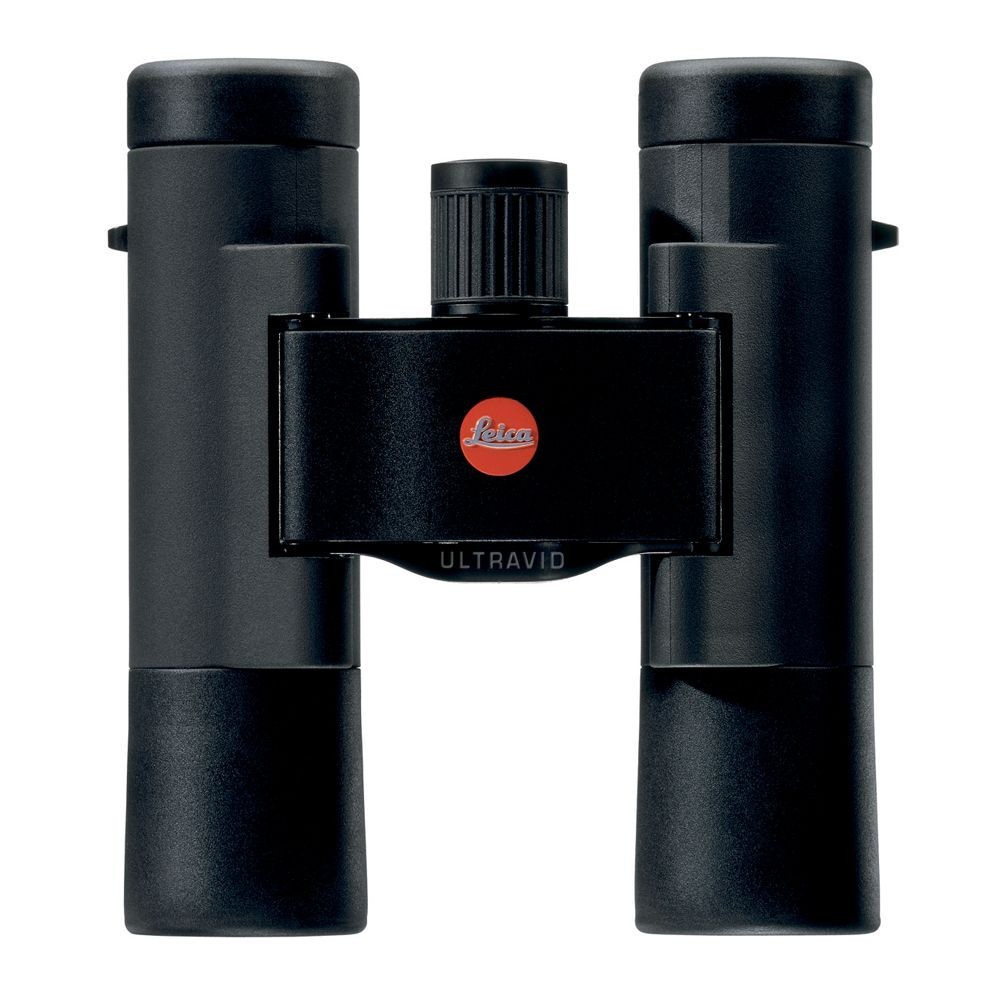
Leica Ultravid BR 10x25 Review
It is incredibly difficult to make binoculars compact without sacrificing optical quality, but Leica largely succeeds at that task with the Ultravid BR...
 www.outdoorgearlab.com
I hope this answers your questions.
gordrob
Subscriber
For a lot of years I carried a set of Bushnell 10X50 binoculars whenever we were out of the city. They were good but not great so I found a set of Nikon 10x40 6 degree on a clearance table so I broke down and bought the binoculars. Couldn't be happier. They are a lot lighter than the Bushnell binoculars and the optics are a lot sharper. Should have upgraded a lot sooner.
BMbikerider
Member
I was bought a nice pair of Nikon 10x50 bins a few years ago but rarely use them partly because I forget to take them when I am out and about. When I do remember they do get used to look at places too difficult for me to get to. (Well I can wish can't I? The bins do help)
Alan Edward Klein
Member
I see what you mean. I read through a few reviews of this binocular, not one mentioned this spectacle eyepoint adjuster.
In this Australian link, you can see the first image, which shows the front element pulled out on each lens. On one lens it has Leica Camera, the other side has 8x20. This is how the binoculars are used by someone without spectacles.
Leica Store | LEICA ULTRAVID 8x20 BR black w. AquaDura
Leica stands for visual enjoyment and lasting value. Our approach and Leica's unique technical expertise make our optical instruments ideal companions offering the highest possible reliability and durability.
This second link shows the binoculars in their compressed state, which is how the binoculars are used by spectacle users. Essentially we have an infinity section on our spectacles and we view the binoculars using the infinity part of our spectacles. Once infinity is correct for one persons eyes through their spectacles, the focusing is correct for anyone using their spectacles through the infinity section of their spectacles.
This review also shows the little focusing adjustment button in the centre on the underside of the binoculars. Once you have set this, and if you are using spectacles all of the time, then I don't think you will need to adjust initial focus. We haven't needed to adjust ours since our initial adjustment when we were shown by the Camera Shop proprietor in Germany.
Leica Ultravid BR 10x25 Review
It is incredibly difficult to make binoculars compact without sacrificing optical quality, but Leica largely succeeds at that task with the Ultravid BR...
I hope this answers your questions.
How does the eye relief allow auto setup focus for two wearers?
Mick Fagan
Subscriber
Alan, the eye relief is used by spectacle wearers, you push the binocular eye pieces in, then, and while wearing your spectacles, you adjust focus. As you will be using the infinity part of your spectacles to view through the binoculars, any other spectacle wearer can use the focus set by the first spectacle wearer to view perfectly through the binoculars without any adjustment except to set pupillary distance for the distance between each eye.
If a non spectacle wearer uses these binoculars, then they pull the eye pieces out, which lengthens the whole glass to glass optics. Make adjustments for their eyesight, then use the binoculars. If they hand the binoculars to someone else, then the next person will need to adjust the binoculars for their eyesight.
The binoculars work seamlessly between spectacle wearers, no further focusing adjustment is required. They do not work seamlessly between non spectacle wearers.
As both of us wear spectacles, these are perfect binoculars for us as we do not need to put our spectacles on the top of our heads to use the binoculars. We just hand the binoculars back and forth and keep our spectacles in place.
If a non spectacle wearer uses these binoculars, then they pull the eye pieces out, which lengthens the whole glass to glass optics. Make adjustments for their eyesight, then use the binoculars. If they hand the binoculars to someone else, then the next person will need to adjust the binoculars for their eyesight.
The binoculars work seamlessly between spectacle wearers, no further focusing adjustment is required. They do not work seamlessly between non spectacle wearers.
As both of us wear spectacles, these are perfect binoculars for us as we do not need to put our spectacles on the top of our heads to use the binoculars. We just hand the binoculars back and forth and keep our spectacles in place.

| Photrio.com contains affiliate links to products. We may receive a commission for purchases made through these links. To read our full affiliate disclosure statement please click Here. |
PHOTRIO PARTNERS EQUALLY FUNDING OUR COMMUNITY:  |