
• Welcome to Photrio!
    Registration is fast and free. Join today to unlock search, see fewer ads, and access all forum features.
    Click here to sign up

For "The End of the World As We Know It"

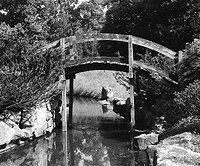
Cemetery Chapel

H
Cemetery Chapel

  • 2
  • 0
  • 30
2 bath test

A
2 bath test

  • 3
  • 0
  • 54

Recent Classifieds

Forum statistics

Threads
202,771
Messages
2,845,338
Members
101,515
Latest member
Floflo
Recent bookmarks
0

Donald Qualls

Subscriber
Allowing Ads
Joined
Jan 19, 2005
Messages
12,549
Location
North Carolina
Format
Multi Format
Every now and then, I read something that makes it seem like we might in fact be in the End Days. Not of the world in terms of being able to eat and breathe, but the end of film. With Kodak and Fuji both having their bad days, it's not completely out of the question.

Now, photography won't end -- there's wet plate DIY, there are a couple suppliers of dry plates and those emulsions could, in theory, be made faster than the current EI 25 from J. Lane, as well as becoming panchromatic.

Making our own developers is fairly easy -- coffee and beer aren't going anywhere, and even if washing soda goes off the market, baking soda won't and is fairly easy to convert.

Fixer, now, is another story.

Salt water is super-slow, and I'm not really convinced it works at all. Sodium sulfite is also very slow and has little capacity. Thiosulfates (most commonly that of sodium) have been in use for this for almost two centuries -- but while I know how a lot of basic chemicals are manufactured, I don't recall ever reading how thiosulfates are made. I presume (at least in commercial quantities) they're not extracted from onions -- though I understand that is technically possible. As I recall, thiosulfate can oxidize to sulfite, which oxidizes to sulfate -- so is there an electrolytic process that can convert, say, battery acid into sulfonic acid that can then be reacted with a sodium salt or ammonium hydroxide to get a thiosulfate solution?
 
Sure, and in the Brave New World, chemicals like that may not be permitted to be sold to consumers (in favor of requiring that pools be managed by professionals, or drained, for the safety of all). As used for cyanide poisoning, it's a pharmaceutical, not readily available to the public. Sure, sodium cyanide is an alternative (very effective) fixer, but it's genuinely toxic; there's also sodium thiocyanate, but I wouldn't have the faintest idea what else that might be used for and in the Nanny State potassium ferricyanide gets raised eyebrows (because "cyanide" in the name), leading to an extpecation that thiocyanates will have the same problem.

I do see in the link, however, "Soda ash and sulfur are generally used as raw materials in industry, soda ash reacts with sulfur dioxide produced by the combustion of sulfur to produce sodium sulfite, then add sulfur for boiling reactions, and then filter, bleach, concentrate and crystallize, etc, can obtain sodium thiosulfate pentahydrate." So washing soda (obtainable from baking soda in the Nanny State and sulfur (likely to be available in garden stores, if you get there ahead of those making gunpowder with it) and the right procedure. That's a better starting point than I had.
 
I was just talking to a fellow who was a photographer in the FSU back in the day. He did everything from scratch aside from fixer. He said he would have done it too but he didn't have the recipe.
 
The end of film !!! Surely not! Where's Henning when you need him:smile:

Don't get me wrong -- photography won't end even if Kodak, Fuji, Ilford, Foma, Adox and ORWO all close up shop. But we might be back to 1870 to 1880 technology, and in a Nanny State that won't let us buy "hazardous" chemicals easily.
 
Cameras are the limiting factor. No new cameras. Especially problematic for 120. We need a good 6x9/645 decent lens that can focus. Something like Kodak made in the glory days. Ilford and the others need to figure out how to get people to buy paper. For me film is a means to an optical print.
 
Film and chemistry are one thing, if Kodak goes bust Iflord will pick the slack, as noted by Mshchem it is a lack of new 35mm and MF bodies and lens that will end film photography as the pool of reliable used gear is being bought up.
 
I can make a camera for wet plate or hand coated dry plates; don't even need a leaf shutter at ISO 25 or slower (stop down a bit and use the lens cap). But if I can't fix the resulting plates after development, it all turns black over time.
 
For the past two years I've concentrated on shooting wet plate collodion, mostly with either a 4x5 or 8x10 wooden camera. All of the chemicals I buy are pretty basic and generic, and I tend to mix up my own from scratch. The substrate is either commercially available metal plates or glass from picture frames. The cameras are still being made. Large format lenses aren't being made but considering I use lenses as old as 1843 they are very durable and most have no moving parts.


Kent in SD
 
Large format lenses aren't being made but considering I use lenses as old as 1843 they are very durable and most have no moving parts.

For that matter, it's not that difficult to make your own lenses, if you stick to pre-1900 designs like the Cooke Triplet, Periskop, etc. It's a skill in itself, but "by hand" is how lens prototypes were made all the way into the 1950s. I've got a telescope for which I hand made the primary mirror, and when I was working on it, I knew someone who was making doublet telescope objectives (cemented!). And once I have a glass plate negative, I can print via albumen or a bunch of "alternative process" methods. IFF I have fixer.

Yes, for roll film there are tighter requirements -- the more you enlarge, the less aberration you can tolerate when making the negative.
 
really strong salt water will work. a subscriber posted recently that he often does that and has no issue at the moment with the films fixed / stabilized with salt.
 
I'm not convinced the film is fully fixed from salt water, and even if it is, it's 24-72 hours in the brine -- which IMO can't be good for the gelatin.
 
I would pay particular attention to Gerald Koch's posts in the first link in jnantz's post #14.
I'm not too worried about any Nanny state tendencies - as long as there are agricultural uses for a lot of the technology that the film photography uses.
 
Cameras are the limiting factor. No new cameras. Especially problematic for 120. We need a good 6x9/645 decent lens that can focus. Something like Kodak made in the glory days. Ilford and the others need to figure out how to get people to buy paper. For me film is a means to an optical print.
Until it becomes fashionable for photographers to say they don't use social media, printing will limp along. I think photographers who print their own work are dying faster than they can be replaced.
 
The bigger problem with be learning how to just selectively expose an image, once background radiation from the nuclear war is still so high everything on the plate instantly fogs. But the first person to do so, after finally emerging from their underground shelter four hundred years later, will have done something of historic importance.

As far as Fabberyman's own pessimism goes, I disagree. At least here in the US, every generation rebels. It's inevitable that some upcoming generation of teenagers will outright rebel against their parent's generation of addiction to electronic gadgets all around the house, and go back to making things by hand instead. They'll dig out their great-grandparents old Creedence Clearwater albums, figure out a way to play the records using an old VW bus battery, and move into moss-chinked log darkrooms way back in the woods, off the grid, wearing Dektol and amidol tie-dyed clothing.
 
Last edited:
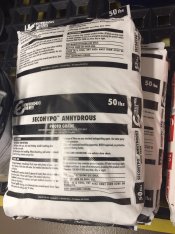
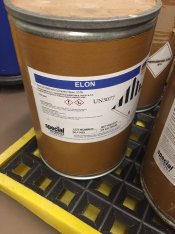
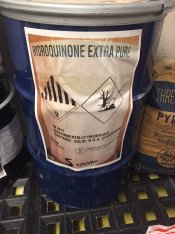
Just stocked up; think I'm good for a few weeks...

IMG_6892.jpg IMG_6893.JPG IMG_6894.JPG
 
Yep, one fad after another .... cyclic, predictable at least. Daddy still dresses like a hippie and smokes pot, even 65 years old; his rebellious son wears a business blazer, short haircut, and won't touch dope. I've seen that more than once.
 
They'll dig out their great-grandparents old Creedence Clearwater albums, figure out a way to play the records using an old VW bus battery,

I've always wondered if cactus needles could be repurposed as phonograph needles—stick it through a styrofoam cup, lightly hold the needle to the groove, and put your ear to the cup.
 
I've always wondered if cactus needles could be repurposed as phonograph needles—stick it through a styrofoam cup, lightly hold the needle to the groove, and put your ear to the cup.

Won't last long (steel needles used to wear out in a few tens of playing hours, as I recall), but there are postcard phonographs available online -- fold it up, put a pin or sewing needle in the right place, and spin the disk by hand. Audible without amplification, at least with old 45 and 78 records.
 
I've always wondered if cactus needles could be repurposed as phonograph needles—stick it through a styrofoam cup, lightly hold the needle to the groove, and put your ear to the cup.

back in the days of victrola heaven people often times used cactus needles for their victrola, you only got 1 play out of the record though
 
If the worse came to be, I, luckily, have a pretty wide assortment of hobbies, interests, and passions so if one goes away, it’s backfilled by another.
 
Photrio.com contains affiliate links to products. We may receive a commission for purchases made through these links.
To read our full affiliate disclosure statement please click Here.

PHOTRIO PARTNERS EQUALLY FUNDING OUR COMMUNITY:


Ilford ADOX Freestyle Photographic Stearman Press Weldon Color Lab Blue Moon Camera & Machine
Top Bottom