

• Welcome to Photrio!
    Registration is fast and free. Join today to unlock search, see fewer ads, and access all forum features.
    Click here to sign up

For TF-4 Users.

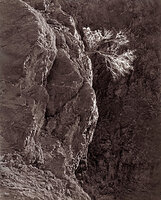
Bush on Canyon Wall

A
Bush on Canyon Wall

  • 0
  • 0
  • 0
double portrait

A
double portrait

  • 1
  • 0
  • 20

Forum statistics

Threads
203,257
Messages
2,851,997
Members
101,747
Latest member
Tallphotographer
Recent bookmarks
0

jamusu

Member
Allowing Ads
Joined
May 16, 2006
Messages
305
Format
35mm
I am seriously thinking of trying TF-4. I make my final enlargements on fibre and anything to shorten the washing time will help. I have a few questions for those of you who use it. They are as follows.

1.) What are your overall experiences with it (good, bad, etc...).

2.) Do you use it for both film and enlargements?

3.) What are the steps that you follow when developing film with it?

4.) What are the steps you follow when making enlargements with it?

5.) I know that a hypoclearing agent is not needed in the process, but for
those of you who selenium tone your prints, do you use a hypoclearing
agent before the final rinse, or is it still not needed?


I am still torn on wether or not I should use it to develop my film. I know for a fact that I will use it to develop my prints in the future because I can always re-print them if I do not like how they look the traditional way, but you only get one shot with developing negatives as you know.

Sorry for so many questions, but I have read nothing but good things about this fixer since learning of its existence earlier this week. The time that it will save in the darkroom is why I am so i nterested in trying it, but I am still straddling the fence on whether or not I should purchase it.

Thank you,
Jamusu.


James.


James.
 
After selenium (which contains some fix) it's always better to do hypoclearing. First it kind of stop it and it helps to remove that residual fix in the wash.
It has nothing to do with the kind of fix you use before.
 
I am seriously thinking of trying TF-4. I make my final enlargements on fibre and anything to shorten the washing time will help. I have a few questions for those of you who use it. They are as follows.

1.) What are your overall experiences with it (good, bad, etc...).

2.) Do you use it for both film and enlargements?

3.) What are the steps that you follow when developing film with it?

4.) What are the steps you follow when making enlargements with it?

5.) I know that a hypoclearing agent is not needed in the process, but for
those of you who selenium tone your prints, do you use a hypoclearing
agent before the final rinse, or is it still not needed?


I am still torn on wether or not I should use it to develop my film. I know for a fact that I will use it to develop my prints in the future because I can always re-print them if I do not like how they look the traditional way, but you only get one shot with developing negatives as you know.

Sorry for so many questions, but I have read nothing but good things about this fixer since learning of its existence earlier this week. The time that it will save in the darkroom is why I am so i nterested in trying it, but I am still straddling the fence on whether or not I should purchase it.

Thank you,
Jamusu.

James.
James.

Hi James

1. It is the only fixer I use for film for a number of years. Great stuff.
2. Film mostly, prints occasionally.
3. Follow the instructions on the bottle.
4. Follow the instructions on the bottle.
5. I use hypo-clearing agent or other washing aid because may water is slightly acid and I think HCA returns the print to a alkaline state. Works for me, I have never gotten stains when toning.

Hope this helps.
Michael
 
I switched to TF-4 a couple of years ago after using Ilford Rapid and Kodak Pro for years. I use it for both film and paper and have nothing but good things to say about it. I don't tone my prints so I can't offer any advice there, but as Michael said just follow the instructions on the bottle for film and paper and you should be fine. Just be sure to use a plain water stop bath and adjust any of your procedures as necessary.

Regards,

Ash

Edit: For lith printing which generally requires a fast acting stop bath, I use a different, non-alkaline fixer instead of TF-4. This may or may not be necessary... someone with more experience in these matters may have a different suggestion.
 
You can use a stop bath with TF-4. There is no problem.

And, neither film nor paper "needs" any specific pH unless it is color. The atmosphere will gradually cause pH drift in the coating to compensate more effectively than anything you might do.

PE
 
You can use a stop bath with TF-4. There is no problem.

And, neither film nor paper "needs" any specific pH unless it is color. The atmosphere will gradually cause pH drift in the coating to compensate more effectively than anything you might do.

PE

Will an acid stop bath have any effect on the longevity or effectiveness of an alkaline fixer?

Ash
 
Ash;

TF-4 is so well buffered that a stop bath will not materially affect it. In fact, a stop may be better than a water rinse for a variety of reasons.

PE
 
I use a water stop and a hypo clear before selenium for prints. I also use if for both film and papers. I agree it is great stuff, but I will use other fixers as well, though not at the same time.

Eli
 
Ash;

TF-4 is so well buffered that a stop bath will not materially affect it. In fact, a stop may be better than a water rinse for a variety of reasons.

PE

Excellent to know. I was under the impression that there might be issues with an acid stop bath. Thank you for the information PE.

Ash
 
I use a running/changing water stop and use TF4 exclusively for prints, but I may start using it for film as well. I never use hypoclear for prints, always wash FB prints at least an hour and/or soak w/water changes for much longer. No staining or other problems at all, ever...

One thing: it has a strong ammonia odor, even when mixed with distilled water. The odor is stronger when the solution is freshly mixed.
 
Excellent to know. I was under the impression that there might be issues with an acid stop bath. Thank you for the information PE.

Ash

The white cloudy material in a bottle of TF-4 is the buffer used to maintain the alkaline pH. There is enough to withstand a stop. I have talked to Bud Wilson at the Formulary and to Bill Troop who designed it as well as Grant Haist, and then I conducted experiments to verify this fact.

AAMOF, with use, the ammonia odor of TF-4 may increase slightly, but with an acid stop, it pretty much remains constant without any increase. I prefer this. Also, the acid stop helps remove Metol from the film or paper. It is easier to wash Metol out given a quick acid dip. This is not intended to mean that Metol is or may be a problem but the acid dip seems to increase the wash rate just a tad IMHO which is all to the good.

Since wash rate depends on water quality, a good test for retained fix, retained silver and of course, hypo exhaustion are always in order.

PE
 
Mike;

Ammonium Thiosulfate sold is very very hard to make and ends up evening out the cost due to weight difference. If you object, buy the solid and mix your own. Sodium Thiosulfate solid is easier to mix up as a fix, less expensive and if you plan on living as long as Methuselah to wait for the fixing of film and paper, makes an excellent low cost fixer albeit slow. :D

PE
 
I started using TF-4 about 4 years ago, when I started developing my films in Pyrocat HD. I absolutely love the stuff! It makes life sooooooo much easier.

Good luck,
 
Sounds like everyone has positive reviews for it thus far which is making my decision much easier.

Jamusu.
 
Sodium Thiosulfate solid is easier to mix up as a fix, less expensive and if you plan on living as long as Methuselah to wait for the fixing of film and paper, makes an excellent low cost fixer albeit slow./QUOTE]

Are you saying that using a Sodium Thiosulfate fixer will require a more extensive wash than that recommended with the Ilford method with film or RC papers?

Eli
 
I've used TF-4, and it seems to be a good, effective fixer. For the way I work, it seems to be overkill, but I have no complaints about it. There is a slight ammonia odor, but not enough to bother you - it is really pretty odor free. Since it is alkaline, you should use an acid stop bath rinse to be sure development is fully stopped before you put your materials in the fixer. TF-4 is well enough buffered so that a minor carryover from the stop bath will not hurt it. Because of its higher pH, it washes out quite easily from most papers, and a hypo clearing treatment before toning is probably unnecessary. A good rinse will do. Life may be slightly shorter than some neutral or acid fixers, but I haven't done any tests for this.
 
I use TF-4 for both film and paper. I use a water stop for both film and paper. Water stops are not immediate, and that effect is what I like. With paper I use a "double" water stop. Because I prefer not to use an acid stop, a double water stop or a rinse tray (with paper) after the first stop prevents carryover. Using this method it lasts as long or longer as any other fixer I have tried. I'm very happy with it, and wouldn't consider using another fixer except on the weight of great advice from many people.
 
Last edited by a moderator:
Sodium Thiosulfate solid is easier to mix up as a fix, less expensive and if you plan on living as long as Methuselah to wait for the fixing of film and paper, makes an excellent low cost fixer albeit slow./QUOTE]

Are you saying that using a Sodium Thiosulfate fixer will require a more extensive wash than that recommended with the Ilford method with film or RC papers?

Eli


Sodium Thiosulfate fix baths are very slow fixing. Depending on the pH of the fix bath, the wash rate for Sodium Thiosulfate fixes can be the same or slower than for Ammonium Thiosulfate.

Sodium is a bigger ion than Ammonium and makes a much larger complex with Silver ion. The complex diffuses more slowly in gelatin and the Sodium ion diffuses more slowly.

PE
 
Depending on the pH of the fix bath, the wash rate for Sodium Thiosulfate fixes can be the same or slower than for Ammonium Thiosulfate.

Thank you.

What PH do you recommend for Sodium Thiosulfate fixers with comparable times? What materials would you recomend for a base or acid 'tweak' of the ph in distilled water?

Eli
 
Photrio.com contains affiliate links to products. We may receive a commission for purchases made through these links.
To read our full affiliate disclosure statement please click Here.

PHOTRIO PARTNERS EQUALLY FUNDING OUR COMMUNITY:


Ilford ADOX Freestyle Photographic Stearman Press Weldon Color Lab Blue Moon Camera & Machine
Top Bottom
