
• Welcome to Photrio!
    Registration is fast and free. Join today to unlock search, see fewer ads, and access all forum features.
    Click here to sign up

Focusing in the Darkroom

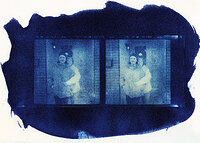
Cyanotype stereo card

A
Cyanotype stereo card

  • 0
  • 0
  • 0
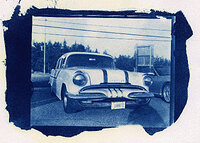
IMG_0025.jpeg

A
IMG_0025.jpeg

  • 0
  • 1
  • 0

Forum statistics

Threads
203,125
Messages
2,850,234
Members
101,690
Latest member
nisherii
Recent bookmarks
0

Deryck

Member
Allowing Ads
Joined
Jan 24, 2008
Messages
29
Format
Medium Format
Hello to all from Denmark,

I would like to ask a question of those of you who use reading glasses when working in the darkroom.

Using glasses, (which I normally do) I can focus the negative to grain sharpness using my grain-magnifier. However, when I remove my glasses, this same focus seen through the grain-magnifier is blurred, but can be brought back to grain sharpness again by re-focusing WITHOUT my glasses. Apart from being a revelation, this seems a little odd as I am certainly not able to focus any of my cameras without the aid of my glasses.

I know that stopping down will cover the difference, but I would like to get as sharp a focus as possible on the paper from the outset.

Should I focus throught the grain-magnifier using my reading glasses (as I usually do), or should I focus without the glasses?

My reading glasses are +2,5. I use a 'PEAK' grain-magnifier, and the negative cannot heat-buckle as it is held flat in a glass negative carrier. The focusing mechanism itself cannot shift or creep as it is a 'DEVERE 504' with a locking knob. The eye-balls - on the other hand - are fifty-some years old.

Thanks,
Deryck
 
Try making two prints - one focused with glasses and one without - and see if there is any difference. If not, do what's comfortable. I too wear glasses, blended bi-focals, and use a Peak magnifier. I can get the focus right most of the time without the maganifier. Glasses often come off when I'm trying to focus the Rollei SL66E - reading and distance variations in the the lenses becomes too confusing. Focusing the Leica on the other hand, is easy, with or without specs. These eye-balls are 76 years old.
Cheers - and keep working in the darkroom.
Morry Katz - Lethbridge, Canada
 
You should adjust the grain focuser so you can see the crosshairs, reticule or whatever is in the grain focuser eyepiece without looking at an image. This is the same as focusing a pair of binoculars or a microscope. You are setting the focus to see an object in the device, you do this wearing or not wearing glasses, whatever is more comfortable, and once set you use the grain focuser with or without glasses, depending on how you set it. Now you will be able to accurately focus the image in the enlarger.
 
Hello to all from Denmark,...............

I am certainly not able to focus any of my cameras without the aid of my glasses.
..................
Thanks,
Deryck
Hello from Wisconsin, USA.
The cameras don't have an adjustable viewfinder. On my Nikon F3, the right angle finder with its 6x magnification does have an adjustable viewfinder. Some Right Angel finders that attached to the viewfinder also have this feature.
 
I think Morry's advice is sopt on. See what does the best. You could even do this on one print. Dodge half a sheet with a book or some such and expose the other half focusing one way. Flip and repeat. This way you can view the results instantly, reducing material usage, even though only by a minimal amount.
 
You need to calibrate the eyepiece for the specific situation (glasses, no glasses, reading glasses) or the device will not give an accurate focus. In fact, if not calibrated, you will be certainly guaranteeing an out of focus print!

Jon

ps I would just use regular glasses. Maker sure to keep your eye a consistent distance from the eyepiece when calibrating and using. To calibrate, turn the eyepiece until the rectangular focus lines are sharpest.

When focusing the negative, make sure you can see both the rectangle lines and grain in focus at the same time.
 
Last edited by a moderator:
Hello Deryck,

My eyeballs need +5.5 correction and have astigmatism to boot, so focusing anything is a real challenge.

When focusing large format cameras, I take my glasses off and put my noze about 150mm away from the glass.
Things are super sharp then and focusing is easy, but breathing under the dark cloth steams everything up. Grrrrr...

This made me realize that focusing on a ground glass is easier than focusing on an "aerial" image (like the Peak image).

Now I use a Magnasite focuser (the ground glass type) with-or-without my glasses... it makes no difference.
Focusing is much faster with the Magnasite and just as reliable for low to medium magnification.
For really high magnification, I use the Peak without my glasses. (Just make certain the reticle is in focus too.)

Here's another thread on focusers...
(there was a url link here which no longer exists)

Reinhold

www.classicBWphoto.com
 
Always use caution with aerial image focusing, you have to know how to focus your eye on the indicator spot, otherwise focusing the enlarger will be futile.

Cameras don't focus with an aerial image (unless, of course, you have an aerial image focusing screen :wink: ).
 
My reading glasses provide me with as sharp an image
ON the EASEL as I need hope for. Focusing with the lens
open wide and both eyes open I tweak the focus until it
appears needle sharp. The I stop down. Dan
 
I have a pair of glasses made for computer display in the upper part, and a bit closer than normal reading in the lower part (with a line, not progressives). I use this pair for most darkroom printing.
I find that the "mid-range" lens (set for 26" - 30" for the computer display) works best with my grain focusser, which is an old model from the 60's. I forget the brand, maybe Ultima, but it has an eyepiece, a mid level piece with a "worm" or sine wave image on it, and the lower mirror, which sends the image up to the mid level piece, I guess. The "worm" helps me focus on this plane.
Works very well for me.
 
What Bob-D659 wrote is on the money. I have the Peak grain focuser. There is a circle in the image path. What you need to do is adjust the eyepiece so that the circle is sharp. The device is now calibrated to your vision. Then you will get an accurately focused image on the baseboard. That's all there is to it, and you don't need to worry about testing or anything. It just works.
 
My problem focusing started when I switched to Pyrocat HD developer with 6x6 negs. I cant see any grain to focus on , with or without my glasses. I have both a Peak and a Magnasight, I have to find a sharp edge and bring that into critical focus (or eyes on a portrait).

Rick
 
I have that same problem when I use TMX in just about anything. You need to find a sharp, high contrast edge of something to focus on or you're lost. The results are worth it though.
 
Second wht Bob D659 said.

If you do not do this, you are focusing on two different points in space. The rectangle MUST be in focus first, then you do the grain.
 
Photrio.com contains affiliate links to products. We may receive a commission for purchases made through these links.
To read our full affiliate disclosure statement please click Here.

PHOTRIO PARTNERS EQUALLY FUNDING OUR COMMUNITY:


Ilford ADOX Freestyle Photographic Stearman Press Weldon Color Lab Blue Moon Camera & Machine
Top Bottom
