
• Welcome to Photrio!
    Registration is fast and free. Join today to unlock search, see fewer ads, and access all forum features.
    Click here to sign up

Flaking Acros!

Tompkins Square Park

A
Tompkins Square Park

  • 5
  • 0
  • 68
Siesta Time

A
Siesta Time

  • 2
  • 0
  • 52

Recent Classifieds

Forum statistics

Threads
202,859
Messages
2,846,680
Members
101,573
Latest member
IanSeehorn
Recent bookmarks
1

bvy

Member
Allowing Ads
Joined
Jul 22, 2009
Messages
3,280
Location
Pittsburgh
Format
Multi Format
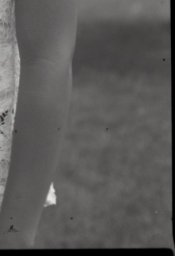
This is annoying. I have a backlog of Acros 100 (120) that I've been developing (six to nine months since exposure). Every roll I develop has at least a few frames with, what looks like, emulsion that has flaked off. These show up as clear, irregular spots on the negative. Usually where there's one there are others. Since this started happening, every variable has changed (for one reason or another) including:
- tank and reels (Paterson to stainless)
- developer (HC-110, various dilutions, to XTOL 1+1)
- stop (acetic acid to plain water)
- rinse (Paterson tank with hose to Ilford rinse method)
- wetting agent (Photoflo to Edwal LFN)
- camera (two different Yashica Mat 124G's)
- film (all Acros but different lots and expiration dates)

What hasn't changed is the storage conditions of the exposed film (Ziploc bag in cool dry area) and the fixer (Ilford Rapid Fixer 1+9, 3 to 5 minutes). Everything is mixed with distilled water and processed at room temperature (68F). The camera rollers and backing paper seem to come up as culprits. All I can say is the rollers are clean, and there's nothing telling on the corresponding spots of the backing paper. Nor am I rough with the film when I load it -- usually I just let the backing paper fall away from the film.

Assuming this is happening during the development process, what else can I do to try to avoid it? Prewet? Lower temperature processing? Is there some better way to separate the film from the backing paper? Of course, it's futile if the damage is already done. For example, I considered that dust or debris could be on the film at the time of exposure, but like I said, I've changed cameras. Also, the problem seems to be more apparent the longer the film has sat (working on that).

Thoughts? Thank you.
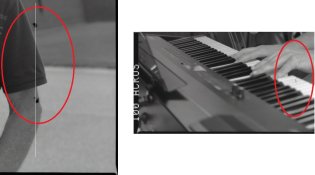
acros marks2.jpg acros marks3.jpg
 
I've seen this before in a recent post. It does look like flaking emulsion - or severe scratching from handling.

PE
 
Hmmmm. This has been one of the most predictable and reliable roll films I've ever used, which I employ both in roll film backs and my P67's.
But I always use alkaline TF4 fixer and very weak stop bath. I also shoot it in sheet film, and even 8x10 sheets fifteen years old are exposing and developing perfectly. So it's a pretty stable product. But sometimes roll films that have been frozen a long time get a stubborn curl.
 
What were the conditions like when you exposed the film?

It occurs to me that if the humidity was high, for instance, than the process of unrolling and re-rolling the film that happens in the camera may have trapped moisture between the film and backing paper, which then sat there, trapped, for the six to nine months you say elapsed before development.

It seems to me that the delay between exposure and development is the biggest "unusual" factor in what you describe.

Who knows, maybe it is essentially the same backing paper as appeared recently with Kodak T-Max 400.
 
No adverse conditions that I know of, Matt.

I'm now investigating reticulation, as I've found some anecdotal evidence, just today, that suggest Acros is susceptible to it.
 
The Acros examples I've seen before usually had clear reticulation as well as the flaking, and some just reticulation, but all were developed in Rodinal which contains free Hydroxide which softens some emulsions far more than others..

It's almost certainly happening for similar reasons though variations in temperature control. I had similar issues once or twice when I first used EFKE films in the mid 1970's (they improved the hardening slightly in the 1990's), in the end if I was using a one shot developer I added a hardener, or if using a replenished developer used an chrome alum hardening stop bath.

However since the EFKE films were improved I process normally and for about 20 years with Rodinal and have never had an issue. Likewise with Acros which I now process in Pyrocat HD, water rinse, and Hypam/Ilford Rapid fixer.

With softer emulsion films it's critical to keep all steps of the process including washing to within +/- 1ºC through-out the complete cycle, it's not actually difficult. Fuji's process control is very high so it's not defective film, you need to look at tightening up your process control.

Ian
 
manufacture defect?
 
I don' think it's defective. And if, as PE said, I was quick to call this reticulation, I still think it's related to the emulsion flaking while the emulsion softens during development.

To Ian's point, I try to keep everything at room temperature (68F) but stops and rinses, which I prepare from the tap, could fluctuate up or down (usually up) by three to five degrees. I always thought that was "close enough," but in this case, maybe not. Also, my rinses -- fill, agitate, dump - can be fairly vigorous. Not violent, but not gentle either. Don't know if that plays a part.
 
It looks more like scratches, abrasion or emulsion flaking away. That could be either a defect or rough handling.

In today's modern making processes, it would be strange to see a soft film from Fuji. They have patents for some very strong hardeners.

PE
 
The only time I have seen this is at the extreme edge where emulsion has flaked off. I'm wondering if it is then because of rough handling...
 
It might be frilling or skiving or any number of defects due to support, subbing, coating, handling, processing and etc.

PE
 
The quality control of ACROS seems superb. I've used plenty of it in 120 size, as well as other formats, and it's not fussy about development and
fixing at all.
 
The quality control of ACROS seems superb. I've used plenty of it in 120 size, as well as other formats, and it's not fussy about development and
fixing at all.
That's great to hear, but it's not my experience and others are reporting similar problems to mine. I'm not suggesting Acros is defective or inferior, just different. It's the only film I have this problem with, and I'm not rough handling it at any point. Right now I'm exploring that carelessness in tempering my baths may be the culprit. I've been developing at 68F with the other baths ranging from 68F to 73F.
 
No prebath
Temper to less than 1C between any bath to final rinse in photoflo
Water stop only

If that does not work try a hardening stop bath.
 
Hmmm. Not every emulsion likes high temps. I'd consider 75F to be getting around the red line.
 
Kodak emulsions will withstand temps to 120F, and I suspect that Ilford films will as well. It is very hard to cause reticulation with either Kodak or Ilford products. Apparently this is not so with Fuji products.

When we first started using the new hardeners, I was one of a team looking at high temp processing. We used a "little dipper' processor and ran color paper at 120F with no problem. The project and processor were both cancelled though.

PE
 
When I'm in Turkey I regularly process all my films at 27ºC (80,6º F) with no problems with Ilford, Foma & Kodak films or Fuji Acros. I do however keep the process temperatures very close to within +/- 1ºC, often the variation is more like +/- 0.2ºC. The emulsion on the Foma and Acros films is certainly softer than the Ilford and Kodak films but again that's not an issue as long as you handle with care when you remove from the tank after washing and putting to dry.

There's no difference in quality prints or scans from the negatives processed at 27ºC in Turkey or the same films at 20ºC here in the UK. I'm sure temperature control is the issue.

Ian
 
I recently developed a roll and I have a similar issue. I did not change my modus operandi and from the 4 films I developed with the same D76 batch, only the Acros got trouble...
 
I recently developed a roll and I have a similar issue. I did not change my modus operandi and from the 4 films I developed with the same D76 batch, only the Acros got trouble...

I never did solve this problem. I added a chrome alum pre-bath, switched to a hardening fixer, and maintained my temperatures to within one degree (68F). It's not everywhere, but it seems to consistently show up on a frame or two of every other roll I develop. I've had it happen with XTOL and HC-110, stainless and plastic tanks. The only thing I haven't changed is the camera -- I use a Yashica Mat 124G -- though I did experience it more than once with two different models.

After these last few rolls, I think I'm done with Acros.

ETA: Uploading a recent example.
0363-02 (flaking).jpg
 
Last edited:
The defect clearly comes from the film as I never got a similar issue issue with another film and my development process is pretty standard (D76 + rince + Ilford fixer + washing). Also developer, rince and fixer were done at 20-21 deg C. Only the final wash was 23 deg C. I don't why a +3 deg difference would give such bad result... Like you, goodbye Acros.
 
Photrio.com contains affiliate links to products. We may receive a commission for purchases made through these links.
To read our full affiliate disclosure statement please click Here.

PHOTRIO PARTNERS EQUALLY FUNDING OUR COMMUNITY:


Ilford ADOX Freestyle Photographic Stearman Press Weldon Color Lab Blue Moon Camera & Machine
Top Bottom