• Welcome to Photrio!
    Registration is fast and free. Join today to unlock search, see fewer ads, and access all forum features.
    Click here to sign up

fixer

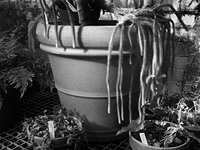
Ferns

H
Ferns

  • 0
  • 0
  • 11
between takes

H
between takes

  • Tel
  • Mar 21, 2026
  • 2
  • 0
  • 34

Recent Classifieds

Forum statistics

Threads
202,864
Messages
2,846,753
Members
101,577
Latest member
tograp
Recent bookmarks
0

CMoore

Member
Joined
Aug 23, 2015
Messages
6,347
Location
USA CA
Format
35mm
I did a search, but I am not sure what i found.
Is the general consensus that it is cheaper to buy concentrate than to make your own.?
Seems like the quality of home brews was also called into question.?
I bought 5 liters of Ilford Rapid Fix for 30 bux.
Thank You
 
Last edited:
I'd just use your 5litres of rapid and forget worrying about whether you've bought the "right" thing.

(It's the right thing)

go out and take photographs
 
I have never heard of anyone making their own fixer. But fixer is not that expensive considering you can reuse it multiple times. Plus, most fixer is the same anyways.
 
Most fixers are NOT the same! :wink:
Well I should revise my point then. There are 2 main types of fixers. Rapid fixers and fixers with hardeners. Rapid fixers work faster and fixers with hardeners help the film from not getting scratched. Honestly, if you use one or the other, your image will still come out exactly the same on either one.
 
Sorry...looks like i have asked a "beginner question"...one that has started arguments in the past.
Was just kind of curious.
Will take your guys advice and stick with the Ilford. I will actually have a real darkroom in a few more months, and will not need to keep dumping my brand-new Stop and Fix down the drain.
Thanks Again.
 
Just a little word of advice. Don't get too hung up about tiny details. Just pick a developer and fixer and run with it. Black and white developing is very forgiving and it is very hard to screw it up the first time. Just make sure your temperature is correct and your chems are at the right dilution and you should be good.
 
I have never heard of anyone making their own fixer. But fixer is not that expensive considering you can reuse it multiple times. Plus, most fixer is the same anyways.
I make my own fixer and use it only once for consistency of process.
 
Well I should revise my point then. There are 2 main types of fixers. Rapid fixers and fixers with hardeners. Rapid fixers work faster and fixers with hardeners help the film from not getting scratched. Honestly, if you use one or the other, your image will still come out exactly the same on either one.

Fixers come as alkaline, near neutral and acid as well as hardening and non-hardening. Thus, you might say there are 6 types if you allow combinations of all sorts!

All will work and do a good job but some are gentler on film and paper, some need less wash water, and some can actually harm fine grain images. You will learn this with time as you learn photography.

Simply put, any fixer can be used as long as you follow the manufacturers instructions. You may have to adjust wash times for local water, but use of a fixer and hypo test kit set can be a big aid.

PE
 
As long as the topic of washing has been brought up.....does it "hurt" the film to leave it soaking in water, in the tank reels.?
What i have been doing, is making about 8-9-10 washes, but sometimes i do other things, and the film might sit in the water for 5-10-20 minutes before i change it.
For the last wash, i have been using distilled water with just a drop or two of Foto-Flo.
The first (9) washes are all tap water.
Thank You
 
People do make their own fixers but seldom rapid fixers based on ammonium thiosulfate. This is because ammonium thiosulfate is most often found as a 60% solution. You are going to pay to ship water whether you buy a commercial fixer or mix your own. So the savings in mixing your own is not that large and most people just do not bother.
 
Soaking film overly long (or paper as well) will cause undue swell and softening and may cause the film or paper to be softer and more prone to scratching. In extreme cases and with lower quality products, the emulsion can float right off the support.

I buy my Ammonium Hypo 60% in bulk from the Formulary and mix my own.

PE
 
Soaking film overly long (or paper as well) will cause undue swell and softening and may cause the film or paper to be softer and more prone to scratching. In extreme cases and with lower quality products, the emulsion can float right off the support.

I buy my Ammonium Hypo 60% in bulk from the Formulary and mix my own.

PE

Two points:

1) PE really knows what he is posting about. He has been instrumental in the development of some of the best, most recently developed fixers;
2) be careful if your plan is to duplicate what PE does, because PE knows what PE knows, and most likely you don't!

Your Ilford Rapid Fixer is great. Follow the instructions carefully, and it will be very well suited to most commonly available films and paper.

If you transition to something like TF-5, and follow the directions carefully, than you will be using a fixer that PE co-developed, and you will be following directions he may have written, and he certainly approved.

And by the way, there is nothing that makes it necessary to include hardener with non-rapid fixers. They use sodium thiosulfate (formerly sodium hyposulfate) and only tend to include hardener in commercially packaged mixtures because, historically, they included hardener, and haven't been changed.

 
Kodak powder fixer is with hardener. It is not good for my prints on old FB paper. Not good at all. But works fine on film and RC paper.
I searched for DIY fixer formula on APUG. All ingredients are available locally, it is cheap, but I'd rather buy Ilford concentrate in 5L to use for printing and use one gallon package of Kodak powder for film.
Once none of it available locally, I'll switch to DIY (not expensive), but it is huge bags to store in the basement and mix every time I'll need it :smile:
 
Soaking film overly long
PE
I guess that raises another question.
What time would be "overly long".?
Before these days of drought, i thought people would often leave their film in running water for 20-30 minutes.?
Thanks
 
I have never heard of anyone making their own fixer.

Depends on what you want to do. If you are just going for fixing "conventional" film or prints, mixing the fixer yourself mostly will not add any value. If you are going for something particular, e.g. short fixing times or other particular process parameters or fixing after toning, commercial products don´t do the trick.

If you are just getting started, Ilford Rapid is a great fixer to begin with. If you ever need something different, you will find out when you get there ...
 
I guess that raises another question.
What time would be "overly long".?
Before these days of drought, i thought people would often leave their film in running water for 20-30 minutes.?
Thanks

One hour at 68F (20C) is overly long for a soak and the limit for a real wash.
 
Sorry...looks like i have asked a "beginner question"...one that has started arguments in the past.
Was just kind of curious.
Will take your guys advice and stick with the Ilford. I will actually have a real darkroom in a few more months, and will not need to keep dumping my brand-new Stop and Fix down the drain.
Thanks Again.
Even with no darkroom, there's no reason to dump your fix*. Just use a funnel and return your working solution to the bottle. Keep track of how many square centimeters/inches you've fixed or pay attention to the color so you know when it's close to exhaustion. Or use Hypo-check.

Avoid contaminating fix with developer and you will significantly extend its working life.

BTW, the historical reason for hardening fix was due to old-timey softer emulsions. Most film manufactured today doesn't need to be hardened, so hardening fixes are a mostly unnecessary historical anomaly.

*In fact, it might be illegal where you are, and it's certainly not a good idea — fix contains silver, a (toxic) heavy metal, and should never be put into the municipal water supply. Take your exhausted fix to your city's toxic waste disposal event, if they have one, or to a lab that can recover the silver.
 
Photrio.com contains affiliate links to products. We may receive a commission for purchases made through these links.
To read our full affiliate disclosure statement please click Here.

PHOTRIO PARTNERS EQUALLY FUNDING OUR COMMUNITY:


Ilford ADOX Freestyle Photographic Stearman Press Weldon Color Lab Blue Moon Camera & Machine
Top Bottom