• Welcome to Photrio!
    Registration is fast and free. Join today to unlock search, see fewer ads, and access all forum features.
    Click here to sign up

First Large Format (Ignorance and Expense)

Two Rocks

H
Two Rocks

  • 1
  • 2
  • 18
.

A
.

  • 2
  • 2
  • 16

Recent Classifieds

Forum statistics

Threads
203,583
Messages
2,856,771
Members
101,913
Latest member
General
Recent bookmarks
0
You can simplify and not employ the ENTIRE concept of the Zone System, and yet a Spotmeter will indeed be very handy
  1. Pick a point in the scene that YOU wish to appear as 'mid-tone' in the final print
  2. Point your spotmeter at that point, and the suggested exposure will tell you to make THAT point middle tone (think '18% gray')
  3. Process your film normally, without changing chemistry temp or time from standard suggested 68 degree developer time
The above steps simply use the Exposure part of the Zone concept as elaborated by Adams, and make use of the fact that all meters (not the 'evaluative' modes found in camera meters, which bias areas within its view and decides which areas play as 'more important' or 'less important') suggest an exposure resulting in 'mid-tone- gray, regardless of how light or dark the important object in the scene it is aimed at!

A spotmeter plays a more significant role in the Zone System when you need to read the brightest area vs. the darkest area, to determine the brightness range of a scene, and if that range is too wide to ordinarily fit within what film can capture, you can then adjust exposure AND adjust the developing to compress/expand the brightness of the scene to better fit into what can be captured by the film being used. But you do NOT need to use the entire Zone System concept simply to employ principles of exposure in which you decide at assess the scene more methodically (without adjusting processing later)
For example, in shooting product shots in the studio, I would use the spotmeter to assess the brightest and darkest areas of the scene in which I wanted to retail visible detail, and adjust my lighting so that the two would fall within the (compressed) range of tones that could be printed in a brochure by an offset press...and I was shooting color transparency, (not B&W film) and I was sending the shots to a pro lab for standard processing.​
 
Last edited:
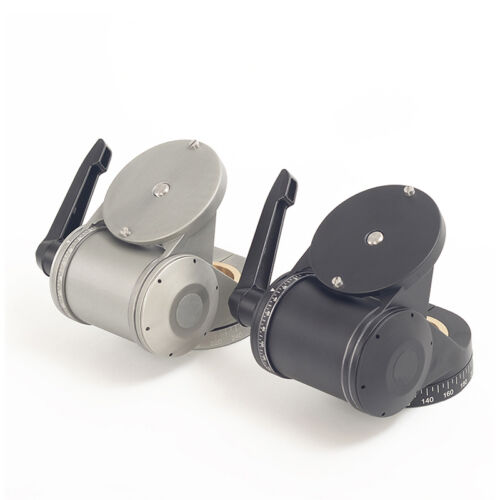
I've heard good things about Gitzo. It looks really sturdy. The sinar head looks nice, been wanting a pan and tilt. My ball head on my STX is completely falling apart, and I like the precision of a pan and tilt. Could you get me the name of the head you use?
I completely get being old school, I'm sort of the same way. The majority of my backpacks still have metal frames. The majority of modern technology loves to fail me.

I think I'm going to get someone local to develop my film for now, maybe develop each negative individually in trays? I'm probably not going to be shooting this a super crazy ton, at least not at first, I'd be lucky to be pushing a clip a week with this. My main usage for this is going to be landscaping, and we don't have a ton of good landscape shots in my little spot in Mississippi. Trying to travel to more scenic locations to satisfy my own wanderlust and get more pictures, though. Maybe it'd be worth it to start developing my own then, but I may start shooting and decide that I don't want to send in film or wait to have it returned to me.

I send my BW film out by mail from NJ. It takes about a week to ten days for the whole return trip. I'm using one of two places that both use dip and dunk and will push and pull if desired.

North Coast Photo in Carlsbad CA- They use Clayton F76+ developer which is similar to D76 Kodak. They also do color negatives and chromes.
LTI Lightside in NYC. They use XTOL developer. They'll also do color negative but not chromes.

Good luck,
 
I'd get a small tape measure for bellows calculations, a notebook (and a small calculator if you don't use your phone).
 
Bellows calculations? Now this is new, haven't heard anything about that yet.

the further the lens is from the infinity position, the dimmer it gets, so you have to add exposure (since the light coming out of the lens is a cone, it spreads out filling a larger and larger area with the same amount of light.) Cameras with internal meters don't need to worry becuase they see the light at (or near) the film plane. If your reproduction ratio is 1:1 you need two more stops of light, but the larger the film size, the closer you get to 1:1 even for regular shots (on 35mm, a quarter fills the frame at 1:1, on 8x10 a human face fills the frame at 1:1.)

There are bellows factor apps, or formulas you can find online. If you're doing landscape type shots, its less necessary, but the closer you expect to get to your subject, the more likely it will come into play.
 
When you use a lightmeter to get an apropriate exposure time, that time is strictly speaking only true for focusing the lens at infinity.

As soon as you focus any closer the distance between lens and film plane increases. That means fewer of the photons will hit the film (picture a cone of light coming out the back of the lens). So you have to increase the exposure time, that's bellows compensation.

For most landcape photography you don't have to worry about it. For portraiture and close ups it makes a difference.

Another recommendation would be a good book about LF photography. View Camera Technique by Leslie Stroebel comes to mind.
 
So the real version is just called the Sinar pan tilt head. They’re only available used, and can easily sell for $200-300 in good condition. The Chinese clone is $300 new, and can be bought on eBay:


It doesn’t work well for other cameras because it is only a 2 way—pan and tilt. You get the third axis (leveling the horizon) by rotating the rail inside the rail clamp.

Personally I don’t recommend ball heads on view cameras. Some like them, but I hate them because the camera is large and unwieldy.

A ball head and a Sinar F2 is a recipe for disaster. The camera sits sufficiently tall above the ball that it becomes a momentum arm whenever you loosen the tension on the ball and will happily whip downward, if you're lucky only giving whatever body part of yours is in the way a nasty pinch - if you're unlucky, and the lens board is insufficiently secure, it will violently launch your lens at the ground. Or if the entire camera is insufficiently secure to the tripod head, launch the lens AND the camera violently at the ground.

Get one of those Sinar heads, or a good Gitzo 3-way pan/tilt head.
 
Bellows calculations? Now this is new,

For most landcape photography you don't have to worry about it.

Exactly. You normally wouldn't get even 1/3 stop correction for a focus distance further than about twenty feet -- you're okay on negative films down to six feet or so (few medium format or 35 mm cameras even think about it -- the RB67 has a scale for each lens, but you have to be focused pretty close for the scale to get to even half a stop, and that's mainly a studio camera by design).
 
Thinking back to the question of dark cloths - if you or your significant other (assuming you have one) own a sewing machine, then you just need to order a yard of black canvas and an equal size piece of white canvas, and sew them together. Voila, you have a breathable dark cloth that is sufficiently large enough to protect your viewing screen even if later you go up in size to an 8x10.
 
...the closer you get to 1:1 even for regular shots (on 35mm, a quarter fills the frame at 1:1, on 8x10 a human face fills the frame at 1:1...

There are bellows factor apps, or formulas you can find online. If you're doing landscape type shots, its less necessary, but the closer you expect to get to your subject, the more likely it will come into play.

I'd wondered about that, obviously an 8x10 sheet is bigger than a 35mm sheet, so shouldn't an 8x10 contain MORE image? I'm not a physicist as you can clearly tell, aside from being dropped several times on the head as a toddler.
I am going to make an attempt at some portraiture here, so I'll have to check out that book, thanks.
 
Bellows calculations? Now this is new, haven't heard anything about that yet.

To close focus you need lots of bellows draw....so less light reaches the film. That's what you need to compensate for.....& there are measurements and calculations for that.
 
obviously an 8x10 sheet is bigger than a 35mm sheet, so shouldn't an 8x10 contain MORE image?

That's not what gives you bellows factor. The f stop aperture takes focal length into account, so a 300 mm at f/8 gives the same image brightness as a 30 mm at f/8 (albeit it will cover a much larger negative at that brightness, because the physical aperture is ten times the diameter = 100 times the area).

What gives bellows factor is that as you focus closer (requiring drawing the bellows out further by moving the lens away from the film) the effective focal length changes. If you're shooting at 1:1, you've doubled the focal length, but your f/8 on the scale is still the same physical aperture size -- and f stop is effective aperture over effective focal length, so your f/8 becomes f/16 if you don't change the setting.

The same lens, set the same way, is two stops slower at 1:1 than at infinity.
 
That's not what gives you bellows factor. The f stop aperture takes focal length into account, so a 300 mm at f/8 gives the same image brightness as a 30 mm at f/8 (albeit it will cover a much larger negative at that brightness, because the physical aperture is ten times the diameter = 100 times the area).

What gives bellows factor is that as you focus closer (requiring drawing the bellows out further by moving the lens away from the film) the effective focal length changes. If you're shooting at 1:1, you've doubled the focal length, but your f/8 on the scale is still the same physical aperture size -- and f stop is effective aperture over effective focal length, so your f/8 becomes f/16 if you don't change the setting.

The same lens, set the same way, is two stops slower at 1:1 than at infinity.

I've never thought of it as "effective" focal length, but thats a really straightforward way of understanding it.

OP, Get a cheap vinyl sewing tape measure. Get a short one, or cut it down to about 2ft. Thats 600mm and a) you'll rarely need more on 4x5, and b) the standard bellows on a F2 won't even go that long.
 
I am going to make an attempt at some portraiture here, so I'll have to check out that book, thanks.

It's a very good book, but it's also quite in depht and technical (and out of print). Maybe others can recommend a more accessible book if you'd prefer that.
 
I've never thought of it as "effective" focal length, but thats a really straightforward way of understanding it.

OP, Get a cheap vinyl sewing tape measure. Get a short one, or cut it down to about 2ft. Thats 600mm and a) you'll rarely need more on 4x5, and b) the standard bellows on a F2 won't even go that long.

Already got one, do a tiny bit of sewing on occasion.
 
Also, just out of curiosity, why do people so often consider film to be "grainy"?? Film carries more detail, and has lower ASA options than digital
 
the further the lens is from the infinity position, the dimmer it gets, so you have to add exposure (since the light coming out of the lens is a cone, it spreads out filling a larger and larger area with the same amount of light.) Cameras with internal meters don't need to worry becuase they see the light at (or near) the film plane. If your reproduction ratio is 1:1 you need two more stops of light, but the larger the film size, the closer you get to 1:1 even for regular shots (on 35mm, a quarter fills the frame at 1:1, on 8x10 a human face fills the frame at 1:1.)

There are bellows factor apps, or formulas you can find online. If you're doing landscape type shots, its less necessary, but the closer you expect to get to your subject, the more likely it will come into play.

I've never shot that close. How close do you have to be before that comes into effect?
 
I've never shot that close. How close do you have to be before that comes into effect?

If the camera to subject distance is more than ~8 times the focal length of the lens you are using, you need not worry about it. Some would say less than ~10 times the focal length.
 
I've never shot that close. How close do you have to be before that comes into effect?
If you are focused at infinity, you have no compensation. If your bellows are extended to 1.5x their length when focused at infinity, you have to add a stop. If they are 2x (1:1 ratio) then you add two stops. Depending on the camera you're using, a handy way to think of it is if you are doing a portrait on 4x5, a full-length portrait using a 210mm lens requires no effective compensation (exposure change is somewhere less than 1/4 stop). If you are doing a half-length portrait, you're adding 1/2 stop. If you're doing a tight head-and-shoulders, it's 1 stop. With 8x10, a tight head-and-shoulders is 1.5 stops, a half-length is 1 stop, full length is 1/2 stop or less. An 8x10 portrait, unless focused REALLY close, is still not 1:1 macro, but it's getting there. On 11x14 or bigger, a tight head shot is 1:1 macro. On my 14x17, a head and shoulders shot is 1:1.
 
Also, just out of curiosity, why do people so often consider film to be "grainy"?? Film carries more detail, and has lower ASA options than digital

Film has grain- that's an inherent quality of film. The faster the film, the more grain it has. Small format films like 35mm show their grain more readily than larger format films do because each grain of silver makes up a larger percentage of the total image area, relatively speaking. Once you get past 4x5, film grain is effectively a non-issue regardless of film speed.
 
I've never shot that close. How close do you have to be before that comes into effect?

the way I think about it is that it happens the moment you focus closer than infinity, but depending on the film you shoot the importance may or may not be enough to have a deleterious effect. As @TheFlyingCamera mentions, at 1.5x the infinity bellows the light drops a stop. If you're shooting E6 that might be a real issue. Color negative might not notice, B&W negative will still probably still give you a usable negative as well. But don't factor in other variables, like--how accurate is your shutter? if its set for 1/500 the answer is probably not accurate at all.

When I first started playing with 8x10, a lot of my shots were underexposed, because for the same shot, the reproduction ratio is larger compared to smaller film, so you hit it quicker. For me, for 4x5 I rarely need to care, except when I'm shooting slide film, and then, only when the subject is reletively close.
 
I had a Manfrotto 410 head that was excellent. Sold it a few years back and havent found anything I've like better. As for tripod, I prefer heavier options, I used a knock off version of a Manfrotta 475. Very heavy, but about as rigid as they come.
 
If the camera to subject distance is more than ~8 times the focal length of the lens you are using, you need not worry about it. Some would say less than ~10 times the focal length.

So, using a 4x5, I'm shooting a 150mm lens, 8x is 1200mm or 47", let's say closer than 4 feet. If I'm shooting a 75mm, 600mm or closer than 2 feet. A 210mm would be 1680mm or closer than 5 1/2 feet. a 300mm would be 2400mm or closer than 8 feet.

So how do you keep track when using these many lenses?
 
Photrio.com contains affiliate links to products. We may receive a commission for purchases made through these links.
To read our full affiliate disclosure statement please click Here.

PHOTRIO PARTNERS EQUALLY FUNDING OUR COMMUNITY:


Ilford ADOX Freestyle Photographic Stearman Press Weldon Color Lab Blue Moon Camera & Machine
Top Bottom