
• Welcome to Photrio!
    Registration is fast and free. Join today to unlock search, see fewer ads, and access all forum features.
    Click here to sign up

Filters

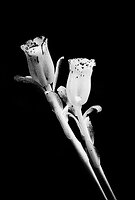
Indian ghost pipe plant.

H
Indian ghost pipe plant.

  • 0
  • 0
  • 12
2026-01-136.jpg

A
2026-01-136.jpg

  • 0
  • 0
  • 12

Recent Classifieds

Forum statistics

Threads
202,928
Messages
2,847,720
Members
101,542
Latest member
Obrian29
Recent bookmarks
0

thisispants

Member
Allowing Ads
Joined
Jan 23, 2009
Messages
65
Format
35mm
Hi...just a quick question....

Using coloured filters for B&W...and also say using a polarizer with colour film, do you need to take the UV filter off, or can you just use the polarizer/colour filter over the UV filter.

I cant think of why it would make any difference, but I really hve no idea.

Thanks.
 
I've never used a UV, but I would want to shoot through as few pieces of filtration as actually needed. If you leave it on, you must multiply the factors of the two filters----I'm not sure a UV has a factor but if it does, you have to multiply them for the total factor to be applied to the exposure.
 
Less glass outside that designed into the lens, and fewer air-to-glass surfaces is usually considered better. Every air-to-glass surface causes some light loss and more reflections. You might not notice the difference, but in theory at least fewer is better.

You'll obviously need to stack to get combined effects from something like a yellow or orange filter plus a polarizer, but a UV filter won't typically have much affect on the result, so for optimal image quality, it should be left off when using other filters.

You could simply test and see if you find that the extra filter is problematic for you in some way, then decide what's the best balance of convenience and quality of results for you.

Lee
 
Take out the UV filter, If it was a coloured + CPL it may be OK. But the UV just protects.
If you got a long focal length and conditions where flare may not appear, you could leave both filters, but better not.
 
UV rays increase with altitude so it also depends where you plan to shoot. If you shoot in the mountains above 1000 meters UV has impact on film and the UV filter is recommended. For normal conditions shooting follow above advice and use the UV filter only to protect your lens.
 
Don't forget that the more filters you have attached to the lens increases the possibility of vignetting, especially with wide-angle lenses.

Mike
 
UV filter is really no more than an upsell with a new lens. All the purpose it really serves, IMHO, is to protcect the front element of a lens attached to a camera attached to a careless photographer. Of course, anything can happen to anybody. But I have not mounted a UV filter in over 15 years.
 
Don't forget that the more filters you have attached to the lens increases the possibility of vignetting, especially with wide-angle lenses.

Mike


Exactly what I was going to add! :tongue:

Additionally, image quality can suffer by 'piggy-backing' filters. I've seen some pros attach 4 filters — those dreadful COKIN things. Buy the best you can afford in terms of quality, work within the angle of your lens (to avoid the vignetting) and double up judiciously. Leave UV or SKYLIGHT filter on lens all the time, but (ideally) remove it when fitting a POL (incidentally, remember a polariser will cool the scene slightly).
 
Last edited by a moderator:
Leave UV or SKYLIGHT filter on lens all the time, but (ideally) remove it when fitting a POL [...]
Remove the UV everytime you put any other filter on.
It serves no purpose at all when using other filters. But it will add to the flare.
 
hi, i just want to ask, if red colored filter is better when shooting in black and white film.. and at night.. i need more contrast in my street shots.. all i have is a UV filter..

there are some people that recommends yellow filter and some are red.. im confused.. even googling it, and reading a few stuff over the net confuses me.. anyone used one for black and white shots? i just want to enhance my images more and give it more than just black and white pictures...

thanks..
 
hi, i just want to ask, if red colored filter is better when shooting in black and white film.. and at night.. i need more contrast in my street shots.. all i have is a UV filter..

there are some people that recommends yellow filter and some are red.. im confused.. even googling it, and reading a few stuff over the net confuses me.. anyone used one for black and white shots? i just want to enhance my images more and give it more than just black and white pictures...

thanks..

If you want a natural contrast, that's the use of the yellow filter. It just darkens a bit the sky.
The red filter is just for give a strong contrast, and if you have a combination of Polarizer+red the sky will be almost black.
For low light shots, I'd not recommend the red filter. It just eats 2 stops.
I believe it's hard to increase contrast in night photography, because the low light situations are always low contrast. Less light, lower contrast.
 
i have a UV filter on all my lenses, principally for protection. if you shoot on the street, you're gonna bash your gear around no matter how careful you are. and i use a yellow filter on all my b/w shoots, these days. i use xp2 almost exclusively and a y2 filter seems to add just the right amount of 'oomph'

IMO red filters aren't very useful for street photography, you lose too much speed. and if you're shooting at night most probably do away with filters completely.

one more thing, you can tweak things a bit if you do your own printing and processing.

good luck,

wayne
 
The way I was taught about filtration, the most used color filters for black and white film, i.e. yellow, orange, and red, will cut UV light - one standard yellow filter, in fact, used to be referred to as a "minus blue" and this should block UV. I would assume that most better (coated) polarizing filters also filter out UV, but that may depend on the individual manufacturer. What you want to look for is the manufacturer's filter transmission chart, which shows the wavelengths of light that the filter passes, and how much transmission of each color (from 0% to 100%). No UV filter should have any appreciable effect on exposure speed. I don't use them for protection but sometimes on the water or at higher elevations they actually do help cut the blue in color pictures a little, especially the 1a skylight type. Generally I don't stack filters unless I need both polarization and a particular contrast or warming filter. This is why some companies make "warm polar" and "warm soft" filters - they are combining the effects of two different filters in one so you don't have to stack them (and to sell more filters, of course).
 
Photrio.com contains affiliate links to products. We may receive a commission for purchases made through these links.
To read our full affiliate disclosure statement please click Here.

PHOTRIO PARTNERS EQUALLY FUNDING OUR COMMUNITY:


Ilford ADOX Freestyle Photographic Stearman Press Weldon Color Lab Blue Moon Camera & Machine
Top Bottom
