
• Welcome to Photrio!
    Registration is fast and free. Join today to unlock search, see fewer ads, and access all forum features.
    Click here to sign up

Filter for forest fire smoke contrast improvement?

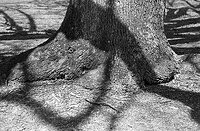
Tree with Big Shadows

Tree with Big Shadows

  • 2
  • 0
  • 38
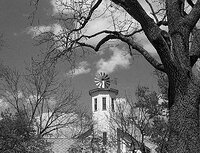
Everal Barn

A
Everal Barn

  • 0
  • 0
  • 38

Forum statistics

Threads
203,453
Messages
2,854,932
Members
101,850
Latest member
psimon
Recent bookmarks
0

NWT Ron

Member
Allowing Ads
Joined
Aug 20, 2015
Messages
100
Location
Yellowknife,
Format
Medium Format
I put this question to the Lee filter representative in Canada last week and haven't heard back since. Perhaps I wasn't taken seriously. Fire season is (fortunately) off to a late start here, but once it gets going air quality from smoke (and sometimes ash falling like snow) darkens the sun and reduces visibility. Unlike city haze forest fire smoke colours and dims sunlight and the sun takes on a bronze colour. Smoke reaching ground level reduces visibility and has a yellow tint in the air.

Any suggestions for filters that may improve contrast on B&W, and colour?

To get an idea of an extreme case, do a websearch for forest fire Yellowknife July 30 2014. At that time of year a clear sky is still too bright to see any but the brightest stars all night.
 
UV haze + yellow to light orange will likely help. I would also think about a polarizer + light yellow (K2).
 
I don't think a polarizer would do anything, except maybe darken the sky even further. But I do like the Yellow idea, which would darken the smoke the more smoky it was, relative to the sunny parts. Mostly I would underexpose and over-develop to bring the brighter part as high up the curve as possible.

Not sure what I would do for color other than try a punchy variety like Ektar and over-expose it a little to keep the darker smoke out of the mud?
 
Sure appreciate the comments. I was wondering about a polarizer, what if the smoke has mixed particle size? Too bad you mentioned the yellow filter, I'm missing that one for my Yashica 635. The sunlight that gets through the smoke layer has a strong yellow component, it will be interesting to shoot off a roll with various filters to see what works best. As there have been a number of large to very large fires over the years someone likely has some experience with filters under these conditions. Next step would be to find a yellow filter with the Yashica mount.
 
Polarizer filters take out specular reflection, which smoke does not have.
 
Polarizer filters take out specular reflection, which smoke does not have.
To be accurate, polarizers take out plane polarized light. Some of the light coming from the sky is polarized, so if you use a polarizing filter it will tend to darken a sky, while leaving clouds and smoke unaffected.
So a polarizer may serve to make the smoke more dramatic, which may be desirable.
 
Following you 100% A polarizer then would be a useful tool to highlight the smoke, it might be interesting to see if there is much polarization left in the sunlight forward scattered through a thick layer of smoke. I'll try to remember to check that, but so far we've had the quietest fire season we can remember since we arrived in Jan 2006. We can smell the smoke from the BC fires when the wind is right and twilight skies are noticeably yellow.
 
You can get a pretty good idea of what filters will do by simply looking at the scene through them. This is especially helpful with polarizers, but works with colored filters pretty well too. Just take your assortment with you and view the scene with them. When in doubt, take a couple of exposures with different filters. After a while, you'll know which filter does what.

Best,

Doremus
 
I just got back from the mountains south of a fire which actually didn't affect light color significantly due to wind change.

If you want to cut through I think you need infrared film with a visual cut IR filter.

Otherwise, I'd play with the color of light and "record" what I see (in other words, I would not fight it rather, I would enhance or record the odd light).
 
I understand that there is a very large fire in Yosemite Ntl Park. We were in Redlands, Ca in 1980-82 and remember the fires above San Bernardino and into Riverside.
Working with the predominant colour will produce some interesting photos, filtering it out I hope would improve the definition of objects on the verge of being totally obscured. Fortunately we continue to have exceptionally nice summer weather here, there are fires in the NWT and we can smell smoke when the wind is right. We'd be very happy to have a record low fire activity this year, its not likely to happen with the long dry spell and frequent lightning activity.
 
I found that for heavily overcast days in Washington DC in the winter or Rochester NY almost all the time that no filter could make the sky look good in a photograph.
 
I asked the same question two years ago. He entire Pacific Northwest and souther BC were covered in smoke. I tried yellow, red and polarizer filters. The Yellow filter worked best, especially since the sky had no details anyway so a RED filter did nothing.

We are back to that again, with thousands of fires all over California, Washington, BC and the Yukon.
 
Yellow it is, the yellow filter I ordered last week, along with a polarized filter, should be in the mail on its way. Still absolutely beautiful skies here, no rain, not much cloud, high temperatures in the low 70's F, a bit windy, and only occasional light smoke in the air. Remarkably, probably because its been dry, there have been fewer mosquitoes and no blackflies to mention (yet) in the city. Nice to get some advice from those who have been there and done that. If I experimented myself it would take a couple of weeks or more to get the processed colour film back, B&W I do myself. Thanks to all!
 
...
Otherwise, I'd play with the color of light and "record" what I see (in other words, I would not fight it rather, I would enhance or record the odd light)....

I know this doesn't answer the question asked, and APUG is sometimes annoying when people pipe in with the opposite of what is desired, but I'm with Bill. I'd even be tempted to try a blue filter and see if the smoke and aerial perspective could be enhanced. (there was a url link here which no longer exists).
 
Not having experience with forest forest fire smoke and photography I couldn't comment. But having a quite a bit of experience living in and under the smoke visually it seems to me that the blue end of the spectrum is the first to go. A modest layer of smoke dims the sunlight and the sun appears as a bright bronze spot through it (we had the entire summer of 2014 with that kind of smoke, except when it got worse). As I'm not (yet) into large format shooting expensive single frames I'll take shots and keep a notebook on the filters used. But so far our summer sky conditions are probably the envy of everyone else in North America.
 
I asked the same question two years ago. He entire Pacific Northwest and souther BC were covered in smoke. I tried yellow, red and polarizer filters. The Yellow filter worked best, especially since the sky had no details anyway so a RED filter did nothing.

We are back to that again, with thousands of fires all over California, Washington, BC and the Yukon.
I would say your experience-based answer is the best!
 
..... in and under the smoke visually it seems to me that the blue end of the spectrum is the first to go.....
You might be right, and I see what you mean, it's true the light seems to get more orange and red under smoke. Blue filters can enhance haze and particles that reflect UV, so I was thinking it might enhance smoke too. I didn't mean to imply that I'd tried it ( that photo I linked did not use any filter at all ). :smile:
 
Part of the fun of this art is to experiment. I am definitely not the last world. I had a lot of fun exposing the same scene with multiple filters to say I like yellow better.
 
Though I don't know about modern films with extended red and IR sensitivity, the old Kodak HIE (High Speed Infrared) would cut through smoke if the visible light was filtered out. You might try one of the current films with deep red sensitivity and a very strong, deep red cut off filter.
 
Smoke is usually grey and I don't think any filter would help much. But if you want more contrast you may consider slight under exposure and over development of the film.
 
Smoke usually is grey, but smoke from nearby forest fires that we've experienced has a dark orange tint. That may have more to do with the sunlight filtering through it rather than the colour of the particles. On the other hand a layer of smoke in an otherwise clear sky stands out from any clouds by its brownish tinge.
IR film would be interesting, haven't had any experience with it. Not sure how to focus for IR, or meter for the exposure, and I don't know whether the optics would attenuate it. Worth looking into but unlikely that I'll try it this summer.
This has been an interesting place to live when it comes to sky clarity, normally we'd have crystal clear skies, in summer we may have smoke from fires thousands of kilometres away or tens of kilometres down the road, we've even had high altitude smoke from the Mt. Redoubt volcano in Alaska. In winter ice crystals do very interesting things, in particular the vertical pillars of light at night over any bright light source, as its caused by light reflecting off of suspended ice crystals it probably could be attenuated with a polarized filter, if you wanted to.
 
Photrio.com contains affiliate links to products. We may receive a commission for purchases made through these links.
To read our full affiliate disclosure statement please click Here.

PHOTRIO PARTNERS EQUALLY FUNDING OUR COMMUNITY:


Ilford ADOX Freestyle Photographic Stearman Press Weldon Color Lab Blue Moon Camera & Machine
Top Bottom
