• Welcome to Photrio!
    Registration is fast and free. Join today to unlock search, see fewer ads, and access all forum features.
    Click here to sign up

Film testing

102391040027-2.jpg

A
102391040027-2.jpg

  • 4
  • 4
  • 56
Just a Sparrow

D
Just a Sparrow

  • 1
  • 0
  • 39

Recent Classifieds

Forum statistics

Threads
201,776
Messages
2,829,949
Members
100,941
Latest member
McKay
Recent bookmarks
0

Roger Hicks

Member
Allowing Ads
Joined
May 17, 2006
Messages
4,895
Location
Northern Aqu
Format
35mm RF
I'm not sure that DBI would be practical with today's 35mm or roll film. What safe light is useable? These films are pretty small to assess under dim light and high speed film may be ruled out altogether.
So, as has been said already, it seems a matter of "horses for courses".

Regards
John
Dear John,

Many, I believe, use night vision goggles with an IR source. Nit much use with IR films but OK (I am told) with most other things.

On the other hand, it does require a lot of experience and practice. When I tried it with Ilford Ortho Plus (where of course you can use a deep red safelight) I found it difficult.

Given that Tim wants to use 5x7, though, this might be a VERY worthwhile route for him to investigate, with Ortho Plus...

Cheers,

R.
 

Jean Noire

Member
Allowing Ads
Joined
Oct 1, 2006
Messages
587
Format
Multi Format
Dear John,

Many, I believe, use night vision goggles with an IR source. Nit much use with IR films but OK (I am told) with most other things.

On the other hand, it does require a lot of experience and practice. When I tried it with Ilford Ortho Plus (where of course you can use a deep red safelight) I found it difficult.

Given that Tim wants to use 5x7, though, this might be a VERY worthwhile route for him to investigate, with Ortho Plus...

Cheers,

R.
Thanks Roger.
"Night vision gogles" ,"IR source" eh? I'm technophobic! Times seem to be passing me by.
Didn't know that Ortho films were still available but now I do. I agree though that worth trying for large format.

Regards
John
 

Paul Howell

Subscriber
Allowing Ads
Joined
Dec 23, 2004
Messages
10,095
Location
Scottsdale Az
Format
Multi Format
As I thought about the BTZS as being math heavy, which turns some people off, it occured to me that if someone knows the basics, has the Viewfinder Store do the testing for paper and film, and uses the Plam Piolt Program and know how to meter and input the correct numbers the math behind the program is far less important. The program should provide the exposure and development tiimes.
 

jstraw

Member
Allowing Ads
Joined
Aug 27, 2006
Messages
2,699
Location
Topeka, Kans
Format
Multi Format
The things I have taken from this thread are:

1) in order for any system to work for a photographer (including me) the photographer must understand it well, and be familiar with its inherent assumptions and peculiarities;
2) different systems will better suit some temperaments and approaches;
3) a method and a consistent approach, well understood and well suited to the strengths of the particular photographer, will help the photographer realize the most from his/her creativity; and
4) if your system of choice isn't working for you, make sure first that you are understanding it properly, and applying it properly, and if so, and it's still not working for you, consider trying something new.

You're pretty wise, yourself...it would seem, Matt. Most excellent.
 

Roger Hicks

Member
Allowing Ads
Joined
May 17, 2006
Messages
4,895
Location
Northern Aqu
Format
35mm RF
As I thought about the BTZS as being math heavy, which turns some people off, it occured to me that if someone knows the basics, has the Viewfinder Store do the testing for paper and film, and uses the Plam Piolt Program and know how to meter and input the correct numbers the math behind the program is far less important. The program should provide the exposure and development tiimes.

Do I understand correctly?

You have someone else test the film and developer for you?

Presumably you shoot the film, then send it, unprocessed, to them? With your developer and a gallon of your local water? Then the same with the prints? Along with your developer?

I'm not being funny. I'm just confused. How much of your own personal testing of materials can someone else do for you?

Cheers,

R.
 

David A. Goldfarb

Moderator
Moderator
Allowing Ads
Joined
Sep 7, 2002
Messages
20,020
Location
Honolulu, HI
Format
Large Format
Do I understand correctly?

You have someone else test the film and developer for you?

Presumably you shoot the film, then send it, unprocessed, to them? With your developer and a gallon of your local water? Then the same with the prints? Along with your developer?

I'm not being funny. I'm just confused. How much of your own personal testing of materials can someone else do for you?

Cheers,

R.

I haven't used this service, but as I understand it, you process the film and paper exposed with step tablets, and they read the step tablets with a densitometer and send you the results, which can be plugged into the BTZS software.

David
 

Jean Noire

Member
Allowing Ads
Joined
Oct 1, 2006
Messages
587
Format
Multi Format
I haven't used this service, but as I understand it, you process the film and paper exposed with step tablets, and they read the step tablets with a densitometer and send you the results, which can be plugged into the BTZS software.

David
Thanks for the info David.
Does anyone know if this service is available in the UK?

Regards
John
 

wm blunt

Member
Allowing Ads
Joined
Jul 13, 2003
Messages
171
Location
Missouri
Format
Large Format
Do I understand correctly?

You have someone else test the film and developer for you?

Presumably you shoot the film, then send it, unprocessed, to them? With your developer and a gallon of your local water? Then the same with the prints? Along with your developer?

I'm not being funny. I'm just confused. How much of your own personal testing of materials can someone else do for you?

Cheers,

R.
There is an old saying,"don't knock it if you haven't tried it". It works fine.
You tell them what film you want to use, they expose the film to a step wedge and send the film to you. IN your own lab you develope the films with your chosen developer. Complete processing as you would any film and then return film to them. They read and plot the information and return findings to you. Works great, no muss , no fuss:smile:
 

Roger Hicks

Member
Allowing Ads
Joined
May 17, 2006
Messages
4,895
Location
Northern Aqu
Format
35mm RF
I haven't used this service, but as I understand it, you process the film and paper exposed with step tablets, and they read the step tablets with a densitometer and send you the results, which can be plugged into the BTZS software.

David

Dear David,

Ah, thanks. Given the price of densitometers nowadays I'd have thought it could be a toss-up which cost more, buying a densitometer, or paying for this service.

Then again I once had a long correspondence wth someone whose densitometer readings were, to be kind, anomalous: he'd bought an X-Rite or something equally good from a lab that was closing down. Eventually I had him send me some film. It wasn't fully fixed... Talk about trying to run before you can walk!

Cheers,

R.
 

Paul Howell

Subscriber
Allowing Ads
Joined
Dec 23, 2004
Messages
10,095
Location
Scottsdale Az
Format
Multi Format
Do I understand correctly?

You have someone else test the film and developer for you?

Presumably you shoot the film, then send it, unprocessed, to them? With your developer and a gallon of your local water? Then the same with the prints? Along with your developer?

I'm not being funny. I'm just confused. How much of your own personal testing of materials can someone else do for you?

Cheers,

R.

From what I understand the View Finder store (local company) will test both film and paper, I dont know all of the details but it seems you send the paper and film you use, they expose it using a step wedge and return to you for development and then you send the paper or film back to View Finder Store who reads the negative or paper densities. I think BTZS testing tests materials outside the camera, I guess the assumstion is that your shutter and light meter are within tolerance.
 

Roger Hicks

Member
Allowing Ads
Joined
May 17, 2006
Messages
4,895
Location
Northern Aqu
Format
35mm RF
There is an old saying,"don't knock it if you haven't tried it". It works fine.
You tell them what film you want to use, they expose the film to a step wedge and send the film to you. IN your own lab you develope the films with your chosen developer. Complete processing as you would any film and then return film to them. They read and plot the information and return findings to you. Works great, no muss , no fuss:smile:

Well, as I say, I wasn't being funny, I was just confused. What you say makes sense -- but without the detail you have just given, I couldn't see how it worked.

Thanks also to Paul, who answered the same question.

Cheers,

R.
 

wm blunt

Member
Allowing Ads
Joined
Jul 13, 2003
Messages
171
Location
Missouri
Format
Large Format
From what I understand the View Finder store (local company) will test both film and paper, I dont know all of the details but it seems you send the paper and film you use, they expose it using a step wedge and return to you for development and then you send the paper or film back to View Finder Store who reads the negative or paper densities. I think BTZS testing tests materials outside the camera, I guess the assumstion is that your shutter and light meter are within tolerance.

It's actually The View Camera Store, one of our sponsors, that provides this service.
 

sanking

Member
Allowing Ads
Joined
Mar 26, 2003
Messages
5,437
Location
Greenville,
Format
Large Format
It's actually The View Camera Store, one of our sponsors, that provides this service.


Yes, it is the View Camera Store that provides this service.

I recommend the service as a one-shot initiation in to the world of BTZS, to show a person some of its potential, as it were. However, if you really hope make full use of the full power of the BTZS system you will have to put in the time and become familar with the assumptions and concepts that support the system, and investing in a densitometer (or adapting a spot meter) is recommended. If you don't care to seriously invest the time in the system in the long run you would be better off, IMO, just using the massive film develoment chart. In photograhy, as in other areas of life, a little knowledge is often more dangerous than total ignorance.


Sandy King
 

Bob F.

Member
Allowing Ads
Joined
Oct 4, 2004
Messages
3,977
Location
London
Format
Multi Format
Even if you do not go to the time and trouble to learn and implement a system like the BTZS, there are other ways to improve your hit-rate. Using one of the variations of the ZS or just zeroing in your EIs and development times using proper contact sheets, ala Barry Thornton and others, will pay large dividends.

It may not give as close a match as BTZS, but it is far better than just using some anonymous times taken from elsewhere.

Cheers, Bob.
 

wm blunt

Member
Allowing Ads
Joined
Jul 13, 2003
Messages
171
Location
Missouri
Format
Large Format
Yes, it is the View Camera Store that provides this service.

I recommend the service as a one-shot initiation in to the world of BTZS, to show a person some of its potential, as it were. However, if you really hope make full use of the full power of the BTZS system you will have to put in the time and become familar with the assumptions and concepts that support the system, and investing in a densitometer (or adapting a spot meter) is recommended. If you don't care to seriously invest the time in the system in the long run you would be better off, IMO, just using the massive film develoment chart. In photograhy, as in other areas of life, a little knowledge is often more dangerous than total ignorance.


Sandy King

I guess I lean more towards the ignorant than the dangerous:smile: , I've never really hurt anyone with my photography, yet. I use the BTZS much as I did the Zone system by using parts that fit my working methods and temperament.
If I used large negatives (larger than 4x5 or 4x10) I might get more involved with the system if only to save on materials like palladium salts but I seem to be doing ok, imho. I have found that if I use an incident meter and the little BTZS power dial along with your recommended starting times for pyrocat-hd I am getting negatives that fit my materials with just a bit of tweaking. Much easier to print negatives than when I was trying to use the zone system. Maybe if I was using silver materials it might be different but with palladium it seems to work fine for me, this might be where that ignorant part comes in :smile:
 

Allen Friday

Member
Allowing Ads
Joined
Mar 30, 2005
Messages
882
Format
ULarge Format
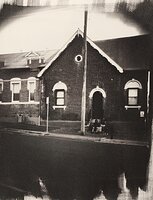
I can vouch for the result of Wm Blunt's work. I have three of his prints from his School House series hanging next to my desk. Terrific.
 

Allen Friday

Member
Allowing Ads
Joined
Mar 30, 2005
Messages
882
Format
ULarge Format
Both methods have their advantages and disadvantages,...

And this is very useful because there are definitely conditions that are better suited to one or the other of the two systems. For the most part, however, neither system is any more complicated or simple than the other, and regardless of which system one choses to use, the most important decisions we have to make are still creative decisions based on how we want our tonal values to look on the final print.


Sandy King

I think these words by Sandy King should be chiseled on granite and hung in the Photography Hall of Fame between the Ansel Adams Wing and the Phil Davis Wing, so that all who enter either wing must read them.

I used the ZS for years, and then experimented with BTZS. Today, I do all my testing with BTZS but still mainly use ZS for metering. Sometimes, however, I will use BTZS metering--especially when I am going for a “literal” translation of the scene. If I am moving tones around, I will use ZS. This decision fits my working style and what I find easiest to use. The other way around may work better for someone else. Each has to find what works best for them.

Once both systems are understood, it is quite simple to move back and forth between them, or to use them in tandem. After all, a film/paper test done under each system should, once you start making prints, give you the same film speed, the same development times for standard, increased and decreased development times. One feature that I like about the BTZS software is that there are tabs which will give me development times in terms of SBR, and there is another tab which will give me development times in terms of N, N- and N+. There is a direct relationship between the two, N equals SBR 7, N-1 equals SBR 8.6 and N+1 equals SBR 5.6. Some books, for example Dick Arentz’s book on platinum printing will give starting EI and developer/film combo times in both BTZS and ZS terms.

I have quoted this before on APUG, but I think it is worth repeating:

“Although these two systems are based on very different technical concepts, they’re both capable of dealing successfully with SBRs of any reasonable length, and both permit prediction and control of image density and contrast. The Zone System provides more direct comparison between subject luminance values and print tones and facilitates free interpretation, but it also allows the careless or inexperienced photographer to make potentially serious mistakes. The incident System is conceptually simpler and relatively foolproof, but beginners may find it less supportive of visualization and manipulation. In other words, both systems have strengths and weaknesses; you’ll be more competent and versatile photographer if you learn to use each of them for what is does best.” Davis, “Beyond the Zone System,” Fourth Edition, 1999, p. 133.”


Allen
 

wilsonneal

Member
Allowing Ads
Joined
Feb 14, 2006
Messages
598
Location
Northern NJ
Format
8x10 Format
I am getting ready to do film testing. I use TMY 8x10 and Pyrocat-HD, and print in PtPd. Most of my exposures are under studio strobe conditions.

Given the above, does it make sense to use an incident meter, assume it is giving a Zone V reading under the strobes, place an 18% card in front of the camera and stop down 4 stops to get a Zone I for the film speed test?

Or does it make more sense to do a conventional open shade test in daylight for the film speed?

For me, the whole point of all the testing is to dial in the proper Contrast Index for PtPd negatives.

Any advice is appreciated.

Thanks
Neal
 

Paul Howell

Subscriber
Allowing Ads
Joined
Dec 23, 2004
Messages
10,095
Location
Scottsdale Az
Format
Multi Format
I am in the process of trying to do some film tests according to the Zone System in 35mm. I think understand the concept - Find the correct film speed that gives you detail in Zone 3, then find the development time that gives you good detail in Zone 8.
Thanks again,
Tim

Food for thought:

Andreas Feininger in his book on Darkroom which covers developing negatives states that with a properly exposed negative you should be be able to read newsprint though the denses part of the neagative, and see details when looking though the thinnest part of the negative. I just check a few of my 4X5 and 6X9negatives and he is right. Any thoughts?
 

Roger Hicks

Member
Allowing Ads
Joined
May 17, 2006
Messages
4,895
Location
Northern Aqu
Format
35mm RF
I guess the assumstion is that your shutter and light meter are within tolerance.

Dear Paul,

Yes, I've been thinking some more about this, and the more I think sbout it, the more it looks like the flexibility of the process being used to plaster over potential gaps.

Camera+lens flare factors for the cameras likely to be used will vary from near unity to 2x or 3x.

Meter variations of +/- 1/3 stop are more usual than not.

People often read the same meter, with the same indicated exposure, either optimistically (rounding up to the nearest 1/3 stop) or pessimistically (rounding down to the nearest 1/3 stop).

Shutter speeds are often 1/3 stop or more slow, and efficiency varies with aperture -- though with a very short focal length in a normal shutter, efficiency can be so high as to result in relative underexposure. I find this with my wife's 35/5.6 Rodenstock Apo-Grandagon.

Now, I have little doubt that the tests you can 'buy in' will remove several potential areas of uncertainty, and will therefore result in more certainty and more precise exposure. I have equally little doubt that often, the potential errors that are not tested for will either cancel out, or can be estimated with enough accuracy to increase certainty still further.

But I am equally confident that in a worst-case scenario, with all the untested errors cumulative, an error of a stop is extremely likely and an error of two stops is possible.

As I say, this doesn't matter very much: the flexibility of B+W neg/pos photography will be able to swallow it, especially if the testing procedure is biased towards a lower EI than the true ISO. But it does argue that some people may think they are working to rather more precision than they are.

To be thoroughly cynical, given how many people see what they want to see (especially if they have paid a lot of money to see it), a 'cowboy' operation could probably pretend to be doing the same thing; make up sets of believable figures; and still rely on around 50 per cent satisfied customers.

I'm not saying for an instant that this is what is happening: I'm sure that the testing procedure from an APUG sponsor would be as good as it could reasonably be made. But I do agree with the poster who said that unless you're prepared to learn a bit of theory, and do a bit of testing for yourself, you might be as well off with the Massive Development Chart.

Cheers,

R.

 
OP
OP
timbo10ca

timbo10ca

Member
Allowing Ads
Joined
Apr 27, 2006
Messages
590
Location
Winnipeg, MB
Format
Multi Format
Food for thought:

Andreas Feininger in his book on Darkroom which covers developing negatives states that with a properly exposed negative you should be be able to read newsprint though the denses part of the neagative, and see details when looking though the thinnest part of the negative. I just check a few of my 4X5 and 6X9negatives and he is right. Any thoughts?

Davis mentions something similar, but with a bit more detail in BTZS.

Tim
 

sanking

Member
Allowing Ads
Joined
Mar 26, 2003
Messages
5,437
Location
Greenville,
Format
Large Format
I think these words by Sandy King should be chiseled on granite and hung in the Photography Hall of Fame between the Ansel Adams Wing and the Phil Davis Wing, so that all who enter either wing must read them.

Allen

Where is that Hall of Fame? This could be my best and last chance to hang around in the same place with Sir Ansel!

But as you did, going back to the source and quoting Phil Davis himself on ZS versus BTZS, is very instructive. Davis makes it very clear that BTZS is an extension, not a replacement of ZS, made possible by the greater precision and availibity of today's sensitometry equipment. Davis also amply describes both systems, with specific advantages he attributes to one or the other.

The great advantage of BTZS over ZS is its testing system, which is both more precise, less time consuming, and provides a much wider range of data. From that data one can choose to use in the field either reflectance type metering based on N values, or incident type metering based on SBR. From my perspective BTZS is one of those win-win situations, and it is hard for me to understand why so many people reject it out of hand. On the other hand, I guess this is not surprising, because from disucssions on this forum it would appear that only a very small percentage of people have even bothered to learn ZS.

Sandy King
 
Last edited by a moderator:

MVNelson

Member
Allowing Ads
Joined
Sep 11, 2006
Messages
5,345
Location
North Florid
Format
4x5 Format
One curiosity, if I may indulge....For Sandy King, was knowledge of BTZS an influential factor in formulating Pyrocat -HD ? Was there something in your BTZS testing that pushed for such a developer ? My favorite combo is 400Tmax/pyrocat-mc 1:1:100 in BTZS tubes (ei@G=0.52 EFS=348 es=1.15). It took exactly 40mins to do the test. My negatives exposures in a word superb! Alas, I wish that developing visual and compositional skills was as easy.... :sad: .
 
Photrio.com contains affiliate links to products. We may receive a commission for purchases made through these links.
To read our full affiliate disclosure statement please click Here.

PHOTRIO PARTNERS EQUALLY FUNDING OUR COMMUNITY:


Ilford ADOX Freestyle Photographic Stearman Press Weldon Color Lab Blue Moon Camera & Machine
Top Bottom