• Welcome to Photrio!
    Registration is fast and free. Join today to unlock search, see fewer ads, and access all forum features.
    Click here to sign up

Film noir 'look' - suitable film?

pared_amarilla.jpg

H
pared_amarilla.jpg

  • 0
  • 0
  • 29
December Path

H
December Path

  • 4
  • 0
  • 47

Recent Classifieds

Forum statistics

Threads
201,677
Messages
2,828,409
Members
100,883
Latest member
jonesmi
Recent bookmarks
1

c6h6o3

Member
Allowing Ads
Joined
Oct 16, 2002
Messages
3,215
Format
Large Format
Give me an example of 'film noir'. Key Largo? Dark Passage? The Third Man? All these films had different looks and the Bogie/Bacall ones at least had no plugged shadows. They were masterfully lit, photographed and processed and had wonderfully full tonal scale. Orson Welles was a little more dark and stark but he wasn't all that shadowy either.
 

David A. Goldfarb

Moderator
Moderator
Allowing Ads
Joined
Sep 7, 2002
Messages
20,019
Location
Honolulu, HI
Format
Large Format
In 2012, ICP's Weegee exhibition focused on connections between Weegee and Film Noir. If you google "Weegee, film noir, ICP," you can find a lot of reviews and articles on the topic in connection with the show.
 

Axle

Member
Allowing Ads
Joined
Nov 30, 2010
Messages
543
Location
Milton, ON
Format
Multi Format
I've gotten some good results using Kodak Tri-X 400, pushed to ASA-800 and developed in HC-110 Dil. A.
 

pasiasty

Member
Allowing Ads
Joined
Jun 21, 2012
Messages
68
Location
Prague, Czech Rep.
Format
Med. Format RF
The "noir" look is IMHO largely a loss of shadow detail and probably highlights too.
Exactly. OP could google out and post some example, otherwise it's hard to guess what he's looking for.

With Wephota F05, a very contrasty technical film, you can get such results:
jennifer_140106_202725_by_pasiasty-d7aliyd.jpg Dead Link Removed
ryoax_130921_235820_by_pasiasty-d6oz018.jpg Dead Link Removed

With Adox CMS 20, developed in D76 (perhaps):
30360002_by_pasiasty-d4pu33u.jpg Dead Link Removed

Is this effect what is sought?

Consider the poor films (by todays standards) that they were shooting with in the 50s, so very little dynamic range in comparison to modern films.
I'd use a traditional grain film, under-expose and push. Maybe abuse some Adox CHS 50/100 or Pan-F.

I wouldn't call either F05 or CMS 20 'poor', they just weren't intended to be (ab)used for grey-scale imaging.
 

markbarendt

Member
Allowing Ads
Joined
May 18, 2008
Messages
9,422
Location
Beaverton, OR
Format
Multi Format
Polyglot and pasiasty I'm thinking that Hurrel may be a much better example or possibly Karsh.
 

pasiasty

Member
Allowing Ads
Joined
Jun 21, 2012
Messages
68
Location
Prague, Czech Rep.
Format
Med. Format RF
Hurrel was a typical example of Hollywood portrait photographer - so I'd recommend a book by R. Hicks and Ch. Nisperos: Hollywood Portraits. Classic Shots And How To Take Them. Kinda unlimited budget they had those times for shooting may be needed...
 

markbarendt

Member
Allowing Ads
Joined
May 18, 2008
Messages
9,422
Location
Beaverton, OR
Format
Multi Format
I don't think the budget needs to be that big. There are pros like Joe McNally that do great things with a few Nikon speed lights. His book "The Hot Shoe Diaries", even though geared toward digital, is a good choice too; the ideas carry over to film just fine.
 

lxdude

Member
Allowing Ads
Joined
Apr 8, 2009
Messages
7,094
Location
Redlands, So
Format
Multi Format
"Mercilessly ferrotyped". That's a wild one. How can you ferrotype"mercilessly"?
Well, if the plate's not warm, it can give them quite a shock, like sitting on a cold toilet seat in the middle of the night...

:wink::wink:
 
Last edited by a moderator:
OP
OP
analoguey

analoguey

Member
Allowing Ads
Joined
Jul 24, 2013
Messages
1,103
Location
Bangalore, I
Format
Multi Format
Thank you for those suggestions.
I do have Rogers book - and while they are excellent portraits only a few are the contrasty moody ones, which I was referring to.
I will see if I have pics around to illustrate what I was referring to. (post 22 might help? No pic there though)

That said, Many useful tips in this thread!


Sent from Tap-a-talk
 

MDR

Member
Allowing Ads
Joined
Sep 1, 2006
Messages
1,402
Location
Austria
Format
Multi Format
Get John Alton's painting with light if you are interested in the film noir look this is the ultimate source. Most examples of film noir style photography have imo little resemblance to the film noir look. Also film noir is not only the look but the psychological and moral aspects of the film as well. John Alton unlike most other modern sources was a Film Noir era director of photography and shot quiet a few of them so he knew his stuff.
For lighting remember that film noirs were mostly low to ultra low budget productions, even Touch of evil by Orson Welles was a low budget movie. Minimal lights, and minimal lighting setups. My lightsource of choice would be fresnel spots or something similar.

Good luck
 

nworth

Member
Allowing Ads
Joined
Aug 27, 2005
Messages
2,228
Location
Los Alamos,
Format
Multi Format
This thread has a lot of hints without real suggestions. A lot of films would work. PL-100 has been suggested, at it is similar to some films that were used during the film noir period. My first thought would be HP-5. HP-4 was used a lot during the original time, too. I would also start with N+1 development to get the contrast. N+2 may be needed. Experiment with the exposure, but my first guess would be to place the shadows low in Zone 3 (about 2-1/2 stops below the scene average), allowing for the slight speed increase from the longer development. A quite a bit of experimenting will probably be needed. I haven't tried doing it, so my suggestions are only suggestions, but they may provide a decent starting point.
 

MDR

Member
Allowing Ads
Joined
Sep 1, 2006
Messages
1,402
Location
Austria
Format
Multi Format
Bob Shell felt that Tri-X exposed at 640 ASA and developed in a stock solution of Microdol-X gave him the film noir look. The film that had the instant film noir look was Neopan 1600 which is no longer made:sad:
Pan-F should work well as it has a higher inherent contrast than other films. But in all honesty you can use any film to get the film noir look, the look is a result of light and theme and not the film. Motives/Scenes with shaft light or strong light/shadow contrast are the best place to achieve the film noir look. Also keep in mind that Babes got the glamour treatment even in film noir meaning that men and women had a different look in film noir.
If you can get some Eastman Double-X you will have a film that was used for film noir productions. Read some American Cinematographer Mags from that era and watch lots of good film noir to get you in the mindset.

Good luck
 

37th Exposure

Member
Allowing Ads
Joined
Feb 5, 2010
Messages
208
Location
The Land of
Format
35mm
Slow film?

Ilford Pan F 50, any Fomapan, or most super slow ISO 25 types such as RPX 25, all developed normally. Your mileage may vary. But they work for me.
 

nworth

Member
Allowing Ads
Joined
Aug 27, 2005
Messages
2,228
Location
Los Alamos,
Format
Multi Format
As I recall, Thomas Bertilsson did some excellent low key work a few years ago that was, although less grainy, a lot like the film noir look. Perhaps he should weigh in.
 

rubyfalls

Member
Allowing Ads
Joined
Aug 5, 2013
Messages
169
Location
USA
Format
Medium Format
OP - what are you planning for subjects? My non-film advice would be that if you are shooting people, specifically women, use a stylist who has experience doing work for bnw film. If you are going for a 'noir femme' look, it helps to know that colour was used to get specific looks.

As for film, I acros 100/Perceptol for slow, tri-x/ID-11 (rated at either 200 or 400 depending on light and lens), and d3200 rated 1600/DDX. Yes, most of it has to do with lighting, posing, subject, background, and camera settings, but film choice matters, too.
 

pentaxuser

Member
Joined
May 9, 2005
Messages
20,321
Location
Daventry, No
Format
35mm
In the good old B&W Warner Bros( and other companies) films of Hollywood days I'd imagine that it was the same B&W film whether it was The Big Sleep, Maltese Falcon or indeed some classic westerns such as High Noon. The latter shot totally in daylight and in the sunny West looks quite different from the others I have mentioned which are from the Film Noir stable.

If it is the same film then my conclusion would be that it is solely the lighting conditions that produce the Film Noir look.

If there was a film or even films that was/were way ahead of the rest in terms of its/their intrinsic properties for that Film Noir look I imagine that this would have been exploited by the MAD MEN and their Cheshire/ Japanese equivalents in the marketing speak

I see no evidence of that

pentaxuser
 

markbarendt

Member
Allowing Ads
Joined
May 18, 2008
Messages
9,422
Location
Beaverton, OR
Format
Multi Format
In the good old B&W Warner Bros( and other companies) films of Hollywood days I'd imagine that it was the same B&W film whether it was The Big Sleep, Maltese Falcon or indeed some classic westerns such as High Noon. The latter shot totally in daylight and in the sunny West looks quite different from the others I have mentioned which are from the Film Noir stable.

If it is the same film then my conclusion would be that it is solely the lighting conditions that produce the Film Noir look.

If there was a film or even films that was/were way ahead of the rest in terms of its/their intrinsic properties for that Film Noir look I imagine that this would have been exploited by the MAD MEN and their Cheshire/ Japanese equivalents in the marketing speak

I see no evidence of that

pentaxuser

Yep.
 

rubyfalls

Member
Allowing Ads
Joined
Aug 5, 2013
Messages
169
Location
USA
Format
Medium Format
In the good old B&W Warner Bros( and other companies) films of Hollywood days I'd imagine that it was the same B&W film whether it was The Big Sleep, Maltese Falcon or indeed some classic westerns such as High Noon. The latter shot totally in daylight and in the sunny West looks quite different from the others I have mentioned which are from the Film Noir stable.

If it is the same film then my conclusion would be that it is solely the lighting conditions that produce the Film Noir look.

If there was a film or even films that was/were way ahead of the rest in terms of its/their intrinsic properties for that Film Noir look I imagine that this would have been exploited by the MAD MEN and their Cheshire/ Japanese equivalents in the marketing speak

I see no evidence of that

pentaxuser

Maybe?

But we aren't talking about how they did it then. We are talking about how to mimic "then" now.

And I'm more than willing to admit that my viewpoint that different films have different, well, personalities, is most more related to my synesthesia than actual objective criteria. That said, if it is all due to lighting (and posing. And set up/styling of subject), then why would we have more than one or two films? And why would tens of thousands of words have been spent (probably on this site alone) arguing passionately to the contrary?

Even assuming that all of this is merely the subjective/personal empirical experiences of an individual shooter, shouldn't we consider that *maybe* that is an important factor in and of itself? That perhaps believing a thing to be so helps the photographer to make it so? Because as much as photography is science and math and a learned set of practical skills, it is nonetheless also an unquantifiable, ephemeral, inexplicable art.
 

markbarendt

Member
Allowing Ads
Joined
May 18, 2008
Messages
9,422
Location
Beaverton, OR
Format
Multi Format
Maybe?

But we aren't talking about how they did it then. We are talking about how to mimic "then" now.

The physics of taking a photo has not changed in a very long time. One basic that remains is that what we put in front of the camera and focus on and how it is lit has a huge effect on the result. I might even argue that the content and lighting of scene has the largest effect on the result.

And I'm more than willing to admit that my viewpoint that different films have different, well, personalities, is most more related to my synesthesia than actual objective criteria. That said, if it is all due to lighting (and posing. And set up/styling of subject), then why would we have more than one or two films? And why would tens of thousands of words have been spent (probably on this site alone) arguing passionately to the contrary?

Money. Suppliers competing for ours and us competing for our client's or us competing for bragging rights. I'm not saying there aren't differences but, it is my understanding that guys like Karsh and Hurrel bought film like Ilford and Kodak buy silver; in bulk by "truck loads". It was simply a raw materiel in their process, nothing more.

Even assuming that all of this is merely the subjective/personal empirical experiences of an individual shooter, shouldn't we consider that *maybe* that is an important factor in and of itself? That perhaps believing a thing to be so helps the photographer to make it so? Because as much as photography is science and math and a learned set of practical skills, it is nonetheless also an unquantifiable, ephemeral, inexplicable art.

While individually we each may not understand how it all works, photography is not magic, it an industrial process and well understood.

Photography, like knitting and welding, is IMO better described as a craft or skill.

Crafts can be used to make useful things or to express unquantifiable, ephemeral, inexplicable things.

What is unquantifiable, ephemeral, inexplicable; is how we setup a shot, our timing of a shot, where we point our camera, what we focus on, how we get our subjects to make the right expression.

IMO magic bullets (magic films) don't exist.

 

MDR

Member
Allowing Ads
Joined
Sep 1, 2006
Messages
1,402
Location
Austria
Format
Multi Format
Rubyfalls how do we do it now I'd say the same way they did it then. The light source for is a different one then Tungsten now HMI (Movies) but the way film noir is being achieved hasn't changed one bit. Regarding night few films were shot at night in the days of film noir most were shot day for night or nuit americaine. They achieved this by using red filters and underexposure.

For a very simple how to light film noir watch the following video. http://vimeo.com/61871347 (The Basics of Lighting for Film Noir)
 

rubyfalls

Member
Allowing Ads
Joined
Aug 5, 2013
Messages
169
Location
USA
Format
Medium Format
The physics of taking a photo has not changed in a very long time. One basic that remains is that what we put in front of the camera and focus on and how it is lit has a huge effect on the result. I might even argue that the content and lighting of scene has the largest effect on the result.

This isn't precisely what I meant. Then, they were simply doing what they did. Now, we are trying to emulate that. And the physics of photography aside, many other things have changed that one trying to shoot noir now might not think to consider. Grooming, fabrics, dyes - all things that affect the style of a subject.

Insofar as films being a magic bullet: I would say they are more talismans. At least, for some of us. I personally "see" a difference in the various feel of a film stock. Is it quantifiable? I don't know. That doesn't matter to me. I'm self-taught and would rather spend my free time taking pictures than digging for the language and science to back up why I prefer d100 for gentler moods. I just do. It is purely subjective. And probably specific to my own weird brain. I make no claim otherwise. If there are objective criteria to support my feelings; awesome. But it doesn't make it so. Or not so.

In the end it is all about preference and confidence. For me, anyway. I'm still pretty new to all of this. But I like what I like.
 
OP
OP
analoguey

analoguey

Member
Allowing Ads
Joined
Jul 24, 2013
Messages
1,103
Location
Bangalore, I
Format
Multi Format
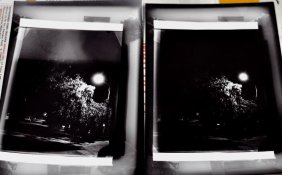
_DSC1077_1024.jpg

This is a sample of what I was referring to as film noir (on the right). I suppose, one could say that in this I didnt get much grain and contrast held okay (this was from a 4x5 Foma100 sheet) - I generally like to make more of such moody/contrasty images without too much grain popping out.
 

snapguy

Member
Allowing Ads
Joined
Jan 1, 2014
Messages
1,287
Location
California d
Format
35mm
noir light

The classic big studio Hollywood film noir movies were very carefully lit. Take a look at "The Maltese Falcon" with Bogart but this time just look at the hair lights --the special light that put highlights on the actors' hair. The hair lights follow the characters around like a tick on a dog. This kind of lighting is slow and time-consuming. They used a slow film and there are a lot of shot with light coming from the back or the side.
Odd shadows are good, too. A trick newspaper photographers -- and the movies -- used in that era was to photograph a crime suspect with the light coming from below the face. This can make the person being photographed look like a monster. The news photog would put his flashgun a couple of feet below the "suspect" and the shadows would go up, not down.
Take a look at still photographs take on vintage noir movie sets. they will tell you a lot.
 
OP
OP
analoguey

analoguey

Member
Allowing Ads
Joined
Jul 24, 2013
Messages
1,103
Location
Bangalore, I
Format
Multi Format
Right, was browsing through images of the movie, and the hairlight does follow them like a tic! And they are mostly at an angle to the lights - but wasnt that necessarily the trend back then? I really like this
I am looking through Roger Hicks Hollywood Portraits, but I am more interested in street-side/urban pictures, in the sodium vapour glow - at least that is the general idea behind this thought of making a series of contrasty, moody images - with, or without people.
In a sense, making the "city" as such, look different - at least the one I am living in.
MDRs advice of shooting in daylight's interesting too - will try that as well.

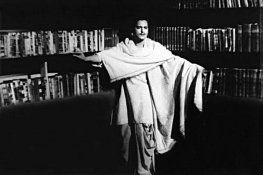
Some of my inspiration for moody BW is also these for example, these movies (Pyaasa, Kaagaz ke Phool) from a favourite director 11_13.jpg - something of the kind that I would usually want to shoot in a street setting
Guru-Dutt-in-Pyaasa_630.jpg
 
Last edited by a moderator:

Xmas

Member
Allowing Ads
Joined
Sep 4, 2006
Messages
6,398
Location
UK
Format
35mm RF
If you believe it was film try a can of 5222 the cine people process it for low gamma to capture details through long takes that would contact print on to print film.

The director gets the lights man and camera man to set up the studio lights or monster reflectors inch 'perfect'.

If he does not like a take or rush they retake.

The stars needed oodles of make up and patience while lights were moved, lenses changed, matt filters cleaned etc.

The noir movies were as 'stylised' as Bollywood is today.
 
Photrio.com contains affiliate links to products. We may receive a commission for purchases made through these links.
To read our full affiliate disclosure statement please click Here.

PHOTRIO PARTNERS EQUALLY FUNDING OUR COMMUNITY:


Ilford ADOX Freestyle Photographic Stearman Press Weldon Color Lab Blue Moon Camera & Machine
Top Bottom