
• Welcome to Photrio!
    Registration is fast and free. Join today to unlock search, see fewer ads, and access all forum features.
    Click here to sign up

Film for bright sunny days?

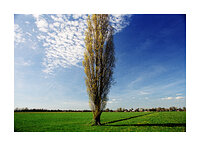
Cigar again

H
Cigar again

  • 0
  • 0
  • 11
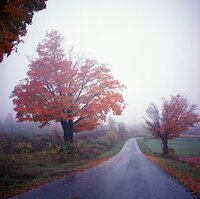
Rainy Day Trees

A
Rainy Day Trees

  • 7
  • 1
  • 108

Recent Classifieds

Forum statistics

Threads
203,158
Messages
2,850,734
Members
101,705
Latest member
kyuut
Recent bookmarks
3

markrewald

Member
Allowing Ads
Joined
Jun 12, 2005
Messages
140
Location
Aurora, Co
Format
Medium Format
Here in Colorado we have more days of really bright clear skies then days with cloudy skies. Hence I am in need of a film that I can use in these conditions. Tmax 400 old emulsion isn't working so well for me. It couldn't handle the high contrast. Delta 400 was about the same. I tend to down rate both of these films. I shoot at iso 320 and develop in D-76.

I am thinking of maybe Acros as a substitute. It seems to be a very forgiving film and I love the tones it produces.

I am also thinking of PanF+. I have been doing some research and found maybe down rating it to 25 iso and using stand development at 1+200 for 90 mins might do the trick.

Does anyone else have a film suggestion?
 
I find the 400 speed films handle the contrast better than the slower films. I suspect you are over developing a bit.

Having said that, I find Acros to be a very nice film for sunny days. I use lots of it, especially at its low price in 120 format. I also like FP4+, possibly a bit more than Acros. I shoot both films at half box speed.
 
Acros works fine but you need to compensate by shortening your developing times if you're anything like me and dont like whiteouts everywhere. I end up shooting it at 64 and then underdeveloping by 20% under high contrast situations. Works quite well.
 
Rate the film about 1/2 speed slower, then when you develop pull times back about 30%. This will even out contrast some.

This whole set was shot and developed that way. A very bright, contrasty day at the beach in summer. I think you'll see contrast was controlled quite nicely considering.

http://www.flickr.com/photos/rich8155/sets/72157594171439870/
 
I agree with everyone here. Cheers... see I can be nice.
 
i love using tmy400 ( old or new ) on bright days and over-exposing a few stops ..
then developing normally. i use a coffee based developer spiked with a tiny bit
of ansco130 stock print developer. when i say develop normally, i mean stand develop
for about 25-30mins. the results are beautiful .. and the film is reproduced via enlarger
or magic-beam with ease.
i also do this with sheet film sometimes stand as described ( in an FR tank ) sometimes
shuffled ( but without the ansco 130 ) for 15-20mins, and get a beefy negative perfect for contact printing. the 4x5 sheets are "a little dense", so you might need a bright light to view them ..

YMMV
good luck !
john
 
Why not preexpose each shot by one LV. Then place the shadows on Zone I and the Zone IX highlights will fall on about exposure zone VIII. Might flatten the bottom a little but probably the easiest way to flatten a scene that surpasses exposure latitude.
 
Chris, do you use a grey card or white card for the pre-exposure?
 
I meter a more or less solid subject area (open sky, sunlit wall, etc) through an opaque material. This gives Zone V. I then adjust down four stops and expose through this material at the adjusted setting. This gives Zone one exposure to the film. I then place shadows that might normally fall on zone II on Zone I. This gives roughly an extra stop in latitude by and large.
 
It sounds like overdevelopment, perhaps coupled with underexposure, is causing the difficulties with printing. 400 films tend be be inherently lower in contrast (hence higher in latitude) than slower films, so I doubt the film is the root of the problem. It is lighting and development IMO. Plus, if you are using an in-camera relected meter, they tend to underexpose in bright compositions, if read directly. I'd try incident metering if you are using an in-camera meter now. Then, if the lighting is higher than normal in contrast, I'd try to overexpose/underdevelop a bit more than you are doing. Maybe one stop instead of 1/3 stop, to start.

This is assuming that you want a 400 film for it's D of F and stop-motion abilities. If not, I'd go for a 100 or 125 speed film. Yes, Acros is a great one, and very affordable...though I wouldn't say it is much more forgiving than T-Max or Delta. Any film will need to be brought under control by way of testing for best results.
 
Sorry to harsh your buds, but I think you're headed down a dead end road here in attempting to solve ambient high contrast lighting conditions with any particular film. As previously eluded to by others, you would do well to look at the (a) Zone System of exposure/printing.

I have used all these films with success by my reckoning (though I don't prefer Acros for other reasons), in all kinds of high (and low) contrast natural lighting. Pan F is a very contrasty film by nature, unless used thoughtfully and developed accordingly with regard to specific lighting conditions. How is a film with a lot of built in contrast going to ameliorate your high contrast exposures? Appreciating and recognizing good light is as fundamental, particularly in monochrome, as is composing. No "tricks" are necessary, just proper technique. Look to the light, man. Learn how to tame it, and any film will likely be suitable.
 
Contrast can be a real issue on bright day. You need a film that handles that well. The ISO 400 films handle contrast well, but that speed is not needed on a bright day. The ISO 100 class films has sufficient speed even for hand held photography on a good day, and they have finer grain and greater sharpness as well. There is a lot of choice in this group, and the decision depends on what look you like.
 
It's all about processing. It's not about one film being inherently more contrasty than another. Contrast is contrast. Process two different film types to the identical Contrast Index and they are practically the same. Proper processing is about matching the scene to the paper.
 
I lived in Colorado Springs for some 4 years or so. I haven;t been shooting for long, but loved the colors I got with Fuji Velvia 100. Here's a link to some of my photos I took with this film and a Pentax MV1 35mm.

Dead Link Removed
 
I'd use T-max 400. My own experience agrees with the curves published by Kodak. That is, T-max 100 ,when over developed can produce over-dense highlights. See the curves for T-max 100 at 10 and 12 minutes in the PDF. Compare to T-max 400. http://www.kodak.com/global/en/professional/support/techPubs/f4016/f4016.pdf

T-max 100 below:
tmax100.jpg


T-max 400 below:
tmax400.jpg
 
Photrio.com contains affiliate links to products. We may receive a commission for purchases made through these links.
To read our full affiliate disclosure statement please click Here.

PHOTRIO PARTNERS EQUALLY FUNDING OUR COMMUNITY:


Ilford ADOX Freestyle Photographic Stearman Press Weldon Color Lab Blue Moon Camera & Machine
Top Bottom
