

• Welcome to Photrio!
    Registration is fast and free. Join today to unlock search, see fewer ads, and access all forum features.
    Click here to sign up

Film fogging issues with "new flourecent" bulbs...

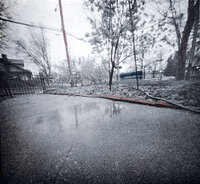
Spring rain through pinhole

A
Spring rain through pinhole

  • 0
  • 0
  • 35
Man in black

A
Man in black

  • 1
  • 0
  • 110

Forum statistics

Threads
203,363
Messages
2,853,481
Members
101,803
Latest member
BOOM CAT
Recent bookmarks
0
I hope the guy that got cut also got checked for mercury in the wound.

PE[/QUOTE]

No, she didn't. Even though it's a union show, they don't have a medic on staff. The fire dept. arrived quickly and took her to the hospital. I'm guessing it's healed up by now, mercury or not.
 
I am not anti-evironmetalism by a long shot, but the excitement in the "green" community and everywhere else over CFL's seems highly misplaced.
My experience with them has been similar to Andrew's. They fail at least as often as conventional bulbs, and as Wildbill notes, it's like rolling dice as to whether they work out of the box. They cost 10 times more than conventional bulbs, then (here at least), you have to pay to throw them away!
I bet it wouldn't be hard do argue that their net cost is higher in spite of the increased efficiency, especially if you consider transporting them from half way around the world.

The lights in my home office are on as much as 20 hours a day, so I've swiched some of those to MR-16 LED's. For everything else, I won't be buying any more CFL's, and there will most certainly be none in the darkroom.
 
I'll bet the net cost is higher. I've given up using CFLs in my garage because the "7 year lifespan" bulbs repeatedly burn out in 12-18 months' time. I think they don't like the winter cold in the garage and the constant on/off they get. In other fixtures around the house, I've slowly converted to CFLs as bulbs burn out. They seem to last longer, and the "3-way" bulbs work pretty well. I, too, wait for LED bulbs to save the day.

Peter Gomen
 
It's odd that mercury battery's are taken off the market for environmental reasons and now mercury in lite bulbs is considered GREEN !

mike c.
 
A short while ago LADWP (los angeles dept. of water&power) put a "green" bag on everyone's door. It consisted of a green fabric back, two cfl's, a data sheet about cfl's, and little gauge showing how to conserve energy. The data sheet showed the output of the cfl compared to standard incandescent bulbs, the cost ($5+/-) per bulb, and how much you'd save on energy bills. California is supposed to be in financial crisis and they give everyone $10 in fricking cfls made overseas?
I've yet to see a cfl or led made in the usa. How is taking an overseas product likely made in a sweat shop by children and shipping it thousands of miles, green? How many of these bulbs will actually be disposed of properly?

I put both of mine into my overhead fixture. One of them burned out in a week. My bathroom and my bedside lamp have the same basic thing, but they have lasted for years, and are on far more often than my overhead lamps. Go figure. Yes, there are many flaws with them (and them being foreign-made is one of my peeves especially), but for the everyday lightbulb for the everyday person, they could save a ridiculous amount of energy in the long run.
 
Last edited by a moderator:
Those bulbs just hate to be used horizontally or upside down. In the small print, on some of them, it specifically states "not for use with dimmers, or in fixtures that place the bulb upside down or orizontal".

Saying they have a design flaw is an understatement.

As for mercury, there are claims that the amount used is trivial when compared with the amount of mercury generated in a power plant, but my view is that the mercury of a broken bulb is right there in your house.

PE
 
It's odd that mercury battery's are taken off the market for environmental reasons and now mercury in lite bulbs is considered GREEN !

mike c.

I agree. It's a total joke.
 
Actualy: why use those tubes anyway ?

Here are a couple of safe ones: halogen lamps and lamps for fridges.
Halogen are in 110/220V and lamps for fridges can be used in safe-lights and these will be avialable for quite some time.

Peter
 
Photrio.com contains affiliate links to products. We may receive a commission for purchases made through these links.
To read our full affiliate disclosure statement please click Here.

PHOTRIO PARTNERS EQUALLY FUNDING OUR COMMUNITY:


Ilford ADOX Freestyle Photographic Stearman Press Weldon Color Lab Blue Moon Camera & Machine
Top Bottom
