
• Welcome to Photrio!
    Registration is fast and free. Join today to unlock search, see fewer ads, and access all forum features.
    Click here to sign up

film developing nothing

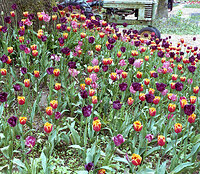
Tractor & Tulips

A
Tractor & Tulips

  • 0
  • 0
  • 10
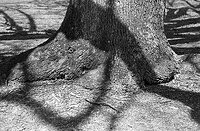
Tree with Big Shadows

Tree with Big Shadows

  • 2
  • 0
  • 69

Forum statistics

Threads
203,456
Messages
2,855,025
Members
101,852
Latest member
keith1420
Recent bookmarks
0

jordanstarr

Member
Allowing Ads
Joined
Apr 30, 2007
Messages
781
Location
Ontario
Format
Multi Format
I have some 4x5 sheet film and I developed 4 sheets from 2 holders. Both were exposed (black side out) and I even checked the shutter to make sure it was working okay. But when I developed, it was blank -purely transparent with only the "Kodak 320TX" on the edge. One sheet had the faintest developing of grass on in one spot I could barely see. I've been trying to troubleshoot this and I can't think of why this would happen. All the film was even shot with a different lens (at least I'm 90% sure of that), so I doubt it was shutter failure. Any leak would leave streaks. I developed it with 2 sheets of HP5 which turned out perfectly so it can't be chemicals. I'm really out of answers here. My answer so far is that it's the film, but I'm 99% sure I've used other sheets of the same batch okay. Maybe putting the film in backwards, though I doubt that would be the case or that it would have that effect on it.

Any help would be appreciated. Thanks in advance.

...Jordan.
 
My bet would be that you indeed tried to expose the film backwards.
 
As mentioned above, you likely loaded the film into the filmholder backwards, i.e., with the emulsion side of the film facing away from the lens. The anti-halation of the flim backing is very opaque. If you have unexposed, loaded film from the same batch, take it into the dark and check to make sure you have loaded correctly. If so, just switch it.

You can identify the emulsion side by the orientation of the code notches. When the emulsion side is facing you, the code notches will be in the upper-right corner when the film is in vertical (portrait, or long-side on the side) orientation (or any of the analogous positions: in vertical/portrait orientation, the notches can be upper right or lower left; in landscape/horizontal orientation, the notches will be lower right or upper left when the emulsion is facing you.) (I'm sure you already know this, but for the benefit of others reading this who may be beginning and confused, I've included it. Please don't think I'm being condescending...)

I like to orient the code notches at the bottom left of the filmholder (i.e., on the left of the flap side) since it keeps the notches well out of the picture area.

If the film was loaded correctly, then check shutters to make sure that they are operating correctly and consistently. Several firings at each shutter speed while looking through the lens at full aperture should tell the tale.

Of course, not pulling the darkslide would have the same effect (and happens more often than we like to admit...) as would developing unexposed film (you should number your holders and keep records to avoid this...). However, if you have a very faint image, I'd put my money on film loaded emulsion-side down.

Best,

Doremus Scudder
www.DoremusScudder.com
 
So it's perfectly clear: upper-right = on the right hand side of the top edge. Not near the top of the right edge.
 
So it's perfectly clear: upper-right = on the right hand side of the top edge. Not near the top of the right edge.

When the film holder is in the portrait position and with the flap on top.
 
I think you're right with the film orientation. I checked all the TXP film and it's all backwards, but everything else is fine. Just a bad night of film loading I guess. Naturally the voice in my head says "notches on lower right", meaning that I'm putting them in the lower right side of the holder, which was where I screwed up.

Do you think this film is still good? I've exposed it, so I'm not sure if I should even chance it. Plus it could be scratched pretty bad.
 
Well flip one and re-expose it, after all the others were blank, besides it won't cost much for the chemicals.
 
When the film holder is in the portrait position and with the flap on top.
The emulsion side is facing you when you hold the film with the notches on the right hand side of the upper edge, no matter how you hold the film holder. It does even when you're not holding a film holder at all.
:wink:
 
Since most of what was flipped was blank, you might as well give it another try. You may get a bit of double exposure, so avoid these for the once in a lifetime shot. You may want to increase your effective film speed a bit, to account for it's having been pre-flashed more or less. Also, you may want to increase development a bit as the contrast might be low.
If you haven't already, mark the holders. After you re-expose some of the sheets, process just one from each holder and evaluate the results. Then you can adjust processing for the remaining sheet in each holder.
 
The emulsion side is facing you when you hold the film with the notches on the right hand side of the upper edge, no matter how you hold the film holder. It does even when you're not holding a film holder at all.
:wink:

If you prefer to hold the film holder in landscape with the flap on the right the notches will be on the lower right side
 
If you prefer to hold the film holder in landscape with the flap on the right the notches will be on the lower right side

Yet, "The emulsion side is facing you when [etc. ...] even when you're not holding a film holder at all".
 
I'll admit I'm a newbie, but if the film has been developed and fixed then surely it cannot be re-exposed?
 
You're absolutely right, Martin.
But not all of the 'backwards exposed' film has been developed and fixed yet.

I wouldn't risk ruining pictures on film that has seen the light of day already.
Film is cheap. An image you might miss because of 'being cheap' may be priceless.
 
I'll admit I'm a newbie, but if the film has been developed and fixed then surely it cannot be re-exposed?
You are correct. Not all of the film has been processed though. The unprocessed sheets could be switched right way out and re-exposed, in theory, at least.
The risk is that the first exposure may have been enough to create an image which would leave a trace of itself a subsequent exposure.
 
I'm using the film for experimental shots. There's about 8 sheets in total and I might get something interesting. You're right QC, it's not worth being cheap about to risk the potential of 8 amazing shots. Plus, there's probably specs of dust on the film anyway from switching it around. But it's better used than thrown out.
 
Photrio.com contains affiliate links to products. We may receive a commission for purchases made through these links.
To read our full affiliate disclosure statement please click Here.

PHOTRIO PARTNERS EQUALLY FUNDING OUR COMMUNITY:


Ilford ADOX Freestyle Photographic Stearman Press Weldon Color Lab Blue Moon Camera & Machine
Top Bottom
