

• Welcome to Photrio!
    Registration is fast and free. Join today to unlock search, see fewer ads, and access all forum features.
    Click here to sign up

Film developer as paper developer

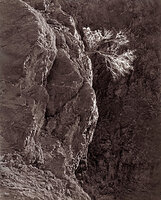
Bush on Canyon Wall

A
Bush on Canyon Wall

  • 0
  • 0
  • 0
double portrait

A
double portrait

  • 1
  • 0
  • 20

Recent Classifieds

Forum statistics

Threads
203,249
Messages
2,851,985
Members
101,747
Latest member
Tallphotographer
Recent bookmarks
0
Ian,
What 'dual purpose' formulas do you have in your developer collection?
Could you post a few?

Do you see anything unique about the ones you have?
(That is how do they differ from both types of single purpose developers?)

Marco,
Did the addition actually change the pH?
In anycase, Ron can give you a more authoritive answer on this than I can;
The most definitive answer, however,
should come I think from just repeating your experiment w/o the added punch.

Ray
 
Marco,
Did the addition actually change the pH?
In anycase, Ron can give you a more authoritive answer on this than I can;
The most definitive answer, however,
should come I think from just repeating your experiment w/o the added punch.

Ray

Hi Ray,

Thanks for commenting on this. No, I did not check pH, unfortunately I also don't have good test strips for that purpose, only my Tetenal fixer silver content test strips that also have a pH scale from 4 to 8 but not higher...

You are right the only definite answer would be to try it without the added teaspoon of soda and see what that does...

Marco
 
nice work marko, beautiful film and prints :wink:

i have never used d76 for film or prints
but years ago i used something called gaf universal developer it was great-stuff.
juan simmons ( a fellow appuger ) and i have been searching for years for the formula
for this mythic developer .. and juan recently discovered something
that calls ansco 125 ... a universal developer in the late 1940s. 125 is similar to dektol
but more sodium carbonate ( 80g instead of 65g ) ...

if you can find glycin in europe, you might also try ansco 130 as a
universal developer i have been using it for years ( 8+ ) as a stand developer
and a regular developer for film ( with agitation ) ...between 1:5 and 1:10 @72ºF for about 8mins
and also mixed in with caffinol c with great results.

others haven't quite had the success i have had, so YMMV !

you might check out these threads for a few more interesting ideas :smile:

(there was a url link here which no longer exists)
 
Marco, I don't have anything clever to add, I'd just like to say how beautiful your images are. Truly amazing work.

~ Sandra
 
sorry ...it looks like i mixed up my forumla ..
dektol should be the one with more carbonate ... not 125 ...
a formula for 125 is here in the articles section
(there was a url link here which no longer exists)
the recipe for dektol / d-72 is here
Dead Link Removed
 
Marco, I don't have anything clever to add, I'd just like to say how beautiful your images are. Truly amazing work.

~ Sandra

Thanks Sandra, this it what keeps me going! :wink:

sorry ...it looks like i mixed up my forumla ..
dektol should be the one with more carbonate ... not 125 ...
a formula for 125 is here in the articles section
(there was a url link here which no longer exists)
the recipe for dektol / d-72 is here
Dead Link Removed

Thanks for the info. I never actually realized that plain soda was such an important component of developers, although I well know the importance of alkaline conditions for keeping the reaction going, but than again, I never actually looked at all the recipes for developers here on APUG...
 
Ian,
What 'dual purpose' formulas do you have in your developer collection?
Could you post a few?

Do you see anything unique about the ones you have?
(That is how do they differ from both types of single purpose developers?)

Ray

Quite a few Ray, however they are mainly rather coarse grained, the Universal developer should have died out by the late 1940's but Kodak kept D163 going into the late 1980's !!!

As a nieve teenager I was sold D163 for my 120 negs, imagine my surprise when I found more grain than 35mm in ID-11 (D76).

The Ilford PQ Universal developers give very good fine grain when highly diluted, and so do the M&B (nown Champion) equivalents. It's ironic that one of the more innovative companies now makes Kodak chemistry.

Ian
 
never use paper developers. I develop film in diafine and acufine depending on my aims, and all prints are developed in the same as the negative. It is not all-purpse; I do it for a specific look, luckily it's the look I want.

Generally the results are less "3D" than well-made prints from paper developers, having not as fine a gradation of tones; but instead build depth through areas of sort of blocky tones. It's not posterized but it has some of that character.
 
Nothing Added?

Never use paper developers. I develop film in diafine and
acufine depending on my aims, and all prints are developed
in the same as the negative. It is not all-purpse; I do it for
a specific look, luckily it's the look I want.

Do you doctor those two film developers when using them
as print developers? Perhaps some added sodium carbonate
and/or potassium bromide?

I've used a few film developers on paper with good results
but don't make a practice of it. I've taken a close look at film
and paper developers and found their component ratios can
differ by quite a bit. Being a minimalist I couldn't justify
combinations of chemistry where some one chemical
occurred in large excesses. Dan
 
Photrio.com contains affiliate links to products. We may receive a commission for purchases made through these links.
To read our full affiliate disclosure statement please click Here.

PHOTRIO PARTNERS EQUALLY FUNDING OUR COMMUNITY:


Ilford ADOX Freestyle Photographic Stearman Press Weldon Color Lab Blue Moon Camera & Machine
Top Bottom
