
-
Welcome to Photrio!Registration is fast and free. Join today to unlock search, see fewer ads, and access all forum features.Click here to sign up
You are using an out of date browser. It may not display this or other websites correctly.
You should upgrade or use an alternative browser.
You should upgrade or use an alternative browser.
Ferrotyping?
-
A
- Thread starter mfohl
- Start date
Recent Classifieds
-
Want to Buy Jobo CPP-3
- Started by lifeandmylens
-
Want to Buy Dagor 12" F6.8
- Started by lifeandmylens
-
Want to Buy Arca Swiss 8 x 10 F Metric
- Started by lifeandmylens
-
Want to Buy Canon 5D IV low shutter count
- Started by Nathan Olsen
-
For Sale Film Freezer, Whirlpool 16 cu/ft Upright
- Started by Roger Thoms
Forum statistics

In desperation, I tried a silicone treated "gun wipe" as the last step in cleaning a ferrotype plate. That worked well. A billion years ago, in school, we had some lacquered plates and they were an invention of Satan. It seemed impossible to get them smooth and clean and the school environment (i.e. students)didn't help. I do believe that nothing quite matches a well done ferrotype job on fiber paper.

As I have a large stock of glossy fibre paper I decided to try Ferrytyping and bought a cheap cloth dryer (the one above explained) and gave it a try. The results look truly amazing but always with flaws. I can never get it to dry smooth, no matter how much I clean the plate.
You can see two images below (both the same actually) - the first one shows the whole area with the flaw and the second a zoomed in version.
I was trying for a long time to buy the right Wax etc but then just got tired and gave up. Still use the paper just without enjoying that amazing gloss.
Ben


Did you originally fix the prints in Fixer with Hardener?!

When I glazed my prints in the late 1960's and early 70's the glazing fluid was ox gall, that's why people disliked the smell.
I was given two large Kodak rotary glazers in the mid 1980's I had to scrap them later as no-one wanted them, we used to use them to dry RC prints (low heat, back to the drum) when producing large print runs, I'd be helping another photographer produce runs of 100+ off a number of negatives, we might do 500+ prints in an evening session.
I still have a double sided glazer, I doubt I'll ever use it.
Ian
I was given two large Kodak rotary glazers in the mid 1980's I had to scrap them later as no-one wanted them, we used to use them to dry RC prints (low heat, back to the drum) when producing large print runs, I'd be helping another photographer produce runs of 100+ off a number of negatives, we might do 500+ prints in an evening session.
I still have a double sided glazer, I doubt I'll ever use it.
Ian

Did you originally fix the prints in Fixer with Hardener?!
I am using a normal fixer - not sure it if has Hardener in it or not. The problem is no-one has a stable recipe for ferrotyping. It isn't like.
1. Do this
2. Then do that
3. And you have that
I tried and searched and followed "tips" but nothing seemed to work. I gave up after about 2 weeks and never tried again. If there was a surely working recipe someone uses on a regular bases with good results, I'll give it another try. For the time being it's matt black prints... I really didn't enjoy losing print after print on that plate.
Thanks,
Ben

I am using it from time to time, if I am calm and patient most times with success ;-)
I never used RC so I only have some experiences fiber.
- I don't use hardening fixer
- I bath the fiber in an antibacterial and fungicidal wetting agent (Mirasol)
- after dripping off the print stays for some minutes in a properly[tm] prepared gelatine solution.
- meanwhile I prepare the chrome sheet for my heating press. Only perfect surfaces will work, I use NevrDull wool for polishing, nothing else.
- just before applying the print I wet the plate with a mixture of thin isopropyl and Mirasol.
- taking the print out of the gelatine solution is the last chance to stop, any grain on the print it will fail.
- laying the print onto the plate is the most difficult procedure with it, with even small bubbles/grain/dust/... it will fail. Then I use a solid squeegee to squeeze the unnecessary gelatine out.
- placed on my warm press, I watch the temperature. As mine don't have thermostats I use my hands, swithcing the heating on and off agin and again to keep it at a temperature my hands just can endure.
- send the kids and wife out, switch of the radio, TV ... and after afew minutes the print will tell "I am soon finished .. " Ok, you can hear a gentle sizzling noise, a tender cracking.
- just before the cracking stops or begins to become less I switch of the heating.
- Don't be too nosy! After cooling down I take out the plate and watch not to bend the plate!
- after some minutes/hours the print has dried finally and ... plopp, the print detaches from the surface by himself, never try to help him!
If something fails it can easily be repeated, except the print/surface breaks. The gelatine isn't hardened and can be resolved either with warm water >40C or bathed in the gelatine solution again ...
With this procedure I am getting 4 out of 5 well done.
horst
I never used RC so I only have some experiences fiber.
- I don't use hardening fixer
- I bath the fiber in an antibacterial and fungicidal wetting agent (Mirasol)
- after dripping off the print stays for some minutes in a properly[tm] prepared gelatine solution.
- meanwhile I prepare the chrome sheet for my heating press. Only perfect surfaces will work, I use NevrDull wool for polishing, nothing else.
- just before applying the print I wet the plate with a mixture of thin isopropyl and Mirasol.
- taking the print out of the gelatine solution is the last chance to stop, any grain on the print it will fail.
- laying the print onto the plate is the most difficult procedure with it, with even small bubbles/grain/dust/... it will fail. Then I use a solid squeegee to squeeze the unnecessary gelatine out.
- placed on my warm press, I watch the temperature. As mine don't have thermostats I use my hands, swithcing the heating on and off agin and again to keep it at a temperature my hands just can endure.
- send the kids and wife out, switch of the radio, TV ... and after afew minutes the print will tell "I am soon finished .. " Ok, you can hear a gentle sizzling noise, a tender cracking.
- just before the cracking stops or begins to become less I switch of the heating.
- Don't be too nosy! After cooling down I take out the plate and watch not to bend the plate!
- after some minutes/hours the print has dried finally and ... plopp, the print detaches from the surface by himself, never try to help him!
If something fails it can easily be repeated, except the print/surface breaks. The gelatine isn't hardened and can be resolved either with warm water >40C or bathed in the gelatine solution again ...
With this procedure I am getting 4 out of 5 well done.
horst

I am using it from time to time, if I am calm and patient most times with success ;-)
I never used RC so I only have some experiences fiber.
- I don't use hardening fixer
- I bath the fiber in an antibacterial and fungicidal wetting agent (Mirasol)
- after dripping off the print stays for some minutes in a properly[tm] prepared gelatine solution.
- meanwhile I prepare the chrome sheet for my heating press. Only perfect surfaces will work, I use NevrDull wool for polishing, nothing else.
- just before applying the print I wet the plate with a mixture of thin isopropyl and Mirasol.
- taking the print out of the gelatine solution is the last chance to stop, any grain on the print it will fail.
- laying the print onto the plate is the most difficult procedure with it, with even small bubbles/grain/dust/... it will fail. Then I use a solid squeegee to squeeze the unnecessary gelatine out.
- placed on my warm press, I watch the temperature. As mine don't have thermostats I use my hands, swithcing the heating on and off agin and again to keep it at a temperature my hands just can endure.
- send the kids and wife out, switch of the radio, TV ... and after afew minutes the print will tell "I am soon finished .. " Ok, you can hear a gentle sizzling noise, a tender cracking.
- just before the cracking stops or begins to become less I switch of the heating.
- Don't be too nosy! After cooling down I take out the plate and watch not to bend the plate!
- after some minutes/hours the print has dried finally and ... plopp, the print detaches from the surface by himself, never try to help him!
If something fails it can easily be repeated, except the print/surface breaks. The gelatine isn't hardened and can be resolved either with warm water >40C or bathed in the gelatine solution again ...
With this procedure I am getting 4 out of 5 well done.
horst
When glazing, I essentially use the same process without the "properly[tm] prepared gelatine solution", plain water does the trick for me. Clean plates are essential, I also use an isopropyl based solvent to clean & polish the chromes just before placing the print. If my press gets to hot, part of the print will be still stuck to the chrome and be still wet, while another part is frying happily. In my process and with my presses, watching and regulating the temperature is essential.
I have not experienced the damage Bence8810 showed us in post #26, no idea what could have caused it. The only problems I have faced were prints (partially) stuck to the plate, but then again, I am of the nosy type not willing to wait for some hours ...
With regards to ferrotyping without a heated press: a friend of mine dries her prints stuck to the ceramics (emulsion facing the tile) of the wall. Does that count?
Downside: she can only use paper which is small than the individual tile, but she has lots of surface to use for drying.

- Joined
- Mar 6, 2005
- Messages
- 2,261
- Format
- Large Format
Pakosol was designed for use on the chrome plated roller of the Pako dryer. It was not possible to assure the absolute cleanliness which was possible with a flat plate. It was not necessary for use on a flat plate which just needed a good washing with a soap or later a detergent, and then rinsing off.there was a special fluid involved too, "Pakosol" was one brand, made by Pakor.
I only quit ferrotyping when Al Weber convinced me about 25 years ago that the slightly matte surface of glossy paper was more desirable.

Dammit... If 'ferrrotyping' is now 'dead' what am I going to do with the 7 or eight large 'never even taken out of the envelope' ferrotype plates that have been sitting on the shelf in my darkroom for some 20 years or so?
Cut them down to 'shaving mirrors for campers????
Ken
Cut them down to 'shaving mirrors for campers????
Ken
You can sell them right here n now to these curious fellows.... cheap!Dammit... If 'ferrrotyping' is now 'dead' what am I going to do with the 7 or eight large 'never even taken out of the envelope' ferrotype plates that have been sitting on the shelf in my darkroom for some 20 years or so?
Cut them down to 'shaving mirrors for campers????
Ken
BTW how big are they?
.
I will check a little 'later'.... after I have come to the end of either my 'allotted time' of on this electronic gadget.. or finished my large mug of freshly brewed coffee (which ever comes first), OR.... when (more importantly) when She Who Must Be Obeyed decides that she NEEDS to check one of our bank account balances to see if she has the 'opportunity' to nip downtown in order to deplete a significant portion of the balances remaining therein. 8-(
However... I believe they are 16x20 inches... It has been a quite while since I last 'moved' them. They have never been used and now, since I 'retired'... and no longer am requested to provide 'glossies'... and I much prefer to NOT use RC papers... and have always preferred to 'blotter-dry' my own fiber paper prints.
I would not be adverse to selling them if someone else's needs were greater... and the price was 'right'.
Ken
However... I believe they are 16x20 inches... It has been a quite while since I last 'moved' them. They have never been used and now, since I 'retired'... and no longer am requested to provide 'glossies'... and I much prefer to NOT use RC papers... and have always preferred to 'blotter-dry' my own fiber paper prints.
I would not be adverse to selling them if someone else's needs were greater... and the price was 'right'.
Ken
- Joined
- Apr 5, 2008
- Messages
- 2,816
- Format
- 35mm
Reminds me that somewhere in my attic should be a small flat-bed print dryer which belonged to my Dad way back in the 1970's, IIRC with some plates and a squeegee. (I remember that he liked Kentmere fibre papers which seemed to give really good gloss without too much difficulty.) Must search it out some time !
Last edited:

- Joined
- Jul 31, 2012
- Messages
- 3,461
- Format
- 35mm RF
If you want to do it an easier way, use plexiglass. I get the clear stuff so I can see if there are any problems (just look through the other side!). It is easy to see if there is any dust or if the plexi isn't making good contact with the print. Keep the plexi clean. You can use a plastic cleaner which also keeps the plexi in good shape. Wax it sparingly, and I do mean sparingly. I use a hard brayer to press the print onto the plexi. I also use hot water for the last bath before putting the print on the plexi. I cover it with a cloth to keep the print from drying too fast from the edges. Leave the print for a few hours. When you come back the print will be dry but the static from the plexi will have kept it from "popping" like it does with a ferrotype plate. Perfect contact the entire time the print is drying. I use a guitar pick to grab the edge of the print since it static-clings to the plexi. Nearly every one comes out perfect unless I miss some dust.
I tried all the methods I could find a few years ago and nothing is anywhere near as easy as using plexi and I tried it just out of curiosity. It was one of those simple solutions one just stumbles over. You can buy the plexi at your local Home Depot for peanuts and they will even cut it for you.
I tried all the methods I could find a few years ago and nothing is anywhere near as easy as using plexi and I tried it just out of curiosity. It was one of those simple solutions one just stumbles over. You can buy the plexi at your local Home Depot for peanuts and they will even cut it for you.
- Greg Davis
- Deleted
- Joined
- Jul 31, 2012
- Messages
- 3,461
- Format
- 35mm RF
What do you wax it with?
I use Butcher's Wax but you could probably use any paraffin/carnuba wax. You need so little it is best to dilute it.
It was a long time ago. Kodak made a ferrotyping solution which I used once or twice. I think I can remember that it had formaldehyde in it (distinctive smell). They also had Print Flattening Solution which I think contained glycerine: it made the prints feel heavy and floppy but they sure were flat! Kodak also recommended that the ferrotyping sheet be polished with a certain grade of aloxite abrasive which was exceedingly fine and I remember them stating that "no other grade would do." ..The memories are fading...
I did succeed in making some ferrotyped prints using a flat bed dryer but often they had uneven patches. They could be soaked and redone. I decided in the interests of getting things done that I "preferred" non-ferrotyped prints.
I did succeed in making some ferrotyped prints using a flat bed dryer but often they had uneven patches. They could be soaked and redone. I decided in the interests of getting things done that I "preferred" non-ferrotyped prints.

Do you still have the plates or you were joking?Dammit... If 'ferrrotyping' is now 'dead' what am I going to do with the 7 or eight large 'never even taken out of the envelope' ferrotype plates that have been sitting on the shelf in my darkroom for some 20 years or so?
Cut them down to 'shaving mirrors for campers????
Ken
- Joined
- May 20, 2015
- Messages
- 48
- Format
- Medium Format
I would love to ferrotype so I will watch this thread in the hope that someone will explain exactly how it is done. I print only on glossy FB paper but for some prints I would like it even more glossy.
I know this is a really old comment, but since I just stumbled over the ferrotyping stuff and found the „naked photographer“ video about the topic, here you go:
Probably the best explanation on how to do it. And to also see the difficulties and imperfections, even if it works.
In general I love the natural gloss of my Fomabrom paper and do not feel the need to improve it, but I have ordered some plexiglas plates like the ones he uses in the video, just because they are cheap and I like to experiment.
- Joined
- Jan 1, 2006
- Messages
- 295
- Format
- Medium Format
, Wow your bringing back bad memories!
I was gifted a basic darkroom equipment set around 1958 (12 yrs old). One of my first additions was a set of two ferrotype chromed metal plates to "gloss" my prints, plate cleaner, roller - the whole bit. I do recall a lot of prints with less than perfect gloss. I stopped using those plates and went off to college, at which point my mother seized the opportunity to re-gift my darkroom stuff to recapture her bathroom. In 1980, I Installed a full darkroom in the basement of my own house. I cannot explain why, but I'm quite sure that some 60 years later, I still have those plates and roller stored in the depths somewhere. I think I kept them as a challenge to be overcome someday, although I have not made a glossy print, fiber or RC, in more than 50 years. (The reason I bought the plates originally was that to pay for photo supplies. I started a little business taking project photos for local contractors to hand out to potential customers. Glossy was the expected standard print of that era.)
- Joined
- Jul 31, 2012
- Messages
- 3,461
- Format
- 35mm RF
I know this is a really old comment, but since I just stumbled over the ferrotyping stuff and found the „naked photographer“ video about the topic, here you go:
Probably the best explanation on how to do it. And to also see the difficulties and imperfections, even if it works.
In general I love the natural gloss of my Fomabrom paper and do not feel the need to improve it, but I have ordered some plexiglas plates like the ones he uses in the video, just because they are cheap and I like to experiment.
You mean the explanation that I wrote that he copied almost verbatim to make his video?
I have always known the process you call "ferrotype" to be a method of forming the image on an iron plate,
and the process of putting a gloss finish on prints to be "glazing".
It is strange that nobody here has come across the original ferrotype process in books and the web.
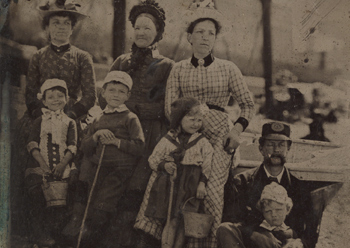
 blog.scienceandmediamuseum.org.uk
The above link will take you to an article that may serve as a taster to the original ferrotype process.
Glazing solutions helped prevent the print sticking to the glass or chromed metal sheet. It didn't always work for me though.
Tetenal Wetting agent still has instructions on the bottle for use when glazing.
Perhaps the use of the term glazing is just peculiar to the British?
I remember trying out a recommendation to use my bedroom window as the glazing plate long before I had a flat bed dryer/glazer.
Could this have been the origin of the word glazing in British photography during the early days of photography? Using glass in frames?
and the process of putting a gloss finish on prints to be "glazing".
It is strange that nobody here has come across the original ferrotype process in books and the web.
How to spot a ferrotype, also known as a tintype (1855–1940s) – National Science and Media Museum blog
In our next post about dating your old family photographs, Colin Harding shows you how to identify a ferrotype, more commonly known as a tintype.
blog.scienceandmediamuseum.org.uk
The above link will take you to an article that may serve as a taster to the original ferrotype process.
Glazing solutions helped prevent the print sticking to the glass or chromed metal sheet. It didn't always work for me though.
Tetenal Wetting agent still has instructions on the bottle for use when glazing.
Perhaps the use of the term glazing is just peculiar to the British?
I remember trying out a recommendation to use my bedroom window as the glazing plate long before I had a flat bed dryer/glazer.
Could this have been the origin of the word glazing in British photography during the early days of photography? Using glass in frames?
Last edited:
| Photrio.com contains affiliate links to products. We may receive a commission for purchases made through these links. To read our full affiliate disclosure statement please click Here. |
PHOTRIO PARTNERS EQUALLY FUNDING OUR COMMUNITY:  |