
• Welcome to Photrio!
    Registration is fast and free. Join today to unlock search, see fewer ads, and access all forum features.
    Click here to sign up

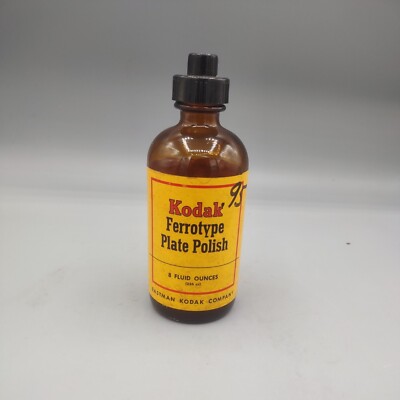
Ferrotype plate cleaning

Recent Classifieds

Forum statistics

Threads
202,669
Messages
2,843,830
Members
101,449
Latest member
ChrisRL008
Recent bookmarks
0

Jojje

Member
Joined
Sep 4, 2006
Messages
256
Location
Finland
Format
Multi Format
Made a few prints on Forte paper (last box). Thought giving a go with my new-old-stock print dryer bought from Ukraine with immaculate looking plates. Should've known better: prints stuck a bit. Well, first ones I tried were a bit veiled anyhow, just in case. - Luckily my large Polish dryer worked perfectly.
My question is, how have you cleaned your ferrotype plates? (I may have a tin of Renaissance wax somewhere)
 
I've never had much luck with this to be honest. 'Ferrotyping' has always worked best for my using plexiglass. There's some info here on Photrio as well as off-site on this.
 
I use chrome polish, the typed on on classic cars chrome bumpers and door handles. My process is to clean the plates, then with heating element off soak the prints in distilled water, squeegee the prints on the plate and let air dry until the prints pops off.
 
I'm quite familiar with the process itself but never had the need to clean the plates with other than Kodak wetting agent and like. I've polished the chrome of my bikes ad nauseam but I'm afraid these polishes may be a bit too aggressive. Plates in question look like new and I don't want to scratch them.
 
Didn't the old Ferrotype cleaner/polisher have a tiny bit of Paraffin wax in the solution (in addition to Carbon Tetra chloride!).

Might try a tiny dab of beeswax and a polish with a lint-free cloth.
 
Google AI came up with the following:

. Common ingredients in ferrotyping solutions used to prevent prints from sticking to the polished metal plates include:
  • Ox gall in a 1% solution in distilled water.
  • Glycerin and a small amount of Kodak Photo-Flo (which contains ethylene glycol and octylphenoxypolyethoxyethanol) in mostly water.
Another method mentioned in historical texts for polishing glazing plates (ferrotype plates) involves a paste made from 50 grams of beeswax in a liter of turpentine.

PS..If you find a 'reciepe' with carbontetrachloride in it... beware..it can be quite dangerous to health...
 
I watched a video by Gregory Davis on ferotyping recently, it covered aluminium, glass and perspex, and a few different cleaners. He seemed to have most luck with perspex, and has a couple of cleaner options for each of them.

 
Beeswax and turpentine is at hand so maybe I'll try that first.

Consulted my library a bit. L.P. Clerc's Photography theory and practice, 3rd ed., 1954, says: "A suitable polish is prepared by pouring about 50g of paraffin, white wax, or spermaceti (melted) into 1 litre of crystallizable benzene or light mineral petroleum."
Ilford Manual of Photography (5th ed. 1958, 502) is more thorough: "A new glazing sheet (...) should be brought into condition by washing it in turn with 1 per cent. acetic acid solution, fresh water, warm soapy water (...) and ammoniacal methylated spirit (e.g., 1 part of ammonia to 9 parts spirit. The (...) sheet should then be dusted with French chalk and polished until all the chalk is removed.
 
more thorough

It describes a different thing. The Ilford manual gives instructions to make the surface really clean and free of any grease. The turpentine & beeswax mixture in essence accomplishes the exact opposite and would work as a release agent that allows the print to pop/peel off the plate once it's dry. Note that on a perfectly clean and grease-free surface (glass, metal), the gelatin of the paper can actually bond to the surface. The only way to release it is to thoroughly soak the paper and you'll be back at square one.
 
It describes a different thing. The Ilford manual gives instructions to make the surface really clean and free of any grease. The turpentine & beeswax mixture in essence accomplishes the exact opposite and would work as a release agent that allows the print to pop/peel off the plate once it's dry. Note that on a perfectly clean and grease-free surface (glass, metal), the gelatin of the paper can actually bond to the surface. The only way to release it is to thoroughly soak the paper and you'll be back at square one.

Of course, you are absolutely right!
 
Photrio.com contains affiliate links to products. We may receive a commission for purchases made through these links.
To read our full affiliate disclosure statement please click Here.

PHOTRIO PARTNERS EQUALLY FUNDING OUR COMMUNITY:


Ilford ADOX Freestyle Photographic Stearman Press Weldon Color Lab Blue Moon Camera & Machine
Top Bottom