
• Welcome to Photrio!
    Registration is fast and free. Join today to unlock search, see fewer ads, and access all forum features.
    Click here to sign up

Faulty Kentmere 400 120 ?

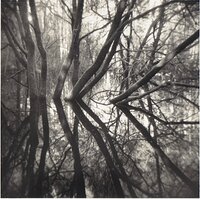
Flooded woodland

Flooded woodland

  • 6
  • 0
  • 59
Babylon

D
Babylon

  • 2
  • 1
  • 62

Recent Classifieds

Forum statistics

Threads
202,836
Messages
2,846,258
Members
101,558
Latest member
Pixelmerchant
Recent bookmarks
0
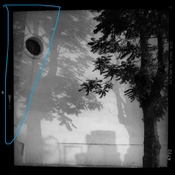
I don’t either. The two diagonal lines in the OP's highlighted area appear to be part of the image: a water stain on the wall beneath the circular window, and some geometry (possibly a corner of the building or a column) that is closer to the camera than the window and partially obstructing our view of the window. I don't see any problems with the negative but maybe I'm just missing something that others are seeing. Here's the highlighted area inverted:

It can certainly looks like just a shadow but it's not. The problem area has the look of a double exposure if you can imagine that. The density does not look 'natural' or in keeping with the surrounding areas, if that makes sense.
 
This failure pattern and in particular the alignment with in-camera frames makes x-ray damage exceedingly unlikely. Sorry to disagree with Harman tech support.

I thought so too.
 
I should reiterate that the said camera is working fine (as usual) having just processed a roll of FP4 without problems.
 
I should reiterate that the said camera is working fine (as usual) having just processed a roll of FP4 without problems.

As I mentioned in the first reply, it looks to me like something like a sliver of transparent film was in the camera. It's probably either not in the camera any more, or has migrated out of the film plane.
 
it looks to me like something like a sliver of transparent film was in the camera.

I see your point, but I find this personally (1) rather unlikely to have happened and (2) it would result in all manner of additional reflections, optical effects and focus degradation and (3) it's highly unlikely to have remained so nicely in place for a few frames and then suddenly disappeared entirely.

This is not to say I have a much better idea, however. It's puzzling, indeed.
 
I see your point, but I find this personally (1) rather unlikely to have happened and (2) it would result in all manner of additional reflections, optical effects and focus degradation and (3) it's highly unlikely to have remained so nicely in place for a few frames and then suddenly disappeared entirely.

This is not to say I have a much better idea, however. It's puzzling, indeed.
It’s only in the same position in two of the frames and moved in the other. Seems unrelated to lighting angle. It’s the only thing that seems to fit AFAICT
 
It’s only in the same position in two of the frames and moved in the other. Seems unrelated to lighting angle. It’s the only thing that seems to fit AFAICT

Hmm, yes, you're right. And upon inverting the first frame, it's also easier to see what's actually happening. The anomaly really cuts through the image, seems to replicate a close-by area of the image, and seems to be fairly well in focus, although the latter is hard to determine.

1695898592764.png


@Elmarc what kind of camera is this, exactly?

And could you perhaps put up some images of the entire film strip so the progression of the issue becomes apparent?
 
I bet if you look up the site on Google Maps you will find the 'anomaly' of frame 1/2 as a part of the building.

In frame 3 there may or may not be something on the neg that wasn't in the scene. To me it looks like a footpath or a long shadow. Or maye something held in front of the lens. But it's hard to tell from the low res image. Making an enlarged print should make it easier to see. Again, Google Maps could also be useful.

Good luck with the mystery!
 
On the first two, it appears to be the edge of a corner of the building protruding in on the shot.

The third negative seems to have some developer starvation; like the edge of the film was not submerged.
 

Attachments

  • 9FA3FAD6-3307-47E5-9590-FF880650D49B.jpeg
    9FA3FAD6-3307-47E5-9590-FF880650D49B.jpeg
    1.1 MB · Views: 94
  • 8DC7F725-FD40-4FFD-B78C-8E2B5E05574A.jpeg
    8DC7F725-FD40-4FFD-B78C-8E2B5E05574A.jpeg
    1.2 MB · Views: 100
Last edited:
Hmm, yes, you're right. And upon inverting the first frame, it's also easier to see what's actually happening. The anomaly really cuts through the image, seems to replicate a close-by area of the image, and seems to be fairly well in focus, although the latter is hard to determine.

View attachment 349951

@Elmarc what kind of camera is this, exactly?

Rolleiflex TLR
And could you perhaps put up some images of the entire film strip so the progression of the issue becomes apparent?

I will try to do so.
 
On the first two, it appears to be the edge of a corner of the building protruding in on the shot.

The third negative seems to have some developer starvation; like the edge of the film was not submerged.

Which part of the third negative are you referring to? Because the horizontal line in the top third of the frame has appeared maybe while inverting the image to positive. Its certainly not on the neg.
I appreciate that its difficult to ascertain the character of the section in question at this resolution but the section clearly has a look of being superimposed as opposed to a cast shadow.
 
Which part of the third negative are you referring to? Because the horizontal line in the top third of the frame has appeared maybe while inverting the image to positive. Its certainly not on the neg.
All remarks refer to the circled areas.

The line is in the posted image; I simply inverted what was there and played with the curves to bring out the detail...

I appreciate that its difficult to ascertain the character of the section in question at this resolution but the section clearly has a look of being superimposed as opposed to a cast shadow.

I am not saying it is a cast shadow; it appears to be a physical part of the building, but I was not there when it was taken, so it is only a guess. The shadows of the tree are broken over the line; seems logical to me.
 
it appears to be a physical part of the building

It's a possibility I certainly could not exclude, to be honest.
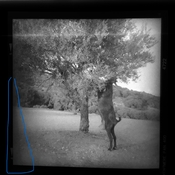
And the other one (the image with the goat) shows such a faint/unclear defect that it's hard to tell if it's related at all, or if it's also a scene element.

I will try to do so.
Thanks. I'd be especially interested in the frames before and after the goat image. I'm very skeptical that there would be a processing/chemical coverage that would be so localized; a full view on the film strip would shed some light on the matter, surely.
 
All remarks refer to the circled areas.

The line is in the posted image; I simply inverted what was there and played with the curves to bring out the detail...


I am not saying it is a cast shadow; it appears to be a physical part of the building, but I was not there when it was taken, so it is only a guess. The shadows of the tree are broken over the line; seems logical to me.

Apologies for misunderstanding. Its certainly not a physical part of the building. You can see that the distance between the triangular section and the circular window is not the same in every frame. That is if I have understood correctly.
 
All remarks refer to the circled areas.

The line is in the posted image;

So it is. That line is the top of the light box that I didn't notice.
 
Its certainly not a physical part of the building. You can see that the distance between the triangular section and the circular window is not the same in every frame. That is if I have understood correctly.

That's what parallax does. We use it when we compose an image. Even small changes in viewpoint can have a major effect on the relationship between the objects in the frame.

You changed viewpoint between frame 1 and 2. If you look at the other objects in your image you can see that they too move in relation to each other.

Our brains are wired to find patterns, even when there are none. I think those trianges are playing tricks on you.
 
That's what parallax does. We use it when we compose an image. Even small changes in viewpoint can have a major effect on the relationship between the objects in the frame.

You changed viewpoint between frame 1 and 2. If you look at the other objects in your image you can see that they too move in relation to each other.

Our brains are wired to find patterns, even when there are none. I think those trianges are playing tricks on you.

I think you will have to take my word for it. There is no part of the building that has a structure like that. I may even return to prove it to myself ;-)
 
I may even return to prove it to myself ;-)
Please do! That's part of the fun of solving these mysteries is actually solving them. If that building is convenient to you it would be great to pay a return visit and see what's there. Or if it's a historical building perhaps there are already images of it online somewhere and we can sleuth from the comfort of our laptops.

I've been convinced since post 18 that this is just a corner of the building or some other architectural detail, which would explain why it's (1) parallel to the water stain on the wall, and (2) not present on the other non-building negatives. But maybe I'm wrong. Don't leave us hanging! 😀
 
I'm intrigued and confused.

In the first two images what is the mark we are talking about? I can see an area in each picture, just to the left of the green line I've drawn which looks like either a corner of a wall or a column? I also set a linear mark (yellow arrow) which appears to be a water stain running down from the circular window.
IMG_8739.jpeg
IMG_8738.jpeg
 
Photrio.com contains affiliate links to products. We may receive a commission for purchases made through these links.
To read our full affiliate disclosure statement please click Here.

PHOTRIO PARTNERS EQUALLY FUNDING OUR COMMUNITY:


Ilford ADOX Freestyle Photographic Stearman Press Weldon Color Lab Blue Moon Camera & Machine
Top Bottom