
• Welcome to Photrio!
    Registration is fast and free. Join today to unlock search, see fewer ads, and access all forum features.
    Click here to sign up

Faulty Kentmere 400 120 ?

Flooded woodland

Flooded woodland

  • 6
  • 0
  • 59
Babylon

D
Babylon

  • 2
  • 1
  • 62

Recent Classifieds

Forum statistics

Threads
202,836
Messages
2,846,262
Members
101,559
Latest member
gnafin61
Recent bookmarks
0

Elmarc

Member
Allowing Ads
Joined
Feb 23, 2022
Messages
221
Location
Eu
Format
Analog
Hello all,
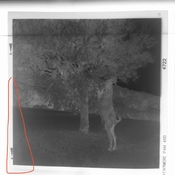
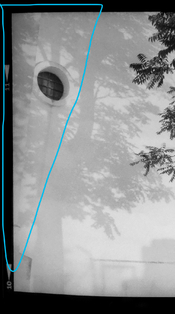
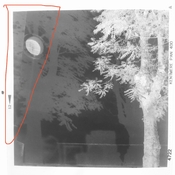
I just developed my first roll of Kentmere 400 120 and as you will see from the examples there are some diagonal patches or blocks of extra density. They appear roughly in the same position on the bracketed frames but also appear in an earlier frame albeit in a different position. Any idea what could be the cause?
I have never experienced this anomaly before. I doubt it is the camera (Rolleiflex TLR) or development error on my part.
Thank you for your opinions in advance.
 

Attachments

  • 9FA3FAD6-3307-47E5-9590-FF880650D49B.jpeg
    9FA3FAD6-3307-47E5-9590-FF880650D49B.jpeg
    582.9 KB · Views: 269
  • 8AE3D789-25FC-4104-BBEB-89CFC987FA4D.jpeg
    8AE3D789-25FC-4104-BBEB-89CFC987FA4D.jpeg
    579.3 KB · Views: 278
  • 8DC7F725-FD40-4FFD-B78C-8E2B5E05574A.jpeg
    8DC7F725-FD40-4FFD-B78C-8E2B5E05574A.jpeg
    510.4 KB · Views: 272
Hello all,
I just developed my first roll of Kentmere 400 120 and as you will see from the examples there are some diagonal patches or blocks of extra density. They appear roughly in the same position on the bracketed frames but also appear in an earlier frame albeit in a different position. Any idea what could be the cause?
I have never experienced this anomaly before. I doubt it is the camera (Rolleiflex TLR) or development error on my part.
Thank you for your opinions in advance.

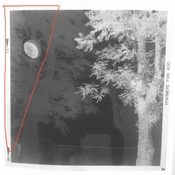
I'm pretty confident saying it's nothing to do with the manufacturing of the film. The fact that it appears in more or less the same position on at least two of the frames indicates to me that it was something that happened in camera. The hard line would be very difficult to achieve in the development stage, but easy enough in the camera. Hazarding a guess, it seems that something almost transparent was inside the camera. A snip of film leader? Maybe someone has an idea more specific to this camera, but I'm pretty sure this is an in camera issue.
 
Its unlikely that it would be a film leader as this is 120 film and there is no leader as such.
Is it plausible that one of the blades of the leaf shutter was a little slow? I don't know enough about leaf shutter mechanisms to know if one blade could react slower than the others at the point of exposure.
Just thinking aloud here...
 
Last edited:
I'm pretty confident saying it's nothing to do with the manufacturing of the film.

Indeed; it is absolutely certain to NOT be a coating or manufacturing defect. The diagonal nature of the anomaly combined with the perfect alignment with individual frames proves this beyond any doubt.

diagonal patches or blocks of extra density.

I see minus density, not excess density. However, it's very possible that the patches in the corners are actually as they should be, and the rest of the film is fogged due to an in-camera light leak of some sort.
I doubt it's the shutter blades since these are pretty far from the film surface and would therefore not cast such a sharp shadow. It's more likely something close to the film. It can be on either side; the fogging may have taken place from behind the film just as well. I'd inspect the camera closely for any light leaks.
 
Indeed; it is absolutely certain to NOT be a coating or manufacturing defect. The diagonal nature of the anomaly combined with the perfect alignment with individual frames proves this beyond any doubt.


I see minus density, not excess density. However, it's very possible that the patches in the corners are actually as they should be, and the rest of the film is fogged due to an in-camera light leak of some sort.
I doubt it's the shutter blades since these are pretty far from the film surface and would therefore not cast such a sharp shadow. It's more likely something close to the film. It can be on either side; the fogging may have taken place from behind the film just as well. I'd inspect the camera closely for any light leaks.

I was looking at the contact sheet when I wrote 'extra density'. But you are correct.
Re the blades, yes they are too far from the film plane to create such a defined edge. Thank you for clearing that up.
As for light leaks, I will check, but if one does exist it would have been between rolls as this is the first roll from the same camera to exhibit such an anomaly.
 
Or sources of internal reflections!

Rolleiflex TLRs can produce reflections from the one of the chrome rollers when the frame is overexposed but this looks like something entirely different.
 
As for light leaks, I will check, but if one does exist it would have been between rolls as this is the first roll from the same camera to exhibit such an anomaly.

Well, a problem manifests itself at some point. Moreover, with light leaks (or reflections), it matters a lot how the camera was handled. Did it spend much time in bright light, or not? How as it held in relation to bright light sources (particularly the sun)? This makes it sometimes puzzling why a light leak or reflection occurs intermittently.
 
To me the line in the two first images looks like a part of the building.

But that doesn't explain the image of the mysterious two-legged creature. Perhaps something in front of the lens?
 
Were the pictures taken outside or through a window?
 
Indeed; it is absolutely certain to NOT be a coating or manufacturing defect. The diagonal nature of the anomaly combined with the perfect alignment with individual frames proves this beyond any doubt.
Hard agree, but whenever _I_ make strong statements like that I end up with someone splitting hairs about the percentage of certainty :tongue:
 
Well, a problem manifests itself at some point. Moreover, with light leaks (or reflections), it matters a lot how the camera was handled. Did it spend much time in bright light, or not? How as it held in relation to bright light sources (particularly the sun)? This makes it sometimes puzzling why a light leak or reflection occurs intermittently.

The camera is subjected to bright sunny conditions on most days but I have never encountered such a problem before with said camera. I doubt a light leak would be so uniform in shape. A reflection possibly....
 
It sounds as if the quickest way now to solve the problem is to contact Ilford.

pentaxuser

I did just that. The technical dept ruled out the camera or a manufacturing fault. They came to the conclusion of x-ray damage. The film did pass a scanner once ( non CT)
I just processed a roll of FP4 from the same camera in similar lighting conditions without problems.
 
I did just that. The technical dept ruled out the camera or a manufacturing fault. They came to the conclusion of x-ray damage. The film did pass a scanner once ( non CT)
I just processed a roll of FP4 from the same camera in similar lighting conditions without problems.

I am glad that the problem now seems to be fixed but I find it surprising that Ilford concluded that one pass from a non CT scanner was enough to create the problem for a 400 speed film

Just out of curiosity , how was it that it was one scan only? If you pass a scanner don't you have to pass it or a similar scanner on the return journey and that's assuming that there were no scanners at the other end?

Thanks

pentaxuser
 
Can you show precisely where the anomaly is on frame 1 and 2? I still don't see it.
 
Can you show precisely where the anomaly is on frame 1 and 2? I still don't see it.

I don’t either. The two diagonal lines in the OP's highlighted area appear to be part of the image: a water stain on the wall beneath the circular window, and some geometry (possibly a corner of the building or a column) that is closer to the camera than the window and partially obstructing our view of the window. I don't see any problems with the negative but maybe I'm just missing something that others are seeing. Here's the highlighted area inverted:
 

Attachments

  • 8AE3D789-25FC-4104-BBEB-89CFC987FA4D.jpg
    8AE3D789-25FC-4104-BBEB-89CFC987FA4D.jpg
    337.8 KB · Views: 97
I am glad that the problem now seems to be fixed but I find it surprising that Ilford concluded that one pass from a non CT scanner was enough to create the problem for a 400 speed film

Just out of curiosity , how was it that it was one scan only? If you pass a scanner don't you have to pass it or a similar scanner on the return journey and that's assuming that there were no scanners at the other end?

Thanks

pentaxuser

This was a train journey with scanners at departure only.
 
Can you show precisely where the anomaly is on frame 1 and 2? I still don't see it.

I didn't either until I looked more closely There is an area of less shadow which is easier seen in frame one but is less clear in frame 2 and if anything is more marginal still in frame 3. The problem is that if I am seeing things correctly the red triangle does not mark the problem accurately The issue is within the red triangle but that triangle also contains part of the shadow area that looks the same as the unaffected part outside of the triangle

I hope that helps

pentaxuser
 
It looks like a wall on the first one as it hides the round window frame. The second shot just looks very overexposed so internal flare?
 
This failure pattern and in particular the alignment with in-camera frames makes x-ray damage exceedingly unlikely. Sorry to disagree with Harman tech support.
 
I didn't either until I looked more closely There is an area of less shadow which is easier seen in frame one but is less clear in frame 2 and if anything is more marginal still in frame 3. The problem is that if I am seeing things correctly the red triangle does not mark the problem accurately The issue is within the red triangle but that triangle also contains part of the shadow area that looks the same as the unaffected part outside of the triangle

I hope that helps

pentaxuser

Yes, that is correct. I did not want to obscure the part by having the red line too close. If one superimposes the problem area on the photo of the goat in the tree and orientates that 180 degrees then the problem area should be more evident.
 
Photrio.com contains affiliate links to products. We may receive a commission for purchases made through these links.
To read our full affiliate disclosure statement please click Here.

PHOTRIO PARTNERS EQUALLY FUNDING OUR COMMUNITY:


Ilford ADOX Freestyle Photographic Stearman Press Weldon Color Lab Blue Moon Camera & Machine
Top Bottom