
• Welcome to Photrio!
    Registration is fast and free. Join today to unlock search, see fewer ads, and access all forum features.
    Click here to sign up

f/2.8 and be there, and let the EI float.

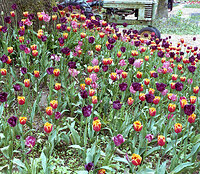
Tractor & Tulips

A
Tractor & Tulips

  • 0
  • 0
  • 10
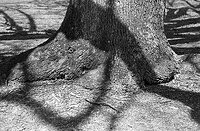
Tree with Big Shadows

Tree with Big Shadows

  • 2
  • 0
  • 69

Forum statistics

Threads
203,456
Messages
2,855,025
Members
101,852
Latest member
keith1420
Recent bookmarks
0
I think "workable" is the operative word regarding that "f/8 and be there" phrase. At f/8 in most photojournalistic conditions, film latitude should cover most inaccuracies in exposure, and the DOF should be deep enough to cover any inaccuracies in nailing focus. So in other words, at f/8 you'll get a decent enough shot to print if you get your other settings somewhere in the ballpark.

I agree.

What I'm trying to find in this thread is how we each move past that basic "f/8 and be there" thought, how we each move from simply workable to our special touch.

In my case, liking short DOF, my compromises include having to work harder at focus, having more failed focus shots, and the willingness to deal with what many might consider "wild" rather than "controlled" exposures. As Gerald mentioned above, that makes more work at the enlarger, I'm ok with that.

My question assumes that we have a style we prefer, some people don't and that's ok. For those that do, what are you willing to do the hard way to get the result you want?
 
So, what compromises do you make to get the look you prefer and make shooting easier?

What I think is interesting is the way that the word "compromises" works in this context.

It does seem that in 2015, for many people the standards of photographic good remain firmly rooted in the late 19th and early 20th centuries. I'm thinking really of the tradition that values sharpness, clear subjects, very careful and perhaps formal compositions, and a very full tonal range as key touchstones of a "technically excellent" photograph.

Thus even someone who doesn't hold those values as essential to their work (I hope I'm not misinterpreting markbarendt as someone in that camp - if I am, my apologies) can speak of "compromises", as if perhaps they don't mind a bit of softness or blur or whatever but also sort of feel that that can be overlooked in the service of the image, even though they know that somehow thereby it doesn't really quite come up to scratch ...

Then we have the difficulty that people who don't particularly care whether their pictures are slightly off-focus, or a tiny bit shaky, or are cropped are seen as somehow having to justify this in terms of their "vision".

(Whereas those who systematically and by habit and preference ensure that their pictures are deadly sharp, that focus is nailed dead on, etc., never seem to be expected to have to justify those choices :smile:)

As for me, I'm not a professional photographer. Accordingly, when I load a roll of 35mm film, I don't go out and shoot it as an assignment or (very often) with a personal project in mind. My camera will go out with me on half a dozen occasions, and there's be all sorts of scenes shot in all sorts of lighting and contrast situations, and thus perforce my EI floats. When those rolls come out of the tank, some frames are dense, others are thin, some are flat, some are contrasty .. some are only good for the bin, others are works of heartbreaking genius of course ...
 
Last edited by a moderator:
What I think is interesting is the way that the word "compromises" works in this context.

It does seem that in 2015, for many people the standards of photographic good remain firmly rooted in the late 19th and early 20th centuries. I'm thinking really of the tradition that values sharpness, clear subjects, very careful and perhaps formal compositions, and a very full tonal range as key touchstones of a "technically excellent" photograph.

Thus even someone who doesn't hold those values as essential to their work (I hope I'm not misinterpreting markbarendt as someone in that camp - if I am, my apologies) can speak of "compromises", as if perhaps they don't mind a bit of softness or blur or whatever but sort of feel that that can be overlooked in the service of the image, even though they know that somehow thereby it doesn't really quite come up to scratch ...

Then we have the difficulty that people who don't particularly care whether their pictures are slightly off-focus, or a tiny bit shaky, or are cropped are seen as somehow having to justify this in terms of their "vision".

(Whereas those who systematically and by habit and preference ensure that their pictures are deadly sharp, that focus is nailed dead on, etc., never seem to be expected to have to justify those choices :smile:)

As for me, I'm not a professional photographer. Accordingly, when I load a roll of 35mm film, I don't go out and shoot it as an assignments or (very often) with a personal project in mind. My camera will go out with me on half a dozen occasions, and there's be all sorts of scenes shot in all sorts of lighting and contrast situations, and thus perforce my EI floats. When those rolls come out of the tank, some frames are dense, others are thin, some are flat, some are contrasty .. some are only good for the bin, others are works of heartbreaking genius of course ...
:D
 
I have never dared to do an outdoor fashion shoot at f2.8 on a film camera because I don't know if the high speed sync on the flash would work on a film camera.

It does provide a challenge.
 
I have never dared to do an outdoor fashion shoot at f2.8 on a film camera because I don't know if the high speed sync on the flash would work on a film camera.

That depends on the camera, some needed 1/30, other 1/60 or 1/125 as the shortest speed for synch but there were cameras that could synch at higher speeds. I guess the assumption here is 35mm but if you move to a MF camera then there were options for leaf shutter lenses on some cameras with FP shutters to get around this and they work OK even at 1/500 with electronic flash.

Alternately it depends on the power control of the flash, I had two great Braun flashes that I used to use for fill in work, the first was stolen the second was broken when a model sent my camera flying, it broke but saved the camera :D

Ian
 
I always took this expression to mean that the most important aspect of photography is simply to be out there working and good things will happen, the f8 reference being a simplification of the technical process because, in terms of making great pictures, that's the easy part.

That is my understanding too. The quote is attributed to Arthur "Weegee" Fellig when asked about his photographic technique. The point of it is not that f/8 is an especially wonderful aperture. It's simply that optimising the technical details - such as which aperture to use - is unimportant in photojournalism. What is important is to be there.
 
It also depends on film speed; with many cameras, f/2.8 can be difficult (or impossible) to work with when outdoors in daylight if you're using relatively fast film.
 
First you have to be there. After that the exposure depends on the lighting. The exact exposure is one from a range of options. There are no fixed rules and the photographer has to make choices.
 
These days, you really can let the EI float with a digital Pentax, because it has a unique TAv mode (combined shutter and aperture priority: you select the speed (T) and aperture (A) and it chooses the ISO for the sensor).

Typically, I use either ASA 100 or 200 film and like my aperture to be f/5.6 or f/8; I'll choose a wider aperture if the situation needs it, which is one reason I bought the 135/2 DC Nikkor.

If you're using a Minox, your aperture is f/3.5 whether you like it or not. Once loaded with today's 100 or 400 film, it's been a novel and interesting experience in choosing my shutter speed. Definitely different than what I've been used to, but my results were good.
 
I can't imagine driving a car with using only one gear, at one speed. Some lawn mowers do better than that. What's the difference in this
f-stop discussion?
 
So Drew... my reasoning for f/2.8 and be there is to target a specific optically controlled look, f/64 defines another look.

Same general idea with speed choice, the speed choice defines how much blur.

The EI choice (EI float) though, doesn't change the look of the subject/content matter much, if any.
 
No two scenes are the same. It would be like opening a shoe store that sells only one or two sizes of shoes, then demand everyone be born
with that size foot.
 
I'm not suggesting that you, or anyone else, has to follow my lead.

I will though suggest that if one likes or wants to be known for a certain style, one will need to figure out how to make it repeatable.

Hurrel's lighting, Adams f/64, HCB's geometry & timing, Steve McCurry's compositions in far off lands, Karsh's portraits, .....

Each of these styles is formulaic, they each require their own fairly rigid set of rules and compromises. Metaphorically a very specific shoe size. :wink:
 
The idea that AA always used f/64 is nonsense. He would have only done that when necessary. If you don't belive me, just read some of his
books or try working with a view camera for awhile. Ain't how it happens. Ever hear of the Zone System, for example, or read his book, The Camera. And as far as Karsh and Hurrell, nonsense too. I've had long talks with one of Hurrell's living assistants. All the above would have
gone stone broke if they had been formulaic.
 
Gosh, Mark. A stereotyped club "manifesto" and what happens in the real world are never the same thing. AA was primarily a commercial photographer. That's how he made his living. Same with EW, except for an occasional grant. Around here any number of people have had
personal connections to those names. We're "in the know". And that was only a brief phase anyway. It was a reaction to the previous soft-focus Pictorialism, and more concerned with a deliberately sharp look with lots of detail rather than any fixed f-stop formula. The "f/64" thing was just a slogan. It just doesn't work that way. Never did. Never will. Spend some time working with an 8x10 camera and printing, and you'll understand why.
 
The idea that AA always used f/64 is nonsense. He would have only done that when necessary. If you don't belive me, just read some of his books or try working with a view camera for awhile. Ain't how it happens. Ever hear of the Zone System, for example, or read his book, The Camera. And as far as Karsh and Hurrell, nonsense too. I've had long talks with one of Hurrell's living assistants. All the above would have
gone stone broke if they had been formulaic.

Yes f/64 was a concept not a dictate.
 
... For example, there's a famous F-64 period AA closeup of a fence with crisp blades of grass. Given the slow film speeds at the time and
the fact blades of grass get disturbed by wind very easily, it's likely that particular shot was made as quickly as possible, necessitating a
larger aperture of perhaps f/32 or so. I could be wrong. Maybe it was a windless day. Unlikely, since in this area the wind is incessant.
One problem they did have back then is that filmholders and camera backs were not as precise as now, big film can sag a bit, and smaller
f-stops helped that problem. If you've ever seen AA prints really big, they aren't all that sharp by modern standards. A good read is AA's
"Examples", where he reminisces about how certain famous shots were taken and printed.
 
Having a formula (a style) isn't a bad thing and I'm not saying Ansel never deviated. I to deviate on occasion.

One point I'm making is that Ansel and others had a certain styles or looks that he/they shot for. Ansel even laid out his instructions for his system (his formula) very specifically right down to the exact density the negative should have at specific points.

The more important thing I am hoping to highlight in this thread is to see how others use their tools to define their results.

I think Ansel and I are similar in that we use(d) aperture as the primary tool for defining our styles.

Ansel was willing to use longer exposures than me.

I'm willing to let the EI (density) float more than Ansel was.
 
What does any of this have to.do with shooting or printing 8x10?
I'm sire some.folkswho were commit to being f64 elievers didn't ONLY use a 8x10 camera...
 

A somewhat disappointing Wiki entry. [*]

Regardless... was f/64 the primary means to achieve depth of field? I would think movements such as tilt would be what large format landscape photographers would use to get a sharp image from close up to infinity. In that case, and especially with slow film, the aperture would be wider, such as f/22 or f/32. At f/64, how much does diffraction degrade a 4x5 or 8x10 image? I've never used that setting on my lens.

I probably wouldn't be a fan of the Pictorial style the article mentions. However, a style where wide apertures dominate sounds intriguing.


[*]
Some of the political spin in that article is incorrect and inappropriate - these days I suppose that's par for the course: I once read a Lens Test article in Shutterbug that somehow managed to take a swipe at George Bush.
 
Photrio.com contains affiliate links to products. We may receive a commission for purchases made through these links.
To read our full affiliate disclosure statement please click Here.

PHOTRIO PARTNERS EQUALLY FUNDING OUR COMMUNITY:


Ilford ADOX Freestyle Photographic Stearman Press Weldon Color Lab Blue Moon Camera & Machine
Top Bottom
