

• Welcome to Photrio!
    Registration is fast and free. Join today to unlock search, see fewer ads, and access all forum features.
    Click here to sign up

Experimenting With Fix

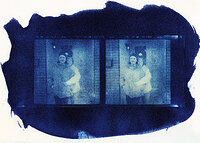
Cyanotype stereo card

A
Cyanotype stereo card

  • 0
  • 0
  • 0
IMG_0025.jpeg

A
IMG_0025.jpeg

  • 0
  • 1
  • 0

Forum statistics

Threads
203,125
Messages
2,850,234
Members
101,690
Latest member
nisherii
Recent bookmarks
0

vickersdc

Member
Allowing Ads
Joined
Jan 8, 2007
Messages
453
Location
Somerset, UK.
Format
Multi Format
Hi all,

I've been playing around with using coffee/washing soda as a developer for my paper neg's and I'm pleased with the results and look that I'm getting. I'm using a plain water stop bath, but now I'd like to make a simple fixer bath.

OK - so I could purchase Sodium Thiosulphate and I know it's cheap and readily available, but am I right in thinking that in the early days of photography sea water was used to fix images?

It may need lots of water and/or take a longer time to work but I'm interested in finding out a bit more about whether a saline solution could be used, i.e. by dissolving a quantity of table salt in water.

Does anyone have any ideas about whether it would work? What ratios would be needed? How long it would take? Has anyone out there tried it?!

Thanks,
David.
 
I don't think you are correct in thinking sea water is a fixer. The Navy used sea water to wash negatives, save for the final rinse which was fresh water. The reason for this was to conserve fresh water on board the ship for cullinary purposes. The photogs would place the developed film in mesh and drag it behind the ship for a few minutes then final wash and dry.
 
Well, it's certainly a possibility that I got the wrong end of the stick! But, I'm also fairly sure that I had read somewhere (and that's the problem as I don't remember where) that an essentially saline solution was used - or at least tried - as a fixer in the early days...

Unfortunately, when I read it I was actually searching for something else and paid little attention to it at the time, now all I have is this vague recollection!
 
Sorry, but there is no practical substitute for sodium thiosulfate or ammonium thiosulfate as a fixing agent.
 
The beautiful property of thiosulfates is that they form a very stable and soluble complex with silver salts, and as a result they effectively remove all remaining silver salts from you film. That's why thiosulfates work so well as fixers. There is no indication that sodium chloride can substitute for that.

And one more point: sewage plants really hate silver salts because they kill their bacteria. Even if you can fix a roll of film with 50l of sea water, you have just created 50l of hazardous waste which should definitely not go in your drain. Compared to these troubles a few spoonfuls of thiosulfate sounds quite nice :smile:
 
I'm thinking that I really need to start a chemistry degree or something to understand all this!

Thanks for the information, Rudeofus; as mentioned above, I'm aware that sodium thiosulphate is cheap and easy to get hold of, but it was just a thought...

Cheers.
 
Thought process are good for all of us. Do not stop thinking or asking questions, it's how we learn.
 
You are correct that in the very early days salt was used to try to stop ongoing development. William Henry Fox Talbot tried it unsuccessfully until Herschel advised that sodium hyposulfite (the misnomer for thiosulphate) would do the job. This is also the source of the word hypo being used for fixer today.
 
I think the discovery of sodium thiosulfate as a fixer was THE giant leap in the development of photography. Prior to its use, photographic images simply faded away.

Dave
 
In keeping with the "all from household products" gestalt of coffee developers, however, some people have made fixers out of fertilizers that contain ammonium thiosulfate. You probably can't get fertilizer at the grocery store, but at least it *is* a non-photo consumer product.

-NT
 
OTOH, there are ways to stabilize the image from further change. You leave the Silver Halides in place and treat them with an agent that prevents any further "damage" from light. This was the entire tenor of B&W work done by Grant Haist before his retirement. He and a team of chemists devised an entire class of chemical stabilizers that created light insensitive silver salts and prevented any further change.

The simplest and weakest (poorest) IIRC was Potassium Iodide. The best was a class of chemicals called Isothouroniums. Of course going this route defeats the purpose of making the process simple or making a process that uses common chemicals. I'm just saying.....

PE
 
You must NEVER use Potassium salts in fixers. This is an absolute NO NO! Nor should you use Calcium or Magnesium salts. Aluminum salts do not appear to do any harm though. These 3 salts have been shown to virtually poison the fixing reaction.

As for making hypo, see this: On an industrial scale, sodium thiosulfate is produced chiefly from liquid waste products of sodium sulfide or sulfur dye manufacture.[1] In the laboratory, this salt can be prepared by heating an aqueous solution of sodium sulfite with sulfur. It is from the Wikipedia article on hypo.

PE
 
Thought process are good for all of us. Do not stop thinking or asking questions, it's how we learn.

+1

I have heard that sodium thiosulphate is available from pool supply companies or is the main constituent of one of the liquid pool products. Not quite "household", but close enough.
 
I gotta get me on a chemistry course, sulphites, sulphates, halides, chlorides, chlorates... lets call the whole thing off... (sorry, just burst into a little bit of song there).

:0)
 
Another fixing agent is P. Cyanide - used by wet-plate/tin-type purists.

Many early photographers successfully removed themselves from the gene pool. Darwin in action!
 
Another fixing agent is P. Cyanide - used by wet-plate/tin-type purists.

It just astounds me that people do this. I'm not a fainting flower about chemistry generally, but KCN is scary stuff.

-NT
 
It just astounds me that people do this. I'm not a fainting flower about chemistry generally, but KCN is scary stuff.

-NT

It must be good stuff, they used in gas chambers for years. It will kill you dead!:sad:
 
I gotta get me on a chemistry course, sulphites, sulphates, halides, chlorides, chlorates... lets call the whole thing off... (sorry, just burst into a little bit of song there).

:0)

Get yourself a copy of "Elementary Photographic Chemistry" compiled by the fine folks at Eastman Kodak.

My copy has a cover price of 1.99usd but I think it ran 8 bucks on ePay and I got lucky. They usually cost more. I've seen some unrealistic prices for it recently.
 
Get yourself a copy of "Elementary Photographic Chemistry" compiled by the fine folks at Eastman Kodak.

My copy has a cover price of 1.99usd but I think it ran 8 bucks on ePay and I got lucky. They usually cost more. I've seen some unrealistic prices for it recently.

Thank you for the heads-up on that - I'll keep a lookout for it, sounds like it might be just what I need to gain a better understanding of the underlying chemistry behind it all.
 
You can get sulphur really cheaply at some shops, such as K-Mart here in Australia at the gardening section.

And sodium sulphite is easy to find (or make from metabisulphite) one of which will be in shops, and cheaply available.

Heating sulphur and sulphite in an aqueous solution should give you thiosulphate, you should know when the reaction is taking place as sulphur is not soluble in water and will start dissolving as it converts to thiosulphate iirc.

If you get sodium metabisulphite and ammonium hydroxide (household ammonia) you should be able to make a mix of sodium sulphite and ammonium sulphite, in which should give you a mix of sodium thiosulphate and the faster ammonium thiouslphate I think.
 
Heating sulphur and sulphite in an aqueous solution should give you thiosulphate, you should know when the reaction is taking place as sulphur is not soluble in water and will start dissolving as it converts to thiosulphate iirc.

It's not that simple. When you heat sulfur and sodium sulfite you are also going to get other sulfur compounds besides thiosulfate.
 
Photrio.com contains affiliate links to products. We may receive a commission for purchases made through these links.
To read our full affiliate disclosure statement please click Here.

PHOTRIO PARTNERS EQUALLY FUNDING OUR COMMUNITY:


Ilford ADOX Freestyle Photographic Stearman Press Weldon Color Lab Blue Moon Camera & Machine
Top Bottom
