
• Welcome to Photrio!
    Registration is fast and free. Join today to unlock search, see fewer ads, and access all forum features.
    Click here to sign up

Experiences with ADOX 25?

Recent Classifieds

Forum statistics

Threads
203,218
Messages
2,851,599
Members
101,729
Latest member
gmed341
Recent bookmarks
0

Nikanon

Member
Allowing Ads
Joined
Jul 11, 2009
Messages
433
Location
Chugwater, Wyoming
Format
35mm RF
I am interested in buying ADOX 25, 50 sheets due to the lower price and the more classic emulsion, as well as the very low ISO that is hard to find in 4x5 other than ortho film, does anyone have any positive or negative experiences with this film?
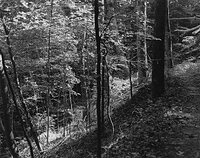
 
I can't speak for the Adox 25 personally, but I have used the Adox CHS Art 100 film on many occasions and I had great results.
 
So far it seems sound and the only reason the price is below a dollar per sheet is because of the older style emulsion most likely
 
Adox CHS 25 (==Efke 25) is one of my favourite films. It has a slightly lower red sensitivity than a "true" pan film, hence is sometimes described as "orthopanchromatic"; I really like the resulting tonality, especially with skin tones. It's a very nice combination with Caffenol developers.

-NT
 
I have not shot it in sheet film, but only 120; and in the Efke brand as well. I found it really clicked in P'Cat HD and while I love what this film is capable of, it's QC left much to be desired. I found pieces of emulsion missing on several shots.

I know someone out there is thinking, "be more careful with it." I am careful with all film that I process and never had a problem with Kodak, Fuji, Agfa or Ilord, only Efke.

Sheet film may be different, I don't know. I do know it's hard to buy Efke when you have to take 2-3 shots of everything so you get one good one. If they improve QC, I'll be the first in line to buy some!
 
It is a great in sheet film. I have found that is is not quite as great as the 120 version, but it is still very good. Another option that I have been shooting lately is Adox PAN 25. It has a really unique look, is ridicilously sharp, and has a perfectly clear base, more so than Adox 25.
 
So far it seems sound and the only reason the price is below a dollar per sheet is because of the older style emulsion most likely
I don't think it's the main reason of being cheap. I believe it's cheap since the fotokemika factory is placed in Croatia, that should have lower costs; and specially, because they have a "lighter" QC that saves a lot of the money. Raising the QC would raise the price. Probably the efke film is easier on the manufacturer process, and it costs less to produce? Don't they have the only dip-and-dunk film coating machine in the world?
 
  • Deleted member 2924
  • Deleted
I just used it(efke) in 4x5 for the first time and I think it will be about the only sheet film I use from now on for anything thats not hand held.
 
above and other places i heard some things about holes in emulsion, i had a similar problem with foma pan 200 (arista edu 120 ultra 200) and it ruined 99% of my 4x5 negatives from a once in a lifetime trip to ireland... foma (arista) will never get my service again. Every shot i make is twice as important as the previous one so i can afford to try anything out and hope for the best (the same thing i do for infrared film , figure out the factor and then shoot).
 
I had that happen with arista 100 in 4x5 but in my case I determined it was my own errors in processing that caused the problem
 
no brian it definately wasnt! I treat every negative like it is my last, i live on a tight budget as well as caring about each shot that i make, ( i take an average of 2 hours to make a 1 4x5 photo, this is only shooting the negative, not including developing and printing) and for the problem to be on each negative, shot and processed and some stored differently i knew it was not an error on my part, on the 120 film as well i noticed holes in the emulsion, here look closely at this photo i made on arista 120 ultra 200, printed on ilford galerie grade 3 glossy 11x14, http://farm4.static.flickr.com/3369/3199753523_a68980141e_b.jpg , these are holes in the actual emulsion visible on the film, they are much worse than this on the 4x5 negatives (basically unprintable)
 
that does look similar to the problems I had , maybe my processing was'nt so bad as I thought. I do understand why you wont use that film anymore.
the photo's that I had the pinholes on were some portraits of my grandmother and unfortuanatly I wont ever be able to take her picture again
she passed not long after those photo's were made
 
no brian it definately wasnt! I treat every negative like it is my last, i live on a tight budget as well as caring about each shot that i make, ( i take an average of 2 hours to make a 1 4x5 photo, this is only shooting the negative, not including developing and printing) and for the problem to be on each negative, shot and processed and some stored differently i knew it was not an error on my part, on the 120 film as well i noticed holes in the emulsion, here look closely at this photo i made on arista 120 ultra 200, printed on ilford galerie grade 3 glossy 11x14, http://farm4.static.flickr.com/3369/3199753523_a68980141e_b.jpg , these are holes in the actual emulsion visible on the film, they are much worse than this on the 4x5 negatives (basically unprintable)

Am I missing something here? Holes in the emulsion would show up as black dots, surely? I can't see any black dots on your image, only white dots that look remarkably like dust marks.

Sorry to throw a spanner in the works.

Regards

Stoo
 
Same here. Additionally why don't you guy just spot these out? This is far from DESTROYED or UNUSABLE. Make do.
 
There are some noticable in the lights, the white is
not dust but emulsion defects, I Checked the negative and camera for dust constantly, I don't have any of the 4x5 shots but if you saw you'd agree it was bad
 
There are some noticable in the lights, the white is
not dust but emulsion defects, I Checked the negative and camera for dust constantly, I don't have any of the 4x5 shots but if you saw you'd agree it was bad

But I have the same confusion as an earlier poster---pinholes in the emulsion would show *black* on the print, not white. What do the corresponding spots on the negative look like? (Well, opaque, obviously, but can you tell anything beyond that?)

-NT
 
In the case I mentioned earlier it was definatly pinholes in the negatives with the resulting black spots on the prints.
improving my prewash pretty well fixed the problem. I dont have a scanner so I cant share them here
as it were the prints I was making at the time were to have a "old" look to them anyway and with sepia toning they "looked" right to everyone I was making them for
as already said here I made do with what I had, but it was still frustrating
now...is spoting really as simple as it looks? any advice?
 
I had white specs showing up on prints that did not seem to go away no matter how well I cleaned the negatives. In the end, the culprit was some dust on the condensor. I felt pretty foolish after ruining a few sheets of paper.

Marcus
 
I make my own spotting brush by removing some of the bristles out of a very fine artist brush. It is fairly simple to touch up a print but make sure that you practice on a test print first. The brush should fairly dry or you will apply to much. Use only a tiny amout of spotting ink and mix with water to achieve the very light tones. I use a small plastic lid for this. A simple magnifier is helpful for working on very small dots. Be patient and don't apply to much ink at once. In the end, your prints will look perfect.

Marcus
 
I am interested in buying ADOX 25, 50 sheets due to the lower price and the more classic emulsion, as well as the very low ISO that is hard to find in 4x5 other than ortho film, does anyone have any positive or negative experiences with this film?

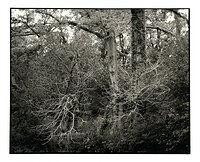
I am assuming that you mean ADOX Pan 25 (not CHS 25 Art).
If so, then I have used the film for more than 50 sheets. It hasn't failed never.
In the 4x5 size this film is really good, in small format cameras I don't like it so much due to PET base that is used instead of gelatine. Thus the films are curliest i've ever seen.

So far I have found only one potential defect on the ADOX sheet films. It was CHS 100 Art sheet film, which had kind a scratch or scar on the emulsion. It was so irregurally shaped that I suspected that it's not caused by myself...
 
Seems to be some confusion, The CHS 25 Art is EFKE 25, which is the most common of the films, Adox Pan 25 comes from a different manufacturer.

Adox/EFKE films are very good/excellent, but more care is needed with processing and handling when wet, they are superb with Pyro developers, Pyrogallol/Pyrocatechin and give excellent acutance and great definition of fine detail.

Ian
 
Photrio.com contains affiliate links to products. We may receive a commission for purchases made through these links.
To read our full affiliate disclosure statement please click Here.

PHOTRIO PARTNERS EQUALLY FUNDING OUR COMMUNITY:



Ilford ADOX Freestyle Photographic Stearman Press Weldon Color Lab Blue Moon Camera & Machine
Top Bottom