• Welcome to Photrio!
    Registration is fast and free. Join today to unlock search, see fewer ads, and access all forum features.
    Click here to sign up

examples of emulsion making

Somewhere...

D
Somewhere...

  • 2
  • 1
  • 59
Iriana

H
Iriana

  • 6
  • 1
  • 119

Recent Classifieds

Forum statistics

Threads
202,738
Messages
2,844,921
Members
101,493
Latest member
aekatz
Recent bookmarks
0

kevin klein

Member
Allowing Ads
Joined
Mar 20, 2006
Messages
194
Format
Large Format
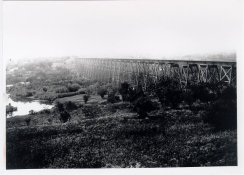
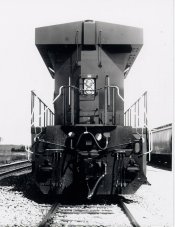
Here are prints made from two plates made using the washed emulsion fomula except I did wash, shread and filter the emulsion.

The emulsion will be gritty and not adheer well to the plate if not washed and filtered.
 

Attachments

  • kevbridge.jpg
    kevbridge.jpg
    142.2 KB · Views: 375
Last edited by a moderator:
lost image

Could not get both images in one posting. Here is the other.
 

Attachments

  • kevtrain.jpg
    kevtrain.jpg
    85.3 KB · Views: 350
emulsion speed

The speed of emulsion is 1.5. Exposure was 6 sec, f:45.
I used 1 mil of .02 hypo solution to 10 gm of photo gel.

I added all the silver at once. Next time I am going to add silver much more slowley to see if the contrast will be a little less and faster speed. I prefer the slower speed for ease in handling in safe light with out the danger of fogging the plate and also because I use the cameras for wetplate so the lenscap can be used rather than a shutter.
 
Fantastic! They look really good.
How did you coat the plates?

Thanks for keeping us updated with you experiments.
 
As you slow the silver nitrate addition, contrast goes down and speed goes up, so your change should do as you say.

The hypo addition should be based on silver, not gelatin and the amount as well as the hold temperature must be determined by trial and error. I use 100 mg of sodium hypo pentahydrate per mole of silver and hold 1 hour at 60 C. I see a big gain in speed and contrast.

PE
 
Amazing.

Now there will be a run on plate holders for LF cameras! :wink:
 
That's a fantastic result. Tweak the contrast, and you're there.

Just how contrasty are they? Are we looking at print scans, and if so, on what paper? Or are these neg scans, and do you know what the density range of the negs is?
 
Well done!

What size are your plates and how did you coat them?

I'm still battling away tring to make my first emulsion but I'm thwarted at every turn by Health and Safety rules (HazMat in the US, I think?). I'm still stuck without 0.880 ammonia and so decided to make my own, but... anyway it is a long story, but I am getting there :smile:

Steve
 
Very impressive. The contrast doesn't look too bad; maybe a tch high, but its hard to tell.

Really really nice quality, and excellent coating of the plates!
 
Well done!

What size are your plates and how did you coat them?

I'm still battling away tring to make my first emulsion but I'm thwarted at every turn by Health and Safety rules (HazMat in the US, I think?). I'm still stuck without 0.880 ammonia and so decided to make my own, but... anyway it is a long story, but I am getting there :smile:

Steve


Steve;

There are formulas out there that do not need ammonia.

In addition, you can take an ammonia type formula and use the acid base cycle (ammonium sulfate), or you can add the iodide at the end of the make, you just have to add less or you will fog the emulsion.

PE
 
Steve;

There are formulas out there that do not need ammonia.

In addition, you can take an ammonia type formula and use the acid base cycle (ammonium sulfate), or you can add the iodide at the end of the make, you just have to add less or you will fog the emulsion.

PE


Well, making ammonia shouldn't be too bad. I ordered loads of laboratory glassware and stuff and set up the equipment I needed (nice and cheap off eBay) and waited for the chemicals to arrive (marble chips, Ammonium Chloride, that sort of thing...)
And waited...
And waited...

Most the people on eBay have been great, but the one guy I ordered the chems from is either a bad apple or, if his excuses are to be believed, eBay screwed up.

I'm still hopeful I may get the stuff eventually...

Meanwhile I tried making CaO from 'precipitated chalk' which I am assured is ground limestone.
Either I was assured incorrectly or the brewery supplier who supllied me didn't give me precipitated chalk at all, but gypsum or possibly magnesium carbonate rather than calcium carbonate... :surprised:

Either way, I must have put enough heat into it to weld a battle ship (cracking the crucible in the process) and the stuff was just the same as when I started, but warmer...

Anyway, I will master it - I'm determined!
I went for a walk through an ancient quarry at the weekend and managed to pick up some lumps of what I think are limestone. I knocked off a few chips with a hammer and put a blow torch on them for a few minutes and, after they cooled, put them in water where they fizzed reasuringly, giving me a white milky solution. So, now all I've got to do is get the barbeque REALLY hot :D

OK, this is getting a bit silly. At this rate I will be sourcing the gelatine by buying my own cow :wink:

But, its kinda fun, just not sure what it has got to do with photography!

Steve
 
Last edited by a moderator:
Thanks for the compliments.

The images are 5x7 enlagments on Ilford VC,RC paper with no filtration. The plates are 3.25 x 4.25 and have well enugh density for albumen or salt printing.

Development is with Dektol 1:1, 2min or D-19, 3 min.

Coating is done in hand just like collodion, I like the idea of using a tea pot, I just pour directly from the stainless steel developing tank I use to melt the emulsion in.

Most formulas call for Ammonia but I like to keep things as simple as possible and use no ammonia.

No subbing was used.

Thanks again.
 
outstanding results...

Kevin,

Those samples were terrific. Thank you for sharing them with us.

Bob M
 
Photrio.com contains affiliate links to products. We may receive a commission for purchases made through these links.
To read our full affiliate disclosure statement please click Here.

PHOTRIO PARTNERS EQUALLY FUNDING OUR COMMUNITY:



Ilford ADOX Freestyle Photographic Stearman Press Weldon Color Lab Blue Moon Camera & Machine
Top Bottom