
• Welcome to Photrio!
    Registration is fast and free. Join today to unlock search, see fewer ads, and access all forum features.
    Click here to sign up

Eugene Atget Appreciation

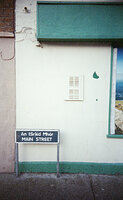
An tSráid Mhór

A
An tSráid Mhór

  • 0
  • 0
  • 16
IMG_1285.jpeg

D
IMG_1285.jpeg

  • 0
  • 0
  • 24

Forum statistics

Threads
203,124
Messages
2,850,179
Members
101,688
Latest member
linie4
Recent bookmarks
0
Factually speaking this doesn't happen a lot at all here on Photrio.
Factually speaking what happened in this thread was a fairly innocuous pun that resulted in a brief and polite exchange of the possible motivations of this small part of Atget's work. This happened on pp24-25 of a long thread where pretty much everything we know about the man has been said, by now. The fact that this dimension of his work is also touched upon is fair & square especially in the manner it was done.

The only thing that's slightly disruptive to the thread is the framing of a nonexistent problem. It's disrespectful to those who intended and succeeded in conducting an inherently respectful exchange of views.

Live & let live, and if there's a problem, use the 'report' function instead of trying to 'solve' it by pouring a mixture of acid and gasoline on it.

I saw nothin'. I heard nothin'. I know nothin'. 😇
 
I would agree with this. Many threads seem to be debased in this way.

Yes and often enough that such flippery like making a pun about women's breasts is one of the reasons we do not get many women here expressing their views. They get enough toxic mascalinity in real life. (deleted comment)

Also I meant flippant -- not flippery as in having flippers.
 
Last edited:
Well, the banter can get kinda sophomoric peep-showish at times on some of these forums
Yes and often enough that such flippery like making a pun about women's breasts is one of the reasons we do not get many women here expressing their views. They get enough toxic mascalinity in real life.

I would like to second my agreement with what @DREW WILEY and @Vaughn have said. I think it is too common for oafish comments to get lightly dismissed as, "boys will be boys," which may be true enough, but none the less, likely to sound offensive to some forum members.

One litmus test participants might use before posting a comment about female anatomy would be to ask themselves, "Would I say this at the dinner table if my mother, wife, and daughter were present?"

To my ear, the comment, "I've seen better knockers," does not sound like part of an inherently respectful exchange of views on a public forum, and probably should have been self-censored.
 
But not in a lascivious way. It seems like he was seeking classical poses.

This got me thinking, besides selling nude studies to painters, what would work best for cityscape painters. I was going through images of Atget online looking for ferns in the foreground, instead I found a common feature in many of his works -- an open and visually quick to move through foreground. An alley or road, steps, open space, etc. moving through the lower 1/3 of the frame or so. This would be expected, it is natural to construct a path for the eye to travel up into one's image. But also I think it would be a good composition style for images to be sold to painters...they would be free to create their own foreground and make it their own painting while taking advantage of the camera perspective..
 
As I understand it from Hambourg's biographical glimpses of Atget's life, he was very disturbed by the way Napoleon III had modernized much of Paris at the expense of the traditional narrow cobblestone street corners, etc, so went out his way to document those specifically, along with the rundown parks. Just like many of us, he was trying to visually preserve what was left of the former architectural culture before it outright disappeared. Winding narrow street were part of that. And his compositions didn't just use geometric disappearing horizons, but atmospheric effects too. Apparently Paris either had thick air, or he timed his shots to look that way, much like the older blue sensitive plate photographers. I never tire of viewing his work.
 
That was what I appreciated about Tokyo -- narrow streets (rarely two vehicles wide) and distinct neighborhoods.

Paris -- at Atget's time there was most likely a lot of classic smog (fog mixed with coal smoke). Being acidic the smog would make the buildings dirty and etch all the limestone. He would have seen the beginning of electricity used for cooking and heating, but natural gas was much later.

Back in 1975 while at uni outside Christchurch, NZ, I helped with a lichen survey in the city (a high-sulfur type of local coal was commonly used for heating and cooking). Some species of lichen are more sensitive to Sulfur dioxide created by the formation of smog. So which species were in relative abundance was an indicator of the amount of smog in that area of the city.
 
Last edited:
I think the intersections were called "coins" (corner, nook, angle) in French. He liked to take his vantage point there both for sake of diminishing point perspective in the distance, and with respect to the coverage of his standard wide angle lens (which often exhibited corner falloff at the top in that setting).

He was also obsessed with the old hand-wrought architecture in those neighborhoods - railings, and especially door knockers. I have one entire Atget book mainly filled with such details. Again, a preservationist mentality. But the book editors have obviously selected what they considered his most interesting examples, often with a surrealistic tinge to them.

Another repetitive feature was a sort of social commentary. Brothels were outlawed from advertising their services, and could only identify themselves with the street number of the location, so they resorted to painting those number especially large, and that is often seen in his street corner views. What percent of that represented of his actual photo inventory is hard to say, versus what the editors themselves selectively homed in on.
 
French Post-Impressionist Paul Gauguin painted nude underage indigenous girls in the South Seas where he retired and married a 13 year-old and became very controversial for his paintings, especially today.

I believe that Gauguin has become almost cancelled over this. Too bad as he was a truly great painter,
 
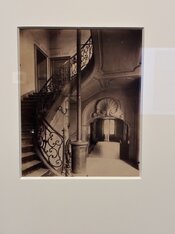
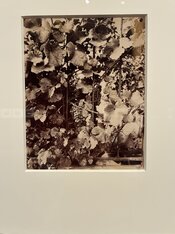
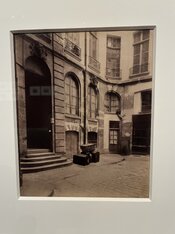
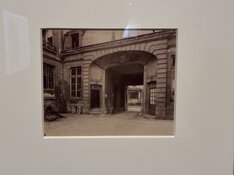
The Atget exhibition at ICP is well worth seeing, which I did a couple of weeks ago. It runs until May 4th. All the prints are by him, from the ICP’s collection, and there are some really great ones. Sadly there is no catalogue for the show; when I asked, they pointed to the Taschen book.
 
The Atget exhibition at ICP is well worth seeing, which I did a couple of weeks ago.
I would love to see it, but from my location in SW Missouri, it would require a significant investment in time to get there and back.

About how many of Atget's photos were on display? Could you get close enough to the prints to get a good long look? Was the exhibition crowded when you were there?
 
About how many of Atget's photos were on display? Could you get close enough to the prints to get a good long look? Was the exhibition crowded when you were there?

I’m not sure about the total number, maybe 50-60…. Yes, you could really get close up views. As has been discussed, he printed small, contact prints I would assume. I was really focused on the prints and didn’t read the wall texts, which had a theme about Atget’s reception.
Excuse my poor cell phone snaps.
 

Attachments

  • IMG_6948.jpeg
    IMG_6948.jpeg
    246 KB · Views: 5
  • IMG_6944.jpeg
    IMG_6944.jpeg
    313.6 KB · Views: 3
  • IMG_6942.jpeg
    IMG_6942.jpeg
    275.9 KB · Views: 3
  • IMG_6945.jpeg
    IMG_6945.jpeg
    258.4 KB · Views: 4
Photrio.com contains affiliate links to products. We may receive a commission for purchases made through these links.
To read our full affiliate disclosure statement please click Here.

PHOTRIO PARTNERS EQUALLY FUNDING OUR COMMUNITY:


Ilford ADOX Freestyle Photographic Stearman Press Weldon Color Lab Blue Moon Camera & Machine
Top Bottom