• Welcome to Photrio!
    Registration is fast and free. Join today to unlock search, see fewer ads, and access all forum features.
    Click here to sign up

Equatorial or German Mount

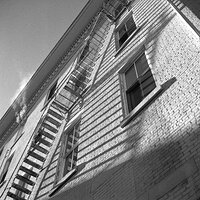
Fire escape.

H
Fire escape.

  • 2
  • 3
  • 22
22886.jpg

A
22886.jpg

  • 2
  • 0
  • 36

Recent Classifieds

Forum statistics

Threads
204,346
Messages
2,867,405
Members
102,231
Latest member
kimlee2027
Recent bookmarks
0
What do you mean? Equatorial mounts usually comes with a tripod.
 
An equatorial mount usually comes with the telescope.

For a camera look for a "star tracker."

There are quite a few designed for cameras that you just fit to your tripod -ranging from budget to astronomical pricing.

Best bet would be to ask a local stargazer shop, or astronomy group.

Great! can you guide me towards a budget version?
 
 
Here is a an overview, Ralph.


Equatorial mountings point the main axis of movement to Polaris, the star at the virtual point of rotation of the earth. That way it is easier to follow a star as the earth keeps turning as you only need to adjust this one axis after you found your target in the sky.
 
Last edited:
Modern computerized astronomical camera trackers use two servo motors to point the camera/telescope to any point in the sky; there is no need for an equatorial mount. If the tracker knows where north is, knows the date and knows the longitude it can take it from there - it's just a load of calculations. You can command the tracker to point in any direction - if you have a sky map you can look up the coordinates for, say, Andromeda, enter them into the app on your phone and the tracker will point the camera at Andromeda. In the ultimate scenario you just drop the tracker/camera on a picnic table any old way, the mount gets all the data it needs from GPS, and you speak to the mount "Sombrero Galaxy" and there your camera will point.

And if you have a Sirius Cybernetics tracker, it will say: "It is my pleasure to point your camera for you, and my satisfaction in having the knowledge of a job well done."
 
Last edited:
Astrophotography quickly becomes a very deep rabbit hole down which much money can be poured, sort of like a hole in the water without a boat.

Many current trends in astrophotography involve digital sensors and taking a lot of short exposures and stacking them. If you take short enough exposures, and have a relatively short focal length lens, then you can use an alt-azimuth mount and the short exposures minimize field rotation; the stacking software takes the rotation out. This is attractive to many people because they can use an alt-azimuth mount and there are mounts that will compute their own alignment after you point them at a couple of stars (or semi-automatically as some of the ones Nicholas is alluding to). There are mini-telescopes that will do all the stacking in their own software, and so on.

If you want to take long exposures, which you'll have to with film, then you need to get an equatorial mount, to align the polar axis, and have some kind of motor drive. (You can also put an equatorial wedge under an alt-azimuth mount to turn it into equatorial, but I think this can be mechanically unsatisfactory especially at mid-high latitudes.)

 
Great! can you guide me towards a budget version?

No, as I have no real world experience with one of those devices..

On the rare occasion I do some astrophotography, I piggy back my camera onto my 10" LX200 which sits on an eq mount.

Unfortunately my knees struggle with moving it somewhere dark enough these days.
 
Photrio.com contains affiliate links to products. We may receive a commission for purchases made through these links.
To read our full affiliate disclosure statement please click Here.

PHOTRIO PARTNERS EQUALLY FUNDING OUR COMMUNITY:


Ilford ADOX Freestyle Photographic Stearman Press Weldon Color Lab Blue Moon Camera & Machine
Top Bottom