
• Welcome to Photrio!
    Registration is fast and free. Join today to unlock search, see fewer ads, and access all forum features.
    Click here to sign up

Enlarging with Filters - Contrast Grades

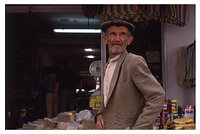
Man in market place

A
Man in market place

  • 0
  • 0
  • 5
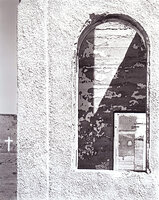
Abandoned Church

A
Abandoned Church

  • 2
  • 0
  • 30

Forum statistics

Threads
203,120
Messages
2,850,104
Members
101,680
Latest member
QGolden
Recent bookmarks
2

Neil Poulsen

Member
Allowing Ads
Joined
May 28, 2005
Messages
528
Format
4x5 Format
I've enlarged with condenser heads, but the half-tep contrast differences were just too large. I would frequently need something in between to get what I needed.

Has anyone experimented with adding additional filters for more subtle discrimination between filter grades? If so, what did you observe?
 
This is were you use other technique, like water bath development, two bath development, De Beeers/Dexktol-Selectol/D72-D52, flashing, etc.

Although these techniques are far more important fith fixed grade papers they are also useful for fine tuning with Variable Contrast papers. Don't forget Split grade printing as well.

Ian
 
Have been playing with Ilford Bromophen recently. The instructions say it develops to completion after n minutes. But it seems to me that some extra development also puts some more contrast in the print and infact the print starts to block up if you leave it for too long. So depending on your developer and paper, print time is also one controlling factor for contrast control.
 
Last edited by a moderator:
Rob, you could also add temperature, dilution etc.

With Chlorobromide papers you can alter the contrast by pushing and pulling a print, slight over exposure and under development will decrease the contrast, and increase the warmth, or as you suggest very slight under exposure and longer than normal development will icrease the contrast a fraction and produce colder, blacker tones.

This doesn't work particularly well with bromide papers, where underdevelopment gives poor/flat tones.

iaN
 
I'm hoping there will be more on this in the jacobson book which I have ordered. Thats why I wanted an older book written when more people were using these techniques.
 
between filter grades?

You indicate "filter grades" so I presume you are using multigrade paper. The so called "Split Grade" printing technique lets you get any intermediate grade. Its only limited by the precision of you timer.
 
If this is consistently a problem, maybe pull your film a 1/2 to 1 stop, or cut film development time or dilution maybe 5%. If you're talking about a certain negative, they pretty much covered everything else. Maybe flashing would help.
 
One reason I'm asking, is because it's a little difficult to change filters with the Aristo head that I'd like to use. So, additional filters would be much preferable.
 
One reason I'm asking, is because it's a little difficult to change filters with the Aristo head that I'd like to use. So, additional filters would be much preferable.

You could add CC magenta or yellow filters in the appropriate amount to the pack.
 
I've enlarged with condenser heads, but the half-tep contrast differences were just too large. I would frequently need something in between to get what I needed.

Has anyone experimented with adding additional filters for more subtle discrimination between filter grades? If so, what did you observe?

Split contrast printing will give you that mid grade, like a #1 1/4 by giving half the exposure on a grade 1 and the other half 1 1/2.

You can do this with any combination of filters, and it WILL make a difference which you do first...subtle but it does make a visible difference.
 
I use AGFA CC filters in the filter drawer, so I can set any filtration I want.

But most of the time I use graded paper, and adjust the contrast through processing. :wink:
 
I print split grade, and use a color head. Feels a little obtuse at first, but becomes very fast and intuitive after a while. I tend not to think in filter grades anymore, (the idea of grades sort of goes away) but in any combination of hard and soft exposures. Want just a tenth more soft contrast in the highlights? Set it on the clock.

The thing to keep in mind is that the soft setting builds exposure across the range (with uber low contrast), while the hard exposure tends to expose from dmax up to the lower mid tones. This is why many people expose and evaluate the soft filter first, find the setting that offers a subtle graduation of highlights, and then print hard to add the range without screwing the highlights up.
 
Photrio.com contains affiliate links to products. We may receive a commission for purchases made through these links.
To read our full affiliate disclosure statement please click Here.

PHOTRIO PARTNERS EQUALLY FUNDING OUR COMMUNITY:


Ilford ADOX Freestyle Photographic Stearman Press Weldon Color Lab Blue Moon Camera & Machine
Top Bottom
