• Welcome to Photrio!
    Registration is fast and free. Join today to unlock search, see fewer ads, and access all forum features.
    Click here to sign up

Enlarging for the Professional

Filling In

H
Filling In

  • 1
  • 1
  • 9
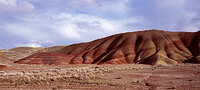
Painted Hills # 3.jpg

H
Painted Hills # 3.jpg

  • 4
  • 0
  • 71

Recent Classifieds

Forum statistics

Threads
203,208
Messages
2,851,369
Members
101,721
Latest member
rptn
Recent bookmarks
0

gone

Member
Allowing Ads
Joined
Jun 14, 2009
Messages
5,502
Location
gone
Format
Medium Format
This is a very old pamphlet or book from Kodak, and it talks about things we forgot in this modern age. Like the size of your darkroom being the limiting factor for the size of your prints. Or using natural light in your window to make enlargements. Has some handy illustrations too.

I suggest saving it as a pdf because things have a habit of disappearing on the web. Better yet, print it out.


Last edited:
Why would you need a large darkroom?
1672823296603.png
😁
 
Thanks for sharing. I checked the "paper fixing" part, however a single bath only is recommended. When did the two fixing bath approach come to fashion?
 
Thanks for sharing. I checked the "paper fixing" part, however a single bath only is recommended. When did the two fixing bath approach come to fashion?

About the same time people stopped wearing a neck tie in the darkroom :smile:
Or less facetiously, probably when rapid fixers became commonplace.
 
I should compare that publication with the Enlarging chapter in my 1940s era Kodak Handbook - see how much difference a couple of decades made.
 
Ansel Adams's first 8X10 enlarger was made from a old view camera and used natural light. I had a friend here in the Phoenix area that made a 4X5 enlarger from a well used Graphic View and a light tube in the north wall of his darkroom that he built out in his garage. On a good day, no clouds, light was even, and fast.
 
About the same time people stopped wearing a neck tie in the darkroom :smile:
Or less facetiously, probably when rapid fixers became commonplace.

Interesting, I would thought that Kodak started promoting such a fixing regime at the timey they were still only offering sodium fixers commercially.
 
I have a couple of Kodak how to books dating from the 20s to the 60s, all recommend a single bath, my thinking was that in the day trays were expensive. In college and later in the U.S Air Force we used single trays, the first I read about 2 bath was in an AA book.
 
It is very important to remember that during most of Kodak's history "professional photographer" meant "photographer who works in a commercial business".
Not a photographer making prints for the art market.
Not a photographer whose primary concern was longevity of prints.
 
I have an easel "paper holder". Eastman, looks very similar, mine is from the 40's, a work of art. Rochester was the center of all things, like Silicon Valley has been for the last few years
 
Ansel Adams's first 8X10 enlarger was made from a old view camera and used natural light. I had a friend here in the Phoenix area that made a 4X5 enlarger from a well used Graphic View and a light tube in the north wall of his darkroom that he built out in his garage. On a good day, no clouds, light was even, and fast.

Ironically i once saw a pamphlet that claimed the window enlarger was first created in Englands sunny weather.

But i think that 400 Watt Bulb would be more reliable until the first electric bill came.
 
It is very important to remember that during most of Kodak's history "professional photographer" meant "photographer who works in a commercial business".
Not a photographer making prints for the art market.
Not a photographer whose primary concern was longevity of prints.

Yet most of the commercially processed photos stood the test of time.
 
Interesting, I would thought that Kodak started promoting such a fixing regime at the timey they were still only offering sodium fixers commercially.

Yes and even more importantly: does Kodak still promote the wearing of a necktie in the darkroom?

On a more serious note the lack of a necktie, of a decent length of course, in the darkroom deprives you of a very flexible dodging and burning tool🙂

Most of my unproductive sessions in the darkroom have arisen because I was the only "tool" in the darkroom😄

pentaxuser
 
Yet most of the commercially processed photos stood the test of time.

The "commercial" standard is quite high.
Ironically, 2 bath fixing can be more economical when it comes to material cost.
But not when it comes to throughput.
 
Ironically i once saw a pamphlet that claimed the window enlarger was first created in Englands sunny weather.

But i think that 400 Watt Bulb would be more reliable until the first electric bill came.

Until you set fire to your house, in the 1920s I would not think that the wiring of most houses would have trouble with the amount of current needed to power a 400 watt bulb.
 
Gosh I love those old Kodak photo as well as graphics arts manuals. I've got a bunch of them.

Old wiring is a different story. Lots of the time it corroded, or some rodent got to it. Then aluminum wire got substituted, and became a fire hazard. When I started selling supplies to contractors in this area, the average residential service panel was only good for 35 amps. It took very little to overload and overheat those weak old circuits. I was lucky because the commercial building in the back of my property was already heavily wired, both 120 and 240V. That's one of the reasons I bought it. But building codes now mandate 200 amp services on residences, and due to the extreme property values these days, up about 20 times from typical purchase prices back in 35 amp service days, probably every single property has long been upgraded. People still find creative ways to accidentally burn down properties, however.

But utility bills. I once had a 2000W Durst color mural head, the old style one. The cooling fan alone required more 240V juice than the average large commercial table saw. That damn thing doubled my monthly utility bill. I replaced it with something of my own design that ran much cooler. That was back in the days of making big Cibachomes, often as heavily masked as .90 supplemental density. You needed some serious candlepower. Today's RA4 papers print way way faster.

 
Last edited:
Hey! I have that enlarger!!

It lives in the corner of my garage and only gets used on moonless nights for 5x7 and 8x10 negatives. 😆

God forbid I have to move out of here someday and move it. It is a monster. It took my son and I an entire weekend just to get it set up. But it is heavy duty and solid. I think I could hit that cast iron base with an 8 pound sledge hammer while I was enlarging and not effect the image at all.

And you are not kidding about the wiring. I replaced all of it but I should have saved some of it to show my grandkids what it looked like.
 
There are a lot of those style enlargers in Las Vegas. But they're converted for hair salon use. How else do you think all those ole gamblin' biddies get their tall beehive hairdos done?
 
Photrio.com contains affiliate links to products. We may receive a commission for purchases made through these links.
To read our full affiliate disclosure statement please click Here.

PHOTRIO PARTNERS EQUALLY FUNDING OUR COMMUNITY:


Ilford ADOX Freestyle Photographic Stearman Press Weldon Color Lab Blue Moon Camera & Machine
Top Bottom