
• Welcome to Photrio!
    Registration is fast and free. Join today to unlock search, see fewer ads, and access all forum features.
    Click here to sign up

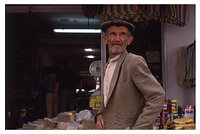
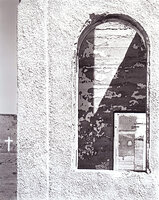
enlarged B&W neg from 35mm color slide

Man in market place

A
Man in market place

  • 0
  • 0
  • 15
Abandoned Church

A
Abandoned Church

  • 2
  • 0
  • 35

Forum statistics

Threads
203,120
Messages
2,850,111
Members
101,681
Latest member
Mick Lord
Recent bookmarks
2

ronlamarsh

Member
Allowing Ads
Joined
Jan 2, 2004
Messages
461
Location
Seattle Wash
Format
Multi Format
Don't have an adequate scanner or the patience to use it so.......I would like to make some enlarged B&W negative from some of my 35mm color slides. The question is if I unmount them and use my enlarger will the fact that I am using an aristo(blu/grn) cold light have an adverse effect?
Second question: I'd rather not unmount them so is it feasible to use a 35mm projector and either photograph the projected image(my first try a dismal failure poor detail)or set it up to project through my 5x7 onto the ground glass and make a negative from there? The second method begs the question of how to expose properly? any thoughts
 
The question is if I unmount them and use my enlarger will the fact that I am using an aristo(blu/grn) cold light have an adverse effect?

Should be okay, just check how red gets rendered and see if it's alright. Ideally you'd want a light with fairly even r/g/b output and panchromatic film.

Second question: I'd rather not unmount them so is it feasible to use a 35mm projector and either photograph the projected image(my first try a dismal failure poor detail)or set it up to project through my 5x7 onto the ground glass and make a negative from there? The second method begs the question of how to expose properly? any thoughts

The way I do it is with an ordinary enlarger. But I suppose you could put your slides on a light table and rephotograph them with your 5x7... if I did that, I'd do a test exposure (withdrawing the darkslide for incremental times) and but up the neg to do development test strips as well. Don't forget bellows factor :wink: If you have a 4x5 polaroid/fuji back you could check exposure that way...
 
It would be like using a filter of the same color for an in-camera neg, I believe. I'm assuming that the aristo light color is close to a regular fluorescent (?). If that is the case, I wouldn't expect much of a difference. If it does seem to make a difference, I imagine you could put a yellow/orange or red filter under the enlarger head. Also, some enlargers have carriers that can do mounted slides. You could always make a carrier out of mount board
 
Thanks all

I did some initail tests using enlarging paper and although the contrast range was way compressed because it was paper not film the rest of the response was ok i.e. reds etc were good. So I'll try it on some film tomorrow ran out of time today. Also made a paper insert to hold the slide in a 6x6 neg carrier works great.
 
So are you projecting your color slides onto paper or film to make the internegative?

Or is the negative image your final output?
 
B&W internegatives

I would go to the trouble of unmounting them and making proper B&W internegs. I have made many, many of them in a 30-year career as a photographer and lab technician. I would strongly suggest the use of a glass negative carrier, and be sure that the transparency is well masked, with black litho film if you have any, before making your interneg. Orient the transparency with the emulsion side UP when making the interneg; that way, the left-right orientation will be correct, and it can be contact printed, if you so desire.

Most of the internegs which I made were done with colour enlargers, hence diffusion light sources, which are not dissimilar to the cold light head you describe. However, the only time I remember adding a filter to the image path was when I had to lighten a logo, which was red on a blue background.

Find out what is the colour temperature of the tube in your cold light head, and make a filter pack to correct it to daylight. Once corrected, you may (I say may) have to add whatever filter the film manufacturer recommends (if any) for proper gray tone rendering when exposing with daylight. AFAIR, for most films, it is a Wratten 8 filter, formerly known as a K2 filter.

In my experience, it was never necessary to filter the light source; in fact, you may not need to correct it to daylight colour temperature, unless you find the tones "off" in your final print. With the cold light source, if it is really blue-green (or cyan, if you prefer), it might be roughly the same as having made a B&W negative on orthochromatic film, or on an older style panchromatic film, with reduced red sensitivity. You will have to make a negative or two, and make some prints to see if the results are acceptable for your needs.
 
Negative

Thanks all. I only used paper to test the tonal range and as expected the tonal range of the paper is way too short. I plan on using arista II ortho/lith for the final negative.
 
Your reds from the slide image will be black in the final if you use ortho film. Is that OK. Why not use panchromatic?

Just get a 'slide copiers' that fits on a 35mm camera. I suspect the optics would be worse than a good contact print but it would be very easy to copy a bunch of slides onto panchromatic 35mm negative film that way.
 
Photrio.com contains affiliate links to products. We may receive a commission for purchases made through these links.
To read our full affiliate disclosure statement please click Here.

PHOTRIO PARTNERS EQUALLY FUNDING OUR COMMUNITY:


Ilford ADOX Freestyle Photographic Stearman Press Weldon Color Lab Blue Moon Camera & Machine
Top Bottom
