• Welcome to Photrio!
    Registration is fast and free. Join today to unlock search, see fewer ads, and access all forum features.
    Click here to sign up

Emulsion side?

St Ives - UK

A
St Ives - UK

  • 4
  • 1
  • 87
Across the Liffey

H
Across the Liffey

  • Tel
  • Feb 25, 2026
  • 1
  • 2
  • 65

Recent Classifieds

Forum statistics

Threads
202,444
Messages
2,840,936
Members
101,333
Latest member
shanhw1978
Recent bookmarks
10

Jojje

Member
Joined
Sep 4, 2006
Messages
255
Location
Finland
Format
Multi Format
I'm confused after acquiring some Soviet 9x12 glass plates from Ukraine, best before 1986, sheet film has its notches but how on earth to differentiate the emulsion side of a glass plate in the dark, there must be a simple answer?
 
As only one side is coated you can test with wet finger at an edge.
 
Touch your slightly moist bottom lip to the plate surface near an edge. The emulsion will give a SLIGHT TUG to your lib where the plain glass side will not..
You can also put a small red or green light source at some distance away, the objective being to create a spot of light across the room, not to light up your plate. Hold the plate so as to view the spot of light across the room as a reflection on the plates surface. The emulsion side will have a dull less sharp reflection.
 
One other thing. Most glass dry plates with orthochromatic. You could actually load them with a safe light, making the difference in sheen visible. Some plates could use an amber safe light, and some required a deep red one. There were panchromatic plates that had to be loaded in full darkness too but they were not the norm.
 
I'll try the lip trick next time. Panchromatic material, I don't dare use any light, but that's the last resort.
 
If plates are packed two together (with little cardboard separators holding two plates at a time at the edges), the emulsion sides of the two plates will be facing each other.

If the plates are simply stacked in the box, then the emulsion sides will all be facing the same direction, so you can sacrifice one to get orientation correct and then feel the (very subtle) difference between glass side and emulsion side.
 
If plates are packed two together (with little cardboard separators holding two plates at a time at the edges), the emulsion sides of the two plates will be facing each other.

If the plates are simply stacked in the box, then the emulsion sides will all be facing the same direction, so you can sacrifice one to get orientation correct and then feel the (very subtle) difference between glass side and emulsion side.
They were stacked and wrapped, just like photographic paper - I thought that, too.
I've yet to expose the first one to find out sensitivity/fog levels.
 
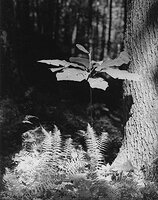
For your information: 1st plate exposed and developed succesfully. No fog to speak of, ISO6, Rodinal 1+50 12 minutes. At least this plate was the right way around...
 
For your information: 1st plate exposed and developed succesfully. No fog to speak of, ISO6, Rodinal 1+50 12 minutes. At least this plate was the right way around...
 
Photrio.com contains affiliate links to products. We may receive a commission for purchases made through these links.
To read our full affiliate disclosure statement please click Here.

PHOTRIO PARTNERS EQUALLY FUNDING OUR COMMUNITY:



Ilford ADOX Freestyle Photographic Stearman Press Weldon Color Lab Blue Moon Camera & Machine
Top Bottom