• Welcome to Photrio!
    Registration is fast and free. Join today to unlock search, see fewer ads, and access all forum features.
    Click here to sign up

Efke IR820 ISO

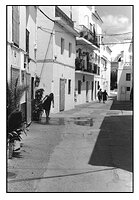
Watering time

A
Watering time

  • 0
  • 0
  • 19
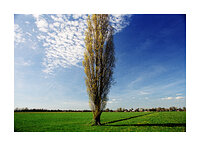
Cigar again

H
Cigar again

  • 1
  • 0
  • 40

Recent Classifieds

Forum statistics

Threads
203,174
Messages
2,850,866
Members
101,710
Latest member
tparuy
Recent bookmarks
0

Boris Mirkov

Member
Allowing Ads
Joined
Nov 12, 2009
Messages
84
Location
Serbia, Belgrade
Format
Multi Format
Tomorrow I`m going to shoot infrared but I have no idea which ISO setting to put on my Nikon F100. Somewere I find 6 ISO, somewere 200 ISO so I`m pretty confused. If someone has some expirience with this film, please help! I`m using Cokin 89b which is like Hoya R72.
Thanks for the help!
 
And one additional question - I`ve heard I could get infrared results using ordinary film with infra filter. Could that be true?
 
Hi Boris,

Efke IR820C is based on the Efke 100 film with extended sensitizers to 820nm.
Using a 89B - 695nm (0007) (5-6 F stops) will give you iso 1,5 - 3 only.

When using a standard panchromatic B&W film (normally till 650nm) you will filter every thing away for the film, so blanc negatives.
IR film you CAN use without filter. It's then a standard film again.

You have to bracket a bit because you never know exactly the amount of IR light in the atmosphere.

Best regards,

Robert
 
Use ISO 3 with that film if you're using a 720 cutoff. You might go lower than that, but you run into issues with depth of field/reciprocity. Without a filter it's a 100-200 speed panchromatic film.
 
The ratio of IR to visible light varies a *lot* with time of day, weather, latitude, and who knows what else, which makes it pretty much impossible to assign a meaningful EI to this film in general. I've gotten good results at EI 6 on some days, and terrible underexposure at EI 1.5 on others. Bracketing and experimenting to find what works for the conditions you typically shoot is probably the only real way to go.

I've actually had some luck metering *through* the filter, with the meter set to 100. The results were a bit thin and I'd probably add a stop or two if I did it that way again. I have no idea how reliable this method really is, though---I guess it depends on the sensitivity of your particular meter to IR.

-NT

 
Тhanks to all for the help, I`ll do my best and develop it in the next few days so hopefully we`ll see the results soon.
Thanks again!
 
I just came back from the shoot and at the thirtieth shot i realized that I haven`t been covering the viewfinder! So my measurements are not what they were supposed to be... I`m gonna develop it tonight and send the results...
Thanks everybody once again for all the help!
 
And one additional question - I`ve heard I could get infrared results using ordinary film with infra filter. Could that be true?

Probably not with any ordinary film, but there's an example of Delta 3200 (there was a url link here which no longer exists). Remember, you saw it on APUG first! :wink:
 
Probably not with any ordinary film, but there's an example of Delta 3200 (there was a url link here which no longer exists). Remember, you saw it on APUG first! :wink:

That is pretty cool. I remember trying a couple of films with an R72 before giving up. The look is pretty good. I will try that some time. (I'll probably stick to EFKE, though... LOVE that look)
 
Important is to make one picture without filter so that later you can check if at least your development is OK.

The edge markings should tell you that, n'est-ce-pas? That's what I've always relied on.

How cool is that about Delta 3200? I had no idea.

-NT
 
Photrio.com contains affiliate links to products. We may receive a commission for purchases made through these links.
To read our full affiliate disclosure statement please click Here.

PHOTRIO PARTNERS EQUALLY FUNDING OUR COMMUNITY:


Ilford ADOX Freestyle Photographic Stearman Press Weldon Color Lab Blue Moon Camera & Machine
Top Bottom