

I conducted an experiment wherein I developed two identical 4x5 sheets of Adox PL100 as follows:
Sheet #1
distilled water presoak = 2 minutes (continuous agitation)
dilution = 1.5:1:200 (distilled water)
Extreme minimal agitation for an hour at 68F. (1.5 minute initial rotary agitation with 2 inversions at 15, 30, and 45 minutes)
4 minute fix in non-hardening rapid fix (continuous agitation)
Sheet #2
distilled water presoak = 1 minutes (continuous agitation)
dilution = 1:1:100 (distilled water)
Rotary (continuous) agitation for 11 minutes at 69F.
4 minute fix in non-hardening rapid fix (continuous agitation)
The two negatives are remarkably similar considering the difference in processing.
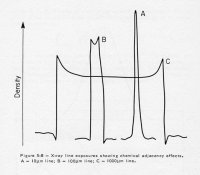
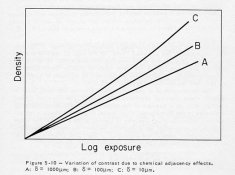
My question is this: I assume there should be edge effects in the negative done with minimal agitation. At what magnification (enlargement size) are those edge effects most likely to be apparent?
I'd be grateful for any comments.
Sheet #1
distilled water presoak = 2 minutes (continuous agitation)
dilution = 1.5:1:200 (distilled water)
Extreme minimal agitation for an hour at 68F. (1.5 minute initial rotary agitation with 2 inversions at 15, 30, and 45 minutes)
4 minute fix in non-hardening rapid fix (continuous agitation)
Sheet #2
distilled water presoak = 1 minutes (continuous agitation)
dilution = 1:1:100 (distilled water)
Rotary (continuous) agitation for 11 minutes at 69F.
4 minute fix in non-hardening rapid fix (continuous agitation)
The two negatives are remarkably similar considering the difference in processing.
My question is this: I assume there should be edge effects in the negative done with minimal agitation. At what magnification (enlargement size) are those edge effects most likely to be apparent?
I'd be grateful for any comments.