• Welcome to Photrio!
    Registration is fast and free. Join today to unlock search, see fewer ads, and access all forum features.
    Click here to sign up

Eastman Kodak Double-X / 5222 and Diafine test

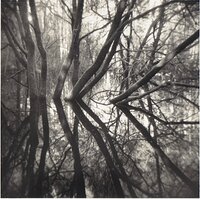
Flooded woodland

Flooded woodland

  • 0
  • 0
  • 0
Babylon

D
Babylon

  • 2
  • 1
  • 34

Recent Classifieds

Forum statistics

Threads
202,832
Messages
2,846,157
Members
101,554
Latest member
Stalk3r
Recent bookmarks
0
I would presume from the thread he is asking where one would find information on the spectral response of a light meter. "The manufacturer" isn't really an answer. Is this normally published? I don't recall seeing it.
 
I would presume from the thread he is asking where one would find information on the spectral response of a light meter. "The manufacturer" isn't really an answer. Is this normally published? I don't recall seeing it.

Unfortunately the manufacturer is the best source of accurate information. Some manufacturers use a colored filter over the cell. There are CdS light cells which closely mirror the human eye's response while others don't. And so on.

Data for specific meters and particular cells can often be found on the internet. I found a paper comparing the spectral response of CdS cells versus selenium cells. The paper was for botanists taking photographs under a leaf canopy. Unfortunately the resolution was so poor that I could not read any specific values. The information is out there. What it will require is a bit of digging. As I found it can be in unusual locations.
 
Last edited by a moderator:
Tungsten ISO values not only apply to tungsten light but also to instances where there is more red light than normal. Outdoors in the late afternoon immediately come to mind. It is also important to know the spectral response of any light meter.

The tungsten 200 ISO is for 3200 K bulbs if you have daylight you need a colour temperature meter... If you are shooting cine for contact printing and need to use jump cuts.
 
Well for now, I'm developing in Diafine because that's what I have. Should I just shoot this at 400 then?
 
Massive Dev chart sez 5222 in Diafine stock solution @640 (3+3). See here.

And yes I was asking about the spectral response. If you recommend something it'd be nice if you could supply info on how other than "look it up."
 
Massive Dev chart sez 5222 in Diafine stock solution @640 (3+3). See here.

And yes I was asking about the spectral response. If you recommend something it'd be nice if you could supply info on how other than "look it up."

Ah thanks. Poked around but couldn't find anything solid.
 
Hope it works out well. Please post up results I have some 5222 in the freezer waiting for me and could use all the help I can get.
 
Well for now, I'm developing in Diafine because that's what I have. Should I just shoot this at 400 then?

My Kodak can says 250 ISO but if you are going to ignore shadow detail you can use any value you like.

XX was between Plusx and Trix. xx is pretty fine grain for speed for cubic grain film.
 
I've never tried this film but I do like Diafine, at least for some things. In my old high school and college days I used it exclusively, mainly because I was broke and its cost per-film was (still, but more so back then) very inexpensive, and it got me a nice speed boost with Tri-X into the bargain. Now I mainly use it with Tri-X when I want EI 1000-1250 (1600 is fine in daylight, say heavy overcast, but it seems to be more like 1000 or even 800 in tungsten, though this could just as easily be my meters. If so, though, it's ALL my meters) and with Pan F+, where it gives a small but welcome nudge to effective speed and controls the highlights a bit.

They don't, though, look quite like other negatives regardless of exposure. For one thing they tend to be a little flat-ish and print on a grade 3 or even 3.5. I don't have a problem with that and just print accordingly.
 
Hope it works out well. Please post up results I have some 5222 in the freezer waiting for me and could use all the help I can get.

D96 is close to D76 1:1 so without prejudice you can try D76 1:1 for the D96 time note the cine people use a low contrast negative for contacting printing on to projection film.

There is a Kodak data sheet.

The can speed is also good as a starting point. With microphen I use 320.

The film is a little thicker than most 35mm so don't try loading more than 35-36 frames depending on cassette types.

If you use stock style developer reuse I'd filter the stock going back into bottle.

If you like nostalgia it is closed to Plusx than Trix.
 
I love 5222 and also the slower Eastman films since gone. The film stock is a bit thicker than still film as Xmas points out. This is actually an advantage as the film remains completely flat during drying and in the enlarger carrier. Personally I have even had problems loading 36 exp cassettes and have opted for 30 exposure ones.
 
Massive Dev chart sez 5222 in Diafine stock solution @640 (3+3). See here.

And yes I was asking about the spectral response. If you recommend something it'd be nice if you could supply info on how other than "look it up."

Spectral response for the film is here

http://motion.kodak.com/motion/Products/Production/Black_And_White_Films/5222.htm

Since I have no idea of what meter(s) you intend to use I cannot direct you any specific spectral response curves. Actually if you always use the same meter then it really doesn't matter. You will soon know what EI fits your work method. This is research that you need to do yourself.
 
Last edited by a moderator:
I love 5222 and also the slower Eastman films since gone. The film stock is a bit thicker than still film as Xmas points out. This is actually an advantage as the film remains completely flat during drying and in the enlarger carrier. Personally I have even had problems loading 36 exp cassettes and have opted for 30 exposure ones.

I too have had to opt for 30 exp per cassette, have found the need to do this for all cine film stock.
 
Well I only take photos 2 hours away from sunset and rise. So I don't bother with colour temperature compensation.

Weston II & III invercone on nose or zone1 shadow Microphen @ 320 (or Rodinal 1+100 20c 60mins stand). Any selenium meter should be similar.

XX has reasonable dynamic range like Tx or HP5+.
 
Photrio.com contains affiliate links to products. We may receive a commission for purchases made through these links.
To read our full affiliate disclosure statement please click Here.

PHOTRIO PARTNERS EQUALLY FUNDING OUR COMMUNITY:



Ilford ADOX Freestyle Photographic Stearman Press Weldon Color Lab Blue Moon Camera & Machine
Top Bottom