
• Welcome to Photrio!
    Registration is fast and free. Join today to unlock search, see fewer ads, and access all forum features.
    Click here to sign up

double exposure

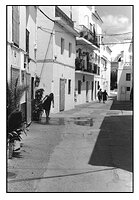
Watering time

A
Watering time

  • 0
  • 0
  • 23
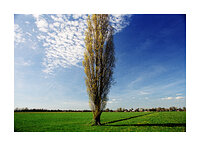
Cigar again

H
Cigar again

  • 1
  • 0
  • 40

Recent Classifieds

Forum statistics

Threads
203,174
Messages
2,850,881
Members
101,710
Latest member
tparuy
Recent bookmarks
2

Berri

Member
Allowing Ads
Joined
Feb 7, 2017
Messages
627
Location
Florence, Italy
Format
Multi Format
I want to experiment with double exposures in the darkroom. If I want to test the effect on photoshop, what layer blending method should I use to simulate the double exposure with the enlarger? Multiply?
 
I think it would be better to actually do it in the darkroom. There are aspects of actual print making that cannot be duplicated in Photoshop.
 
I think it would be better to actually do it in the darkroom. There are aspects of actual print making that cannot be duplicated in Photoshop.
yes I will do it in the dark room, I need to test before to see what I want to get
 
If I want to test the effect on photoshop
You could ask on DPUG.
That place is full of Digitographers and other computa people alike.
 
but they don't know about darkroom
Sure they do, they are the same "D"idiots that go around here and drop the "D" word here and there like in that recent thread on the "S" word. :wink:
Look for those that complain about film price rises, or trying to get "cheap" expired film, or for those that complain about another film discontinuation. All the same they don't have a single problem in dropping a grand, or 2, or 3 or even 5 grand for the latest and greatest Digi device from Canon, Nikon, Leica, etc.
I'm sure they are experts in photoshop.

There is a saying where I come from: "you can't obey 2 Masters".
 
Sure they do, they are the same "D"idiots that go around here and drop the "D" word here and there like in that recent thread on the "S" word. :wink:
Look for those that complain about film price rises, or trying to get "cheap" expired film, or for those that complain about another film discontinuation. All the same they don't have a single problem in dropping a grand, or 2, or 3 or even 5 grand for the latest and greatest Digi device from Canon, Nikon, Leica, etc.
I'm sure they are experts in photoshop.

There is a saying where I come from: "you can't obey 2 Masters".
Ricardo..you are way put of line here..the person is asking a question and you're off on a rant...what's up dude???...chill out or well never have any newcomers here...enjoy the ride and share your knowledge
 
Just experiment under the enlarger. It is not rocket science. Trial and error.
 
Ricardo..you are way put of line here..the person is asking a question and you're off on a rant...what's up dude???...chill out or well never have any newcomers here...enjoy the ride and share your knowledge
You failed to see my peculiar sense of humour.
Besides I have had the pleasure of reading Berri's posts for a few years on Ferrania not only here, but also at the ISF on Flickr.
I wasn't ranting against him.
 
Berri,

I tried Multiply and it looked about right. I'm not sure it will match darkroom double-exposure, because when printing in the darkroom, shadows will interact with each other more than light areas... and I think Photoshop is blending the images equally across all tones.

But if you are just experimenting with effect and not critical of the tones in specific places, it should work just fine to give you an idea.
 
Is your intention to sandwich two negatives or to expose one and then the other? In PhotoShop you would have one image in one layer and then the other in another layer. In the darkroom you would have to figure out the exposure for the sandwiched negatives or for each separate negative and how one exposure will affect the final print. In PhotoShop you will have to work with "fill" and/or "opacity" not "multiply". While it may give you an idea as to what a double exposure will appear as a final product it will take some doing in the darkroom to match the digital representation. Most double exposures I am familiar with were done in the camera.

The late French photographer Lucien Clergue did many in camera double exposures. He would expose a roll (35mm with a simple Minolta slr) in a museum and then re-expose the same roll in perfect registration with another subject. I don't know how he so precisely lined up the frames. A number of years ago he photographed a model in my backyard (Miami,Fl) over a roll of paintings in some museums. There was no elaborate equipment just his Minolta with a 50mm lens hand held. No tripod nor anything but the builtin light meter.

http://www.jeffreyglasser.com/
 
Double exposures with an enlarger have a somewhat different effect to those done in-camera. Well worth experimenting with. Another technique I played with a bit, was creating "zoom" effects by moving the enlarger head up or down the column during exposure.
 
t
Berri,

I tried Multiply and it looked about right. I'm not sure it will match darkroom double-exposure, because when printing in the darkroom, shadows will interact with each other more than light areas... and I think Photoshop is blending the images equally across all tones.

But if you are just experimenting with effect and not critical of the tones in specific places, it should work just fine to give you an idea.
Thanks! Yes I'm not critical in photoshop, I would use it just to preview what I will then be doing in the darkroom. I figured that darkroom double exposure should be inverted in relation to in camera d exposure; in camera you get details in the shadows area while in the darkroom you get details in the higlights
 
Double exposures with an enlarger have a somewhat different effect to those done in-camera. Well worth experimenting with. Another technique I played with a bit, was creating "zoom" effects by moving the enlarger head up or down the column during exposure.
Intresting, thank you. I will experiment on something like this
 
I want to experiment with double exposures in the darkroom. If I want to test the effect on photoshop, what layer blending method should I use to simulate the double exposure with the enlarger? Multiply?

I have done lots of double exposure in the darkroom (that includes back in the 70's some "texture screen" - and that's something you should also take into account to look&learn when practicing in the dark) and I also know - perhaps to a lesser extent and control - the computer side. For me, it's not any kind of sacrilege to ensure or add other kind of knowledge, whatever the source ..., on the contrary, perhaps these facts help me to understand better the clear difference between some "blends" and others. IMHO (& experience), you'll not find the answer on a simple click with a computer layer blending method, nor with multiply, only in the darkroom. So, I could not have any other advice than this.

Best of luck Berri!
 
Photrio.com contains affiliate links to products. We may receive a commission for purchases made through these links.
To read our full affiliate disclosure statement please click Here.

PHOTRIO PARTNERS EQUALLY FUNDING OUR COMMUNITY:



Ilford ADOX Freestyle Photographic Stearman Press Weldon Color Lab Blue Moon Camera & Machine
Top Bottom