• Welcome to Photrio!
    Registration is fast and free. Join today to unlock search, see fewer ads, and access all forum features.
    Click here to sign up

Done With X-Tol

IMG_3569 800x533.jpg

IMG_3569 800x533.jpg

  • 0
  • 0
  • 12
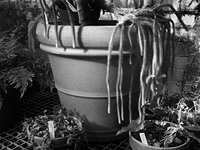
Ferns

H
Ferns

  • 0
  • 0
  • 31

Recent Classifieds

Forum statistics

Threads
202,870
Messages
2,846,784
Members
101,579
Latest member
And ee
Recent bookmarks
0
I recently mixed a 5L batch of Xtol and all are in brown glass bottles. I've only used it once so far and that was the day after I mixed it. With Tri-X it did a great job. I used grocery store bottled distilled water as always to mix any and all developers.

The problem with me and USPlastic is having to by bottles by the case. I don't need 24 4 oz. bottles.
 
I recently mixed a 5L batch of Xtol and all are in brown glass bottles. I've only used it once so far and that was the day after I mixed it. With Tri-X it did a great job. I used grocery store bottled distilled water as always to mix any and all developers.

The problem with me and USPlastic is having to by bottles by the case. I don't need 24 4 oz. bottles.

eBay
 
Mix PC-TEA and it can bring very close to X-tol.
 
The negative is very thin but the images can be made out. I used half of the 300ml of developer to make a 1+1 solution, so I had some of the sample left. I took a clip of film, cut it in half, and dropped one into this stock solution and the other into known good (or better) stock solution. The latter turned almost black in four minutes; the former did not, but it did darken.

That you got an image however thin implies that what you experienced was normal aerial oxidation and not the Fenton reaction (sudden death). It is best to keep developer in either glass or PET (polyethylene terephthalate) plastic containers. The recycle code SPI in the triangle on the bottle should be a 1.
 
Try winebags in wineboxes. I got over 2 years with Xtol that way

pentaxuser
You have to be careful with this.

The wine bags used to be mylar, which is a great oxygen barrier. The wine bags now seem to just be ordinary plastic, which is not a very good oxygen barrier.
 
Plastic bottles are complete crap. I've had Dektol stock in plastic bottles turn brown within days and also had stop bath eat through plastic and leak on the floor. It's just not worth it.

That you got an image however thin implies that what you experienced was normal aerial oxidation and not the Fenton reaction (sudden death). It is best to keep developer in either glass or PET (polyethylene terephthalate) plastic containers. The recycle code SPI in the triangle on the bottle should be a 1.

In other words, it depends on the plastic.
 
The problem with me and USPlastic is having to by bottles by the case. I don't need 24 4 oz. bottles.

I bought a case each of 16oz (450mL) and 32oz (950mL) and they are always in use with developers, toners, etc.

Amazon sells 4oz dropper bottles for a few dollars that are great for photo flo.
 
In other words, just buy some freaking glass. :smile:
There are some real advantages to plastic, particularly if you, like me, have to handle things primarily with one hand.

But I'll never discourage anyone from using glass, if they feel confident that the danger of breakage can be minimized.
 
I use clear glass wine bottles with vacuum stoppers. I know that the vacuum doesn't eliminate all of the air, but it works exceedingly well just the same. I have never had a bottle of Xtol die and I've used some in better than a year old.
 
I have had xtol last in wine bladders for well over a year mixed with distilled. My last batch I mixed with tap water and tried to use it up fast, but it still lasted 6 months. So I am a big fan of the wine bladders. I even bought a kit at my homebrew store that came with empty bladders and a plastic box for the bladders, because the cardboard deteriorates after a couple uses, and I don't like the wine.

There doesn't seem to be a difference between the silver bladders and clear ones. Both are good enough for wine after all.

If you buy glass bottles buy clear ones. If you buy brown, you can't tell the color of the developer or easily see sediment which is counter productive. There is no reason to protect developers from light.
 
I'm using Kodak Rapid Fixer that's been kept in a brown plastic, 1 gallon jug from Freestyle for well over a year. It gets the fixer poured back into the bottle after developing too. So plastic is fine, and I know people that use plain old plastic milk jugs w/ no issues. Just clip test things thoroughly before using them.

D-76 always went 'off' at my place in short order. It is well documented that it gets more active and grainier. Not everyone seems to have this issue though. Finally switched to TD-16 from Photographers' Formularly and got a lot longer storage life w/ a similar look. One of these days I'll try D76 one shot. It seems that people have been doing that successfully for decades despite the fears that it won't be evenly mixed that way.
 
PET plastic bottles compare very favorably with glass ones. PET bottles are essentially free as they are used for water, soda and juice. I am conducting a test and have a bottle of developer concentrate in a PET bottle. It is now more than nine years old with no visible signs of spoilage.
 
I never became a D76 fan. If I'm going to buy a developer that needs mixed, I will buy xtol. If I'm going to mix one, I'll mix D23. If I want a developer that is grainier and slower than xtol I will use HC110 and benefit from its legendary consistency.

D76 exists because it was a cheap good developer for houses that maintained deep tanks of developer for industrial use. It is therefore obsolete, and there is no reason for the hobbyist or artist to usd it. Even Ansel switched to HC110.
 
I'm using Kodak Rapid Fixer that's been kept in a brown plastic, 1 gallon jug from Freestyle for well over a year. It gets the fixer poured back into the bottle after developing too. So plastic is fine, and I know people that use plain old plastic milk jugs w/ no issues.
The bottles that work best with fixer aren't necessarily the same as the ones that work best with developer, because oxygen doesn't really affect fixer, while it can be deadly for developer.

That being said, PET seems to function well for almost everything, if the caps seal well.
 
Well, Kodak does say that the storage life of the stock in a partially filled, tightly closed container is "At least 2 months".

It would seem to me that 300 ml in a container is much more likely to deteriorate than a larger amount in a larger container.

I'd be happy to repeat my recommendation for a replenishment regime, but you have probably read it before.

For every other developer Kodak's recommendations are so conservative as to be laughable.

The fact Xtol only comes in 5 liters and may in fact only be good for two months would be discouraging. I gave it up years ago after too many issues.
 
I never became a D76 fan. If I'm going to buy a developer that needs mixed, I will buy xtol. If I'm going to mix one, I'll mix D23. If I want a developer that is grainier and slower than xtol I will use HC110 and benefit from its legendary consistency.

D76 exists because it was a cheap good developer for houses that maintained deep tanks of developer for industrial use. It is therefore obsolete, and there is no reason for the hobbyist or artist to usd it. Even Ansel switched to HC110.

D76 has survived and remains popular because it is so darned good, and very far from "obsolete." It isn't the best at anything, but neither is it the worst. For all around use it's really hard to beat. If I could use only one developer from now on, it would be D76.
 
I've used Xtol replenished in the past and stored it in PET bottles (soda), the ones that Gerald suggests with the "1" in the recycling triangle. It was fine at least one year after being mixed with deionised water. I think it is an excellent developer, an improved D76. Nowadays I scratch mix, so I don't use it, but it is the only developer I'd consider buying.
 
PMK Pyro...love the stuff and use it exclusively. I buy the liquid formula from Formulary (via FreeStyle Photo in LA).
I keep it in glass bottles and it lasts forever as a stock solution...just mix when needed. It's a good fine
grain developer, and as long as you use common sense and good work habits, totally safe.
 
Sudden death is real, and I'll not risk it again. This on a three month old solution stored in a plastic bottle with the air squeezed out. I even clip tested the working solution as I always do; the mistake I made was not allowing the clip to go to full black. After I saw it darken sufficiently, I assumed it was good. The negative (Acros 100) is very thin.

Too bad, because I liked the results I was getting when things worked out.

I'm open to suggestions for another developer that works well with constant agitation. And maybe isn't so volatile.

sorry to hear you had troubles.
i used xtol getting poor results for years and i moved on too.
they say tmax ( RS !! ) works well with rotary systems
sprint print developer does as well ...

if you want to pare down your chemistry tree
you might also think about using ansco 130
or dektol as both your print and film developer.
with both, you will get similar results with film - nice crisp negatives .
ansco 130 lasts for a long time: i used to buy 6 gallons at a time and buy new every 13+ months.

good luck!
 
I can admit that the stock solution that caused my failure was in a small (~360ml) bottle that was probably squeezed too much and, even so, still had some air space. I did think it was odd when I clip tested it that the clip didn't darken as much as usual, but figured it must be fine if it was darkening at all. My mistake, my loss, lesson learned. I can't speculate if this was regular oxidation or the "XTOL surprise," but either way, I've not experienced any other developer lose its efficacy this abruptly.

I had the remaining stock of this XTOL, which I mixed in February, stored in a two liter soft drink bottle filled to capacity and stored in the dark. I decanted it last night to smaller bottles (glass and thick plastic). I developed a sheet of T-Max 400 (4x5) in both this remaining XTOL (1+1) and HC-110 (E). I wanted to see not only if the XTOL was still good (it is), but also how the two responded to constant rotary agitation. If anyone's interested, I'll post some examples later. At a glance, though, for all the talk about HC-110 building density to quickly under constant agitation, I'm just not seeing it. I might blow through this remaining XTOL as quickly as possible and then go back to bulletproof HC-110.

 
I can't recall the last time I used D76. Ii found Ilford's then ID-11 "Plus" better in most respects and primarily used it or Rodinal. I still use ID-11 mostly with 5222 film and 120 but hang on to Rodinal and HC-110 over D76 that's chocked full of Sodium Sulfite.

The jury's still out on Xtol. I'm working with that but haven't given it the green light yet.
 
Photrio.com contains affiliate links to products. We may receive a commission for purchases made through these links.
To read our full affiliate disclosure statement please click Here.

PHOTRIO PARTNERS EQUALLY FUNDING OUR COMMUNITY:


Ilford ADOX Freestyle Photographic Stearman Press Weldon Color Lab Blue Moon Camera & Machine
Top Bottom