

• Welcome to Photrio!
    Registration is fast and free. Join today to unlock search, see fewer ads, and access all forum features.
    Click here to sign up

Does it make sense to repair historical cameras yourself?

Recent Classifieds

Forum statistics

Threads
203,295
Messages
2,852,538
Members
101,768
Latest member
nataliearich
Recent bookmarks
0

tjwspm

Subscriber
Allowing Ads
Joined
Dec 23, 2023
Messages
382
Location
Germany
Format
Sub 35mm
Actually, you have to ask yourself another question first: Why should I repair my historical camera at all?

Well, I'm not primarily a collector, I also want to use my old cameras. That's the only way I can understand the essence of a camera. So I have to at least repair them, but it would be better to restore them as well. What do you think?
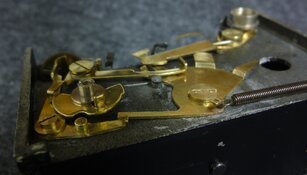
Mamiya super 16 mechanical microcosm.jpg

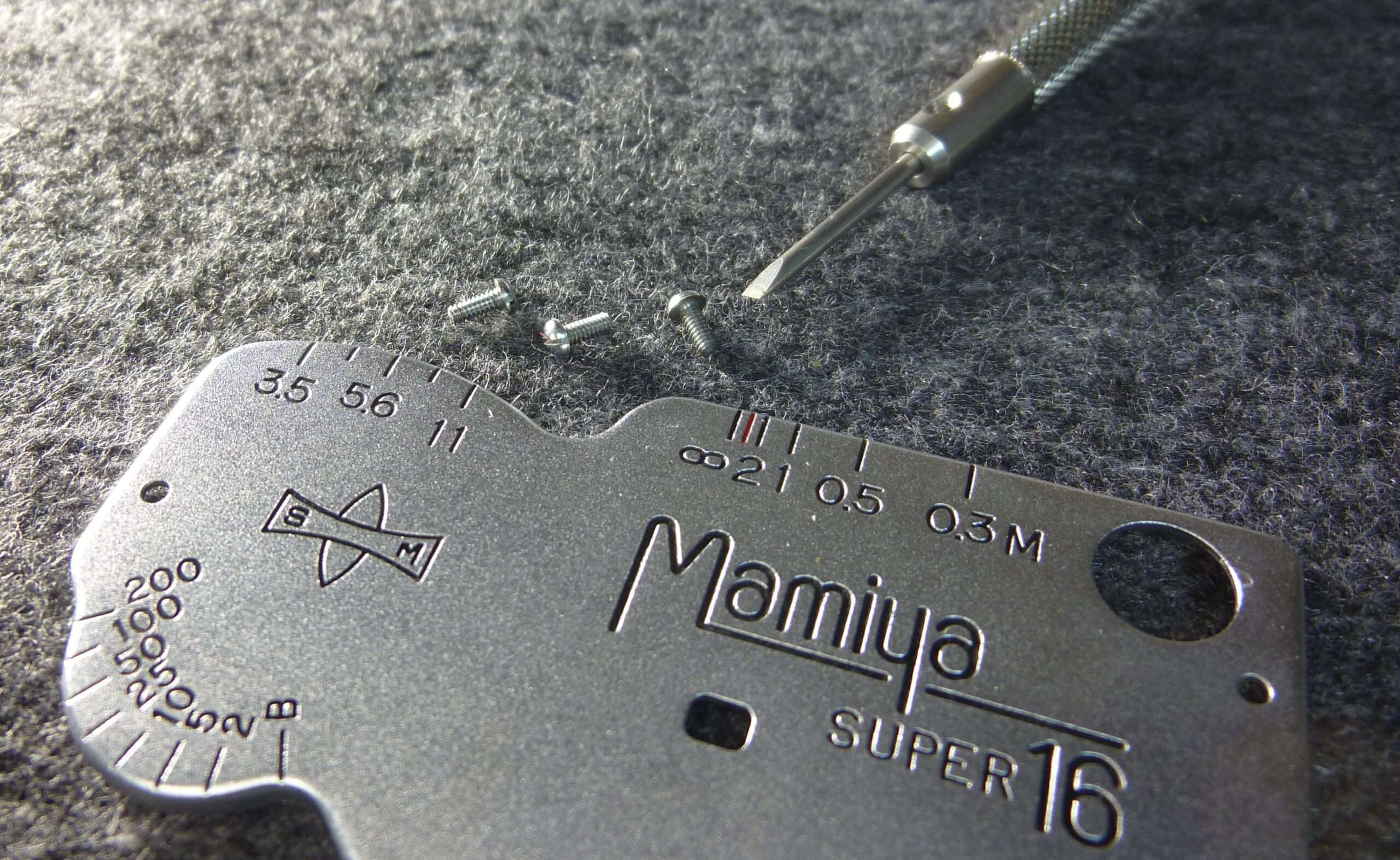
One example is my Mamiya Super 16, which I enjoyed restoring over several weeks. In the end, it's deeply satisfying to have brought it back to life. If you would like to see pictures and videos of my project, you can find them here:
 
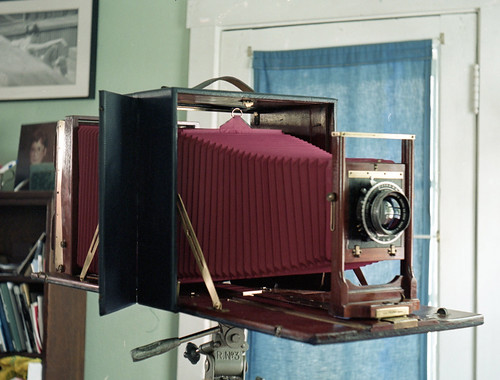
I like to tinker with old cameras too. Many are very complicated puzzles--sometimes maddening but equally satisfying when you figure out how to disassemble/repair/reassemble them. And I've always liked working with wood, so I gravitated toward the old view cameras of the late 19th/early 20th century. Some of them, like the Gundlach Koronas are works of beauty and elegance and very rewarding to bring back to life. I'm a mugwump on the user/collector fence: I try to get my old cameras into working condition, but some I just like looking at...

Premo 8x10 1 by terry, on Flickr
 
It's not a black or white issue. It's a multi-faceted continuum. Some cameras are easy to fix, some are impossible to fix. Some repairs are simple, some are complex. Some people have the time, others don't. Some times special tools are needed, other times not. To some it's an adventure, to others it's a rabbit hole.

I recently got a broken camera -- for free. The problem turned out to be that the camera only operates when film is inside. I "fixed" the "problem" -- and sold it for $120.
 
The question in the title is easier to answer than the one in the OP. As you imply, the title quesiton is largely based on the ages-old collector versus user dicotomy. The quesion in the OP is more complex as it requires a personal assessment/knowledge of skills and risk-taking tendency. For me, I'm a user and have reasonable skills and risk-taking tendencies. Yet there is rarely a camera that I repair in which the first attempt is successful; that first attempt often becomes a bag of parts to support the second and more successful repair effort.
 
Great details in your blog.

Yes, I buy cameras only to use them, and I know for most of them, if I don't use them, no one will. So I am willing to accept some level of risk in my repair. My skill increases with every repair I do, though I don't think it will ever be at a high level.
 
Thanks for a wonderful article! My own Mamiya 16 Super restoration was far more basic: I did not polish the internal brass parts, nor did I attempt to build a flash sync connector.

What I notice when working on Japanese cameras of the early postwar era are signs of hand-crafting: A bent lever here (intentionally, as a factory adjustment), file marks there. I think of how different 1950s Japan must have been.

I don't mind restoring cameras like the Mamiya, because they are still fairly common, and while there's history in that old grease, it doesn't seem like a part of history that needs preserving, unless I thought I had a rare variation, like a pre-production prototype.

On the other hand, if I owned a Leica Luxus, so much of it's value is as a collectable object that I wouldn't touch it. At that level, buyers will very much want complete and original authenticity, even it no longer functions as a picture-taking device.
 
I've repaired quite a few to use myself (then sometimes sell) but have particular one's serviced/repaired by specialists if I want them to have that in their history.

Examples of the latter would be a 1936 Kine Exacta rectangular window that I sent to Foto Service Olbrich in Germany and a 1936 Contax II which is currently being serviced by Euro Photo Services in the UK.
 
Photrio.com contains affiliate links to products. We may receive a commission for purchases made through these links.
To read our full affiliate disclosure statement please click Here.

PHOTRIO PARTNERS EQUALLY FUNDING OUR COMMUNITY:


Ilford ADOX Freestyle Photographic Stearman Press Weldon Color Lab Blue Moon Camera & Machine
Top Bottom