• Welcome to Photrio!
    Registration is fast and free. Join today to unlock search, see fewer ads, and access all forum features.
    Click here to sign up

Does filter quality matter?

Recent Classifieds

Forum statistics

Threads
202,826
Messages
2,846,038
Members
101,550
Latest member
Russell Zhang
Recent bookmarks
0
I want to get a few colored filters for black and white film photography - yellow, orange, and red. These will be used with Konica Hexanon AR lenses on a Konica Autoreflex T4, and possibly also with my Pentax MX gear, using step up rings.

There are tons of used filters available on eBay at reasonable prices. Can I consider any filter which was "made in Japan" in the analog heydays to be of reasonable quality? Or would it be worth the extra time and cost to seek out a more modern filter from Hoya or B+W with multicoating? By "reasonable quality" I mean, am I going to see any difference in image quality between a moderate quality filter compared to the top shelf ones?

Right now I have my eye on a set of Toshiba brand filters, made in Japan, but I can't find any specific info to tell me if the Toshiba filters were "cheap" filters - or comparable to the ones Canon, Minolta, and Nikon were putting their names on back in the 1970s.

And how would the 1970s Canon, Minolta, and Nikon filters compare to modern filters by Hoya, Marumi, or B+W?

I prefer multicoated filters over non-coated filters but wouldn't turn down a filter just because it's made in Japan. In fact nikon filters, made in Japan, are excellent and my preference for my Nikon lenses.
 
Same with lenses! Amiright? Never buy used lenses!
Yes, that would be positively horrifying to buy "someone else's old crap with mars, scratches, fungus, messed up screw threads, etc." Photography as we know it would come to a screeching halt. Quelle horreur! Gahd, and that old crap might not be multicoated.
 
Last edited:
As far as Japanese versus German brands go, the Japanese were fully up to speed or even exceeded German optics in certain categories decades ago; so why not filters too? Sounds like just another misinformed prejudice to me. I've used plenty of superb Japanese filters, and plenty of superb German ones too, just like lenses themselves.
 
Yes, that would be positively horrifying to buy "someone else's old crap with mars, scratches, fungus, messed up screw threads, etc." Photography as we know it would come to a screeching halt.
And used cameras! Especially those old, wretched, film cameras.

Just buy new ones, you know- those nice ones to go with your new, multi-coated filters.
I must be the only one here using that old crap
 
Same with lenses! Amiright? Never buy used lenses!
I know you're being sarcastic, but I've been racking my brain and I can't think of one single piece of equipment currently in my possession that I bought new, other than my contact printing frame. I make portraits almost exclusively these days, and my favorite pictures have all come from equipment that passed through untold numbers of hands before mine.
 
I just cleaned mold and fungus out of a Nikon S4 viewfinder and the 3.5cm F2.5 lens on it. Friend's late Father-in-Law's camera, the Mother-in-Law did not know how to store them. Mold, dirt, grime, fogged viewfinders, fogged elements- I made a low-ball offer. If she wants it back- she's getting a few $100 in free repairs. I have a hard time ignoring the cries of nice equipment. Especially Nikon RF.

The 50mm F1.5 Zeiss Opton Sonnar had a Kenko filter on it. Glass is Perfect on that Sonnar. Filter took the brunt of the horrible storage. The compartment case- mold infested, and "just infested". Dead Flying ants. Just sad.
"
 
Same with lenses! Amiright? Never buy used lenses!
Well, with large format, you are kinda stuck. Today, I shot with an orange B+W, filter on an old 35-year-old Schneider lens. The filter made the lens look almost new. :smile:
 
I know you're being sarcastic, but I've been racking my brain and I can't think of one single piece of equipment currently in my possession that I bought new, other than my contact printing frame. I make portraits almost exclusively these days, and my favorite pictures have all come from equipment that passed through untold numbers of hands before mine.
Cameras, spouses, everything is old and used nowadays. :smile:
 
It sometimes works the other way around. I wanted a 6X9 RF "beater" that I didn't have to worry about pampering, but with perfect optics. Lucked out and got one where the same filter had been left on the whole time, for about twenty years. The filter itself was all scratched and dinged, but the lens behind it, still like new - not even a single smudge or speck of dust.
 
These days we can get our spouses and ourselves refurbished.

I wish...

Obviously you know something we don't. Please share your information. Much to be gained here.

As for me, my cameras seem to be in better condition than I am. Nowadays I don't seem to click as I did before...
 
I wish...

Obviously you know something we don't. Please share your information. Much to be gained here.

As for me, my cameras seem to be in better condition than I am. Nowadays I don't seem to click as I did before...

I have had body part replacement and modifications. However, I am tired of piece part replacement of body parts. I want a full body replacement with one recovery and one rehabilitation. I have talked to my doctors and they are all in and want to sign up too, but they are afraid that Medicare and insurance will not cover it.
 
Well, I dug up my ole Birth Certificate to see if the Hospital contract included a lifetime replacement warranty. Haven't heard back.....
 
Well, I dug up my ole Birth Certificate to see if the Hospital contract included a lifetime replacement warranty. Haven't heard back.....

Does your birth certificate say Nordstroms across the top. If not, you will probably not have a return policy.
 
Nordstroms has lately been the victim of "flash mob" thefts, even in locations previously considered highly safe. I'd hate to have myself carted off during one of those shoplifting sprees. At least the ringleaders were identified and arrested. They had an entire warehouse of stolen good setup high-tech efficiently almost like Amazon, all computerized, and at that point, with about 9 million dollars worth of inventory, if I recall correctly. But since "shoplifting" has stupidly been demoted to a mere ticket misdemeanor in this state, hopefully the prosecutors will be able to get racketeering and organized crime charges to stick instead.
 
I want to get a few colored filters for black and white film photography - yellow, orange, and red. These will be used with Konica Hexanon AR lenses on a Konica Autoreflex T4, and possibly also with my Pentax MX gear, using step up rings.

There are tons of used filters available on eBay at reasonable prices. Can I consider any filter which was "made in Japan" in the analog heydays to be of reasonable quality? Or would it be worth the extra time and cost to seek out a more modern filter from Hoya or B+W with multicoating? By "reasonable quality" I mean, am I going to see any difference in image quality between a moderate quality filter compared to the top shelf ones?

Older uncoated or single coated filters will transmit between 4 and 10% less light than a multicoated filter. It doesn't matter what glass is behind the filter. In addition, multicoated filters are less likely to cause flare than multicoated filters. Beyond that, you are looking more at age related issues. Like many industrial processes, there has been evolutionary improvements in manufacturing optical glass over the last few decades. While the basic optical glass formulations used in filters haven't changed, the product is more consistent. Older used filters may have also seen subject to wear and tear of various forms.

So is upgrading to modern filters worth it? That's between you and your wallet. Personally, when I shoot B&W film, I use Hoya and Bower filters purchased in the 1980's and 1990's, plus some Cokin P series plastic slabs. But if I was shooting professionally, I might well reconsider.
 
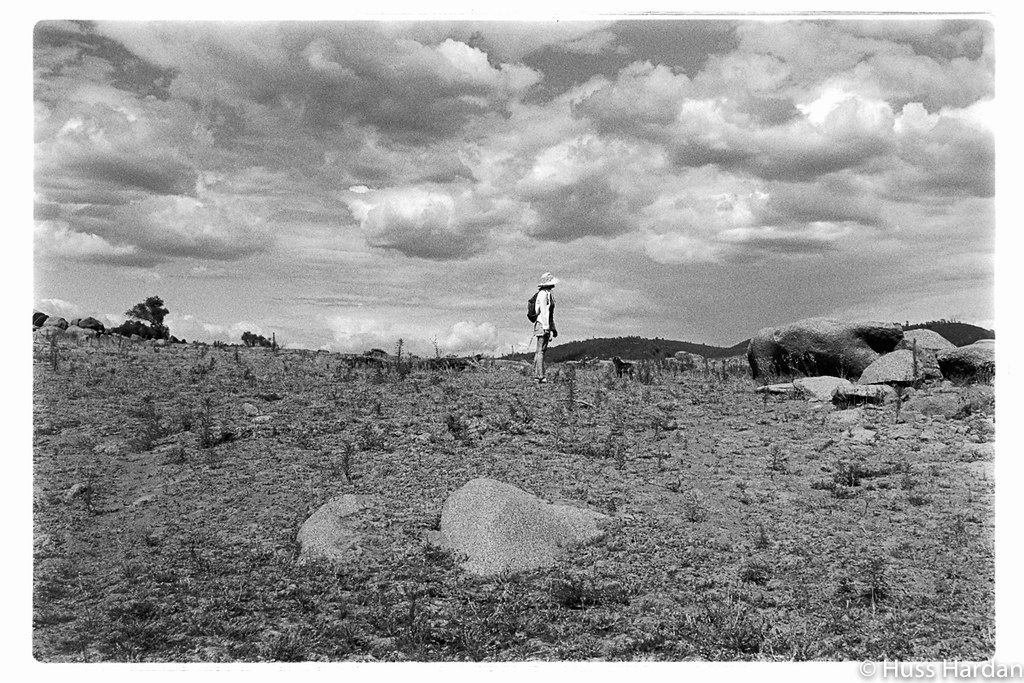
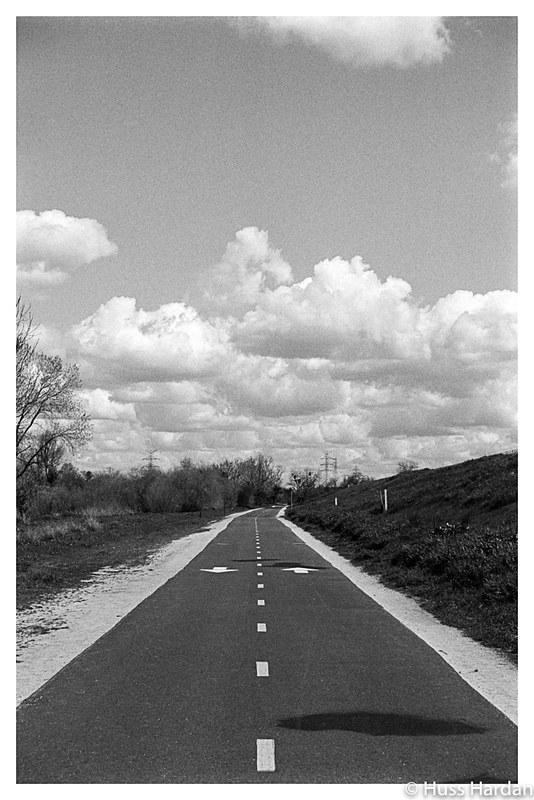
in my honest opinion, through trial and error, when it comes to filters shooting B&W film, it is best to skip filters altogether - and leave any filtering to be done in the darkroom for the printing phase, with only ONE exception: when shooting ONLY the sky for cloud shots, red filters mostly.
 
in my honest opinion, through trial and error, when it comes to filters shooting B&W film, it is best to skip filters altogether - and leave any filtering to be done in the darkroom for the printing phase, with only ONE exception: when shooting ONLY the sky for cloud shots, red filters mostly.

Yup. Kentmere 400, no filter:

 
in my honest opinion, through trial and error, when it comes to filters shooting B&W film, it is best to skip filters altogether - and leave any filtering to be done in the darkroom for the printing phase, with only ONE exception: when shooting ONLY the sky for cloud shots, red filters mostly.

So please explain exactly how you will get the infrared film to take photographs showing the infrared images without the proper filters such as R23, R25, R29, R72?
 
Yes, that would be positively horrifying to buy "someone else's old crap with mars, scratches, fungus, messed up screw threads, etc." Photography as we know it would come to a screeching halt. Quelle horreur! Gahd, and that old crap might not be multicoated.
I've bought used lenses many times but always trusted sources. I've really been disappointed with these lenses. I rather buy used name-brand than 3rd party new!
 
Photrio.com contains affiliate links to products. We may receive a commission for purchases made through these links.
To read our full affiliate disclosure statement please click Here.

PHOTRIO PARTNERS EQUALLY FUNDING OUR COMMUNITY:


Ilford ADOX Freestyle Photographic Stearman Press Weldon Color Lab Blue Moon Camera & Machine
Top Bottom