

• Welcome to Photrio!
    Registration is fast and free. Join today to unlock search, see fewer ads, and access all forum features.
    Click here to sign up

Does anyone use safelights to soup film anymore

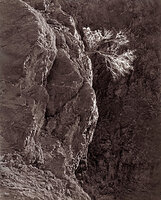
Bush on Canyon Wall

A
Bush on Canyon Wall

  • 2
  • 1
  • 20
double portrait

A
double portrait

  • 1
  • 0
  • 48

Forum statistics

Threads
203,260
Messages
2,852,027
Members
101,749
Latest member
frieMo
Recent bookmarks
0
i like to do photography and i developed my technique of developing film that suits my purposes. inspection development is a bit of a obscure science(to me hey), it worked and it does work nowadays (Atget and some folks here being the prove), but having no technical nor artistic reasons to do it, why do it? it´s like some guys that find d-76 better than id-11, or that rodinal should age, technique is a means in photography not an end . if you like to develop by inspection do it... if you like better a vintage rodinal use it... if i find that a way works better for me why yours have to be longer than mine? go on! the bike is yours! this is not hegelian dialectics. if you like buttercookies you should eat them, even if i dislike them

black and white in analog form is practical and a good way for me to do my things and yes the end results could be a art form, but hell not the means. art (supposedly) is the final object, not your exposure and development, that is a technique, and if you feel an artist doing development by inspection i rest my case here.


do whatever you people like and find practical, these are just opinions...
 
Frankly, I've absolutely no experience in development by inspection, nor am I inclined to acquire any, but...

Let's assume that you have a fair amount of experience with films, developers, papers, etc...
Let's assume that you have done your tests and you know how your films behave with a specific developer(s) and what the results are after printing...
Let's assume that you have a fair amount of experience regarding exposure, meters and how to use them...

Is there a reason to use development by inspection? Is there anything to gain at all?
 
Not too long ago, View Camera magazine had an article about processing large format black and white by inspection using infrared night vision goggles. They were talking about a pair that were made as toys and cost under $100.
 
I haven't done any souping of film by inspection yet. But I relate the folks that soup film through inspection are more like cooks. They cook a dish up to a certain point then adjust the seasoning to finish the dish. Where as some folks that soup film according to time and temp are more like bakers and pastry chefs. Cooks are more like artist, while bakers are more like scientist. I do find plenty of parallels between Cooking and photography which are two hobbies I love. Not to dis the photo pros, I wrecked my photo hobby by making it a profession while back. I'm rediscovering photography as a hobby again. I don't plan wreck my love of cooking by trying to be a pro chef. My philosophy is keep it a hobby if you want to keep it a passion.
 
... Let's assume that you have a fair amount of experience with films, developers, papers, etc...
Let's assume that you have done your tests and you know how your films behave with a specific developer(s) and what the results are after printing...
Let's assume that you have a fair amount of experience regarding exposure, meters and how to use them...
Is there a reason to use development by inspection? Is there anything to gain at all?

Given all those assumptions, there it can be argued are no absolute reasons to do DBI, if you add the much less reasonable assumption that one always has the time to do a "perfect" exposure. Perfect exposure, top notch technical command of the medium, and time and temperature developing, along with a variety of developers and agitation schemes, should be enough to get an optimal negative. But, one does not always have the time to create a perfectly exposed negative.

Look at Adams' "Moonrise, Hernandez, New Mexico". He got one slightly underexposed shot before the light went away completely. He did not have time to meter. He had to estimate as fast as he could, and just barely managed one exposure.

That shot and all the situations like it are reason sufficient to justify DBI as not only a possible way to work, but a vital way to work, at least for some folks, some of the time.

Adams used ten cycles of D-23 and water bath development on that negative. I have no record of whether he actually used inspection on "Moonrise". But whether he did or not, he could have, and it would have been a valid way to deal with the unknowns on that negative. At a minimum, DBI gives the photographer a flexible strategy for uncontrollable situations. Adams ended up intensifying the underexposed bottom half of that negative, making it much easier to print well.

Another reason to deploy DBI is that it is one more piece of the technical armamentarium of darkroom based photography and I suspect a lot of folks don't want to let the craft whither.
 
Last edited by a moderator:
CBG, I understand that DBI can be a useful technique for difficult cases; it's making it a standard procedure that I find puzzling, especially for roll films.
 
Some custom B&W labs use DBI for rollfilm and sheet film, since customers who don't process their own film might not always know what they need to do to have a printable negative, and development by inspection is another opportunity to intervene in the process.

I don't do it myself, but I can certainly see the attraction. You might decide you've gotten pretty close to the perfect neg based on exposure, knowledge of materials, and such, but if you've got the eye to develop by inspection, it's another chance to get exactly the negative you want, just as in printing, there may be a whole range of adequate or good or fine results, but there is plenty of room for interpretation, and most people wouldn't accept, say, using a standard exposure for enlargements of a certain size with no further manipulation even if their negatives were absolutely consistent and developed perfectly to compensate for variations in lighting.
 
CBG, I understand that DBI can be a useful technique for difficult cases; it's making it a standard procedure that I find puzzling, especially for roll films.
I'm pretty sure it is generally used with sheet film. Personally, I've never inspected roll film. Hadn't thought of the commercial lab benefits David mentions. Those make a lot of sense.
 
I'm thinking about this, as I've started to develop reels in bigger tanks in racks, I can't figure out how one would do DBI using this process. I don't really think I want to begin to do it, but I'm trying to figure out in my head how you'd do it with a tank, reels, a rack. It's already a pretty sensitive process (big rack in a big tank) to agitation and even development... Especially w/ the bigger racks that labs must use for volume.

Curious if anyone here has ever seen how it's done?
 
... I can't figure out how one would do DBI using ... big rack in a big tank ...
I can't see an easy way. It sounds like a film handling / logistical nightmare. I suspect labs doing dbi on rollfilm are doing a small number or just one roll at one time but would be interested to hear from anyone actually in the know.
 
I can't see an easy way. It sounds like a film handling / logistical nightmare. I suspect labs doing dbi on rollfilm are doing a small number or just one roll at one time but would be interested to hear from anyone actually in the know.

The only thing I can think of is using a basket half full and having some sort of rotation scheme going...then just being really good at unwinding and winding a few inches of wet film quickly.

Still, I feel w/ agitation and draining/dripping developer on a large rack this would open a bunch of problems up.

Unless there was a water holding bath or something used during the inspection...
 
Many years ago I took a workshop with George Krause who was an master at development by inspection. He showed us how to do it, and later I bought a green safelight filter at a flea market. But I never felt comfortable with the process, and frankly, I was never able to differentiate all that well under dim green lighting.

I've tested my tools and materials, and have a pretty good idea of how my film should be processed. I meter carefully, and where appropriate, designate individual sheets for either plus or minus compensation following my standard formula. It's fairly rare for me to have a negative where the processing is so far off that it cannot be printed (although I have many where the content doesn't deserve to be printed - but that's a different problem.)

I also use variable contrast paper exclusively, which gives me the ability to fine tune individual prints beyond the inherent variables of film.
 
I think David Wood of dr5 fame does DBI with rollfilm for negative processing.

I think the usual approach is to just check a few outside frames. It would be impractical to check every frame, and then how would the person doing the work decide which frame to develop for? For professional labs, I think the assumption would be that many rolls exposed under similar lighting conditions could be batched, so it wouldn't be necessary to inspect every roll.
 
Eugene Smith wrote that a photographer of his acquaintance would snip up a roll film as it started developing and he could see the images coming up, and develop parts of the roll differently. I can barely imagine the mess.
 
Photrio.com contains affiliate links to products. We may receive a commission for purchases made through these links.
To read our full affiliate disclosure statement please click Here.

PHOTRIO PARTNERS EQUALLY FUNDING OUR COMMUNITY:


Ilford ADOX Freestyle Photographic Stearman Press Weldon Color Lab Blue Moon Camera & Machine
Top Bottom
