• Welcome to Photrio!
    Registration is fast and free. Join today to unlock search, see fewer ads, and access all forum features.
    Click here to sign up

Do you wish RC papers were thicker?

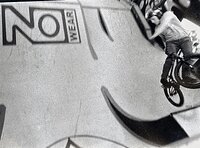
Lowlight freestyle

A
Lowlight freestyle

  • 0
  • 0
  • 16
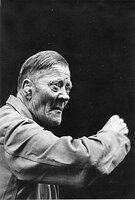
man arguing 1972

A
man arguing 1972

  • 7
  • 0
  • 64

Recent Classifieds

Forum statistics

Threads
203,018
Messages
2,848,695
Members
101,601
Latest member
instantcrow
Recent bookmarks
0
tkamiya, that's not really a solution for me as I have many keepers :smile: and I like having prints in my hands.


Well, sorry about that. This is what I do when I frame RC prints so it won't buckle.
 
I like Portfolio a lot, but for contact sheets I want something thinner to save space in the neg binders. I'd use single weight if it still existed. Last time I saw it was POP paper and Azo. Single weight was great for paper negatives.
Yes, I'd be happy with some thinner RC paper for paper negatives.
 
Why would you want these to be thicker? Unless you are focusing on something of the same thickness, a thicker paper would give greater variance of focus between it's surface and the baseboard.
 
RC paper support is made of /polyethylene/titanium dioxide in binder/fine quality paper/polyethylene

The cost of all of these has gone up in the last few years, and so all of them have been slimmed down to the bare minimum. Due to the increase in oil prices, polyethylene has gone way up.

Regarding SW FB, it is still made in tiny quantity, but is very hard to coat on. It is hard to process and hard to work with post process.

PE
 
I like the thicker RC papers too. The one I use most often is the ilford post card type that is in the portfolio thickness. I had used a few assorted packs of fuji rc paper and that stuff is the thinnest paper that I have ever used, its also sized just slightly different.
 
Why would you want these to be thicker? Unless you are focusing on something of the same thickness, a thicker paper would give greater variance of focus between it's surface and the baseboard.

Clive, I'm talking 'FB thickness'.
 
RC paper support is made of /polyethylene/titanium dioxide in binder/fine quality paper/polyethylene

The cost of all of these has gone up in the last few years, and so all of them have been slimmed down to the bare minimum. Due to the increase in oil prices, polyethylene has gone way up.

Regarding SW FB, it is still made in tiny quantity, but is very hard to coat on. It is hard to process and hard to work with post process.

PE

Standard PE paper is consumed in large quantities for RA-4 papers.
The increase in raw material cost for those two foils should be negligable for the price of sheet papers.

The problem is rather to find a cooperative supplier. There is only one independant supplier. And that is not able/willing or not asked to (depending on point of view) to make a variety of bases. The critical point would be the batch size.
 
Clive, guys, the thickness of the paper is unimportant if you focus on a sheet of the paper you are printing on.

PE
 
But wouldn't that also be true for FB?

The DoF at the board is much greater than many believe. And, as PE said, I focus on a piece of paper as my enlarging easel isn't white in colour.
 
The DoF at the board is much greater than many believe. And, as PE said, I focus on a piece of paper as my enlarging easel isn't white in colour.

Miha, I don't really understand why you want thicker paper. What can you do with thicker paper that you can't do with thinner? Also, I think you mean depth of focus.
 
Well, thick paper equals quality and 'something different' for many photo viewers. Watch the different reactions to Art300 and a thin RC print.

When discussing prints and handing them around to friends they are usually unmounted and the tactile part of the experience does play a role in the impression made. Most people, if they print at all, have lab made colour prints (from Frontiers or other automated RA4 systems) which are on thin RC base material, so anything which is a 'plus' to that is positive.
 
Miha, I don't really understand why you want thicker paper. What can you do with thicker paper that you can't do with thinner? Also, I think you mean depth of focus.

I can handle it easily, the light doesn't shine trough when holding it at arm's length, it doesn't bend when holding in one hand only, etc...
Yes by DoF I mean depth of focus which is quite generous at medium enlargemets and medium apertures.
 
Well, thick paper equals quality and 'something different' for many photo viewers. Watch the different reactions to Art300 and a thin RC print.

Very true, my wife commented once on the paper thickness when handling a photo printed on Portfolio paper (and she dislikes FB papers).
 
Very true, my wife commented once on the paper thickness when handling a photo printed on Portfolio paper (and she dislikes FB papers).

Miha, the tactile qualities of a print is something I have never thought about, but will take your word for it.
 
Miha, the tactile qualities of a print is something I have never thought about, but will take your word for it.

I know this Clive. For you a good photo can also be appreciated in a magazine. And to be honest I would prefer an original copy of the Vu magazine with the picture of the Falling soldier taken by Capa to a FB print made from the original negative in 2013. What would be your pick?
 
Miha, that is a very big question, as there are so many great photographers and images to choose from. I suppose as a photographer’s photographer I think the following is my favourite.

http://www.google.co.uk/imgres?q=mi...w=112&start=0&ndsp=16&ved=1t:429,r:0,s:0,i:82

Not because of a particularly great composition, but rather a compromise between so many different photographic factors. If you view an enlargement of this image the profile of the near woman’s face has a slight dark background between her and the woman in the distance. A fraction of a mm differential (the difference between a good photograph and a really great one).
 
Clive, I'm still interested in your choice as stated in my previus post - an original edition of the Vu magazine or a 2013 FB print from the original Capa's negative?

As for HCB favourite, there are many, but I prefer his more 'static' potos.

p.s. I see that my question in #42 was not very clear, sorry
 
Clive, I'm still interested in your choice as stated in my previus post - an original edition of the Vu magazine or a 2013 FB print from the original Capa's negative?

As for HCB favourite, there are many, but I prefer his more 'static' potos.

p.s. I see that my question in #42 was not very clear, sorry

Miha, sorry for the confusion, but I'm not that familiar with Vu magazine. But as pointed out in your previous post I prefer a good photograph (however it is printed) to an FB print or any other version.
 
It's the magazine where Capa's famous photo was first published: http://www.creativereview.co.uk/images/uploads/2008/10/vu_capa.jpg versus Dead Link Removed

The Capa picture in question has a debate behind it about posed or original. I don't know the outcome, but Capa was a very good photographer. He kept Magnum afloat with his gambling. Incidentally, the thing I like about Capa is the inscription he had inside his helmet that said something along the lines of “Robert Capa, great correspondent and lover.”
 
While we are at it, what's the thickness of the ADOX MCP paper? The data sheet provided by ADOX says 270 ug which is valid for the old AGFA papers.
 
Last edited by a moderator:
I got a different figure for the new Adox PE paper for which I'm not sure though most certain:
220g/m² (paper+PE foils)
 
I believe that 220g/m2 is incorrect. Ilford state 190g/m2 for their regular RC paper and I read that ADOX feels a little thinner than MGRC, although I believe this was only stated once by one user here at APUG.
 
Photrio.com contains affiliate links to products. We may receive a commission for purchases made through these links.
To read our full affiliate disclosure statement please click Here.

PHOTRIO PARTNERS EQUALLY FUNDING OUR COMMUNITY:



Ilford ADOX Freestyle Photographic Stearman Press Weldon Color Lab Blue Moon Camera & Machine
Top Bottom