
• Welcome to Photrio!
    Registration is fast and free. Join today to unlock search, see fewer ads, and access all forum features.
    Click here to sign up

Do you see a trend today in pursuing very thin depth of field

Forum statistics

Threads
203,625
Messages
2,857,281
Members
101,936
Latest member
f100r
Recent bookmarks
1
i think it's a reaction (over?) to the point and shoot digital camera trend -- folks are so used to seeing everything, near and far, in sharp focus because p and s digital cameras are pinhole cameras, pretty much...or at least have the same DOF of a Minox camera.

So when they see actual depth of field effects -- selective focus! -- they think it is something nifty and cool and want to do it more.

THIS! I couldn't agree more.
I think that people see selective focus as more "arty" also because it's pretty specific to photography. Our eyes do focus selectively, but we hardly ever notice because of the way our vision is processed in the brain, so seeing pictures with a prominent out of focus area can be pleasing and "different" from the norm.

Narrow DOF portraits are terrible with one eye in focus and the other not.

I personally don't have a problem with having one eye in focus and not the other, as long as the focus is on the eye closest to the camera, like the two examples below.

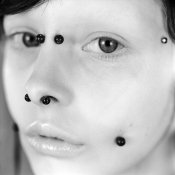
maxfocuseye.jpg iskafocuseye.jpg

Am I the only one?


Maybe it's people shooting 35mm who are having this issue? It's hard enough to get large DOF with medium format camera and standard lens, I will not even mention LF.

I agree, I used to be much more in love with shallow depth of field when I used to shoot 35mm. Now that I often battle with it using medium and large format cameras, I'm less of a fan
 
I also see a lot of newbies on another site asking why they aren't getting sharp photos of people when they're using f2. There seems to be a lot of lack of understanding of how to use apertures. There are also a large number of people who seem to think you start seeing the effects of diffraction at f8 or so and won't stop down beyond that. It's one thing to use DOF creatively and on purpose, but I've seen a number of shots that just look like accidents.
 
It is too hard and time consuming to come up with a good photograph. So we get involved with manipulating ordinary scenes to make them slightly more interesting to the eye. They are kind of like cotton candy. Appealing at first, but not very substantial over the long run.
 
Amazing DOF is a trait of smaller digital sensors. Maybe narrow DOF is becoming a unique (and refreshing) look of old fashioned film photography for people grown accustomed to that digital look. Everything in focus does get boring after a while. I remember doing macros of insects and the like back around 2000 when a friend bought his first digital camera, an Olympus E-10. His photos had such depth of field I had to ask him how he did it. That's when I learned about the sensor size and such.
 
Sometimes I wonder if people show portraits of their lenses and process, rather than the person.

Depth of field is a control allowing photographers to show what they want to show in a frame. To shoot everything at f/wideopen I think is to severely limit oneself to a very small portion of the possibilities available.

But to each their own. I don't have to understand it for other people to enjoy it.

When I look at photographs I view them and wonder whether it's an interesting photograph or not. Then I view to look if I think the image is well crafted to support the photograph and its content or not. Depth of field? It's just one choice in a multitude of things to make up a photograph.

I should add that I think the above relates to any process related variable, like those who think choice of film is important, or who tone their images a certain way, or lith printing, or using some other exotic process. If the photograph at any point becomes about the process, then it's walking on thin ice. If the photograph isn't interesting to begin with, no process variable is going to help make it better. There are things about a photograph that are infinitely more important.
 
Last edited by a moderator:
Do you notice it too or just me. Reading posts in many photo forums, it seems that today there is a trend in very thin depth of field. A lot of people talking about it and make it a very important feature of their equipment. In the old days I think people tried to get more depth of field as I remember. Neither way is wrong but do you notice that there is a trend toward narrow depth of field today?

Yes. It also accounts for the reverse tilt 'miniature' popularity of tilt movements, rather than the forward tilt to get wider apparent DOF
 
The narrow depth of field trend is apparent and as with any technique that affects that much change in the overall look to an image..prone to instant gratification and overuse.Heck..I remember having my set of fog filters that I would unsheath to help conquer the difficult landscape!.awful waste of kodachrome.There were a couple images that survived that unfortunate distraction in my photographic journey..but eventually the fog cleared in my technique.
I must however add to the discussion my deep admiration for a book I came across published by Nazraeli Press of large format images derived from use of a very narrow depth of field.The subject of the monograph was a small region or town in the Swiss Alps.
Very well executed..an effect application of narrow depth of field for my money.


Sent from my LG-P509 using Tapatalk 2
 
I use it whenever I want to isolate something from everything else.

My wife has been doing a lot of family photo shoots in a lot of different locations (that she doesn't necessarily choose), being able to have a real shallow depth of field helps her get a creamy background where otherwise it might be department stores or powerlines.
 
My wife has been doing a lot of family photo shoots in a lot of different locations (that she doesn't necessarily choose), being able to have a real shallow depth of field helps her get a creamy background where otherwise it might be department stores or powerlines.

Then it becomes one tool for her to use to get the best out of each situation. In a different setting she might choose to include more of the background, the point being that it's a choice and something to use for whatever advantage it gives at the time.

Sometimes I'm not sure what I like at first, so I shoot a close-up at f/11 and another at f/5.6, and print both to see what works best.
 
Another factor might be the now ubiquitous "kit" zoom with a maximum aperture of something around f/4.

If a beginner adds something like a 50mm f/1.8 (or equivalent for your format) they will discover (and most likely over-use) a fascinating new tool.
 
Actually I remember seeing more extreme selective focus back a number of years ago with people playing with their view cameras doing portraits.

Also everything has trends, when people are tired of one thing they do other things. Sharp vs "romantic", color vs black and white, big bundles of bokeh vs sharp backgrounds, everything old is new again.
 
I was just thinking, people here who do film exclusively have probably not heard of Dead Link Removed. In short, it's not just shooting wide open, but it's shooting a subject wide open, then a few shots around the edges at the same aperture/focus distance and digitally stitching together. In effect, what you get is an MF or even LF-sized imaging surface shot with something as fast as an f/1.2 (which doesn't really happen otherwise unless you buy one of those $20k Zoomar 180/1.3 or 240/1.2 for a hassy or something).

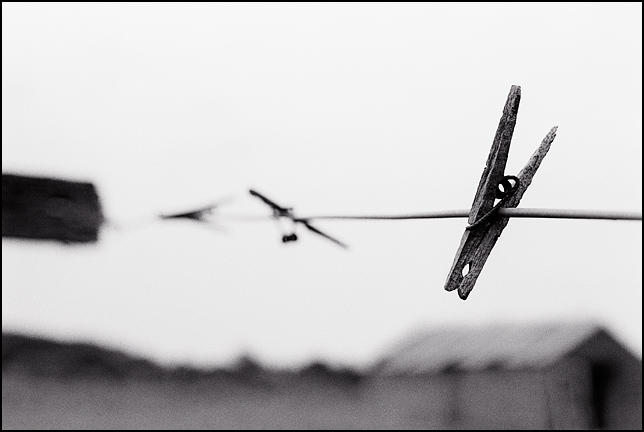
I'm all for shooting f/1.2 if you need the aperture for the given light level, even for the artistic effect (as long as it 'works', like that clothesline pic earlier 'works'). But somehow this Brenizer method is a bit of a step too far. (because both a: I wouldn't go to all that effort, and b: I just don't like the effect in that example at the top of the linked page with the girl in the dress, it just doesn't look good to me. And the one down the bottom with the couple on the road, I can see the digital stitch-marks)
 
Thank you everyone for the replies! I don't think a lot of DOF or shallow DOF is good or bad if use correctly. Only that I see more people seeking for narrow DOF these days than looking for more DOF. In some forum the goal of narrow DOF seems like the norm as one only need to say how do I get better DOF and everyone understood that how do I get LESS DOF.
 
The fashion for shallow DoF is mainly about pursuing a cinematic look. Movie is generally shot at wider apertures (except for the Film Noir era and a few other exceptions). It's easier to edit than deep focus. Wide apertures and specular highlights allow the photographer to portray the subject in his own personal film. I'm more of a wide angle street type, personally.
 
From my observations, selective focus was (is) another trend in an artistic medium. Just like bokeh, B&W wedding portraits, and textured photos. Sometimes these trends are overused simply because they are trendy. Sometimes they hang on a little too long. Sometimes they wane, then resurge.

in all cases, they are not 100% appreciated.

Bill
 
It's definitely an "I just got an SLR" phase and like every other beginner trapping, it becomes perpetuated on the photo sharing websites. Agree with post #41 about it being a cinema borne thing (films are however mostly made up of portraits, so it's more practicality than aesthetic here). But cinematography does appear to have a bigger influence on amateur photography today than actual still photography does, which is concerning.

I did it for a while when I first started with film on the Hasselblad, despite my interest in photography being rooted in landscape work at the time! :blink: So from personal experience, I'd say it's just one of those 'quality' infatuations that people are afflicted with against their better judgement, particularly with a recent step up in format.
But the issue arises, like I say, when it's perpetuated because it's celebrated on sites like Flickr out of ignorance. Some people have difficulty nipping it in the bud because it's the easiest way to make a 'quality' statement, especially with characterful optical systems like the Hasselblad, Pentax 67 and Mamiyas.
 
I agree that it is ugly on portraits, but there have been a few times that I shot other types of things with little depth of field to achieve a look that I wanted, like here:

feighner-farm4.jpg


THe photo has sold well, and was even used for the cover of a Canadian novel published a few years ago:

The photo was shot with an Olympus 50mm f1.4 lens on Tmax 400. I think I shot it at f2 or f2.8, can't remember for sure.

Sorry for being now out of topic but I just wanted to say that your photo is really wonderful, it has moved something in me, which did not happen in a long time. It made me want to go out and use more film. Can I ask how did you market it, I mean it is a great image but how did you find people who were interested in it?
 
Sorry for being now out of topic but I just wanted to say that your photo is really wonderful, it has moved something in me, which did not happen in a long time. It made me want to go out and use more film. Can I ask how did you market it, I mean it is a great image but how did you find people who were interested in it?

I'm sending a PM
 
Do you notice it too or just me. Reading posts in many photo forums, it seems that today there is a trend in very thin depth of field. A lot of people talking about it and make it a very important feature of their equipment. In the old days I think people tried to get more depth of field as I remember. Neither way is wrong but do you notice that there is a trend toward narrow depth of field today?

Yes,I noticed that DOFIS OVERRATED. WHAT WE NEED MORE OF IS DEPTYH OF THOUGHT.:whistling:
 
It's definitely an "I just got an SLR" phase and like every other beginner trapping, it becomes perpetuated on the photo sharing websites. Agree with post #41 about it being a cinema borne thing (films are however mostly made up of portraits, so it's more practicality than aesthetic here). But cinematography does appear to have a bigger influence on amateur photography today than actual still photography does, which is concerning.

I did it for a while when I first started with film on the Hasselblad, despite my interest in photography being rooted in landscape work at the time! :blink: So from personal experience, I'd say it's just one of those 'quality' infatuations that people are afflicted with against their better judgement, particularly with a recent step up in format.

But the issue arises, like I say, when it's perpetuated because it's celebrated on sites like Flickr out of ignorance. Some people have difficulty nipping it in the bud because it's the easiest way to make a 'quality' statement, especially with characterful optical systems like the Hasselblad, Pentax 67 and Mamiyas.

I first saw it in the " portrait field" back in the 80s when we were seeing 300mm lenses being used by fashion photographers at the time creating cool backgrounds. So a lot of people were buying massively long lenses for their Hasselblads to copy the look. Which cost a fortune.

Unfortunately dealing with amateur subjects from a long distance became too difficult so it fell out of favor. Then later 4x5s with shift lenses were experimented with to mess with "eyes in, ears out" look but like all trends it died after a short time.

Then there was Lens Baby. Then photoshop Gaussian blur.

As someone said, these are just another set of tools to modify our work, that can get overused.
 
Shallow DoF actually can make some otherwise crappy/inane photos look better.
But what about Bokeh being something like this or a colourful version of this: http://www.flickr.com/photos/chancy51/11105542315/
(I dont know that photographer, seems to have some other good pictures, I just picked what most closely resembled the commonly seen 'idea').

I wonder whether people who post such pictures actually look at them any larger than a 2/3" lcd or a phone screen.
 
This thread raises the interesting philosophical question of what 'aperture' we naturally see at, and does it matter for our photographic methodology. We don't naturally see in deep focus, so wide angle street photography is essentially an exercise in surrealism rather than realism, which is one of the factors that differentiates it from photojournalism. Everything happens at once and is captured three dimensionally.

Shallow DoF, when taken to extremes, is also anti-naturalistic, locking the viewer into an uncompromising linear space. I would argue that the most naturalistic depiction of a subject (if we can talk about a mental phenomenon in optical terms), is clear focus on the subject with slightly larger defocused circles on the background, or the 'f4 effect'. None of this matters in a medium where time is an abstraction - with the unreality implicit in that deficit - but it's interesting to muse on the messages optics confer to an image.
 
Some see it as cinematic look narrow depth of field while shooting a person. Compare modern movies (dialogue scenes) to old films older films had a lot more dof especially when shot by Greg Toland, ASC.

To quote Blansky "As someone said, these are just another set of tools to modify our work, that can get overused."

As a side note as a film user I wouldn't complain about the wet-plate revival, film is an alt-process these days so using film is no different than using wet-plate. The swirly bokeh from Petzvals can get boring but wet-plate photography is another tool to help a photographer create his vision.
 
analoguey said:
I wonder whether people who post such pictures actually look at them any larger than a 2/3" lcd or a phone screen.

if they don't, then it simply doesn't matter what they look like bigger, though, does it?

They've matched what they want to see to the context in which it will be viewed.

If you are wet (or indeed inkjet) printing, you'll be doing exactly the same thing.
 
Photrio.com contains affiliate links to products. We may receive a commission for purchases made through these links.
To read our full affiliate disclosure statement please click Here.

PHOTRIO PARTNERS EQUALLY FUNDING OUR COMMUNITY:


Ilford ADOX Freestyle Photographic Stearman Press Weldon Color Lab Blue Moon Camera & Machine
Top Bottom
