• Welcome to Photrio!
    Registration is fast and free. Join today to unlock search, see fewer ads, and access all forum features.
    Click here to sign up

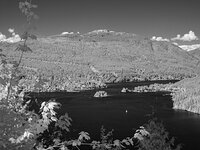
Do you ever flip a print?

Two Waves.jpg

A
Two Waves.jpg

  • 4
  • 2
  • 65

Recent Classifieds

Forum statistics

Threads
202,681
Messages
2,844,099
Members
101,465
Latest member
Plomo
Recent bookmarks
0

BetterSense

Member
Allowing Ads
Joined
Aug 16, 2008
Messages
3,151
Location
North Caroli
Format
35mm
Do you ever deliberately flip a print from the way it appeared in real life, because you thought it looked better? Do you think this is ok to do?

I read about a guy shooting in-camera Illfochromes and they always came out flipped, and he rarely did anything about it unless there was a giveaway in the image, because it really looks fine, to those who were not present at the original scene.
 
Do you ever deliberately flip a print from the way it appeared in real life, because you thought it looked better? Do you think this is ok to do?

I read about a guy shooting in-camera Illfochromes and they always came out flipped, and he rarely did anything about it unless there was a giveaway in the image, because it really looks fine, to those who were not present at the original scene.

Yep. I do it if it helps the image meet my artistic objectives. I stress to anyone who will listen that my images are not documentary -- they are art. They aren't intended to replicate the scene in anyway. That includes flipping. Artist's prerogative.
 
A few times I have composed a scene on ground glass and then preferred to print it flipped... probably because it fit my memory better.

I have noticed that quite a few scenes look equally good to me when printed either way, while some seem to be strongly 'polarized' - tending to look much better one way than the other.

Anyway, sure, I think it's okay to do as long as it doesn't fundamentally misrepresent something e.g architecture and such. It'd certainly not be appropriate in photojournalism.
 
Photo editors for publications have been doing it since pictures could be flipped. It usually involved flipping a persons picture so it would face into the page for aesthetic balance.
 
Not on purpose, but about 15 years ago I reverse-printed a few dozen Agfa Super Pan Press negs from the thirties & forties. I guess I had enjoyed a bit too much "Tonal enhancer" and thought that the "SSERPNAPREPUSAFGA," as it appeared on the print, must be wrong. So I flipped the negative, and all that followed.

It wasn't until the next day that I noticed the Richfield Betholine sign, as well as all of the signs and license plates, in all of my prints, were backwards.

I think I read a thread recently highlighting the comical mistakes we all make in the darkroom. This is my contribution to that list.
 
Last edited by a moderator:
I guess it all depends on the subject and photographer. I'm against "flipping" in my personal work and would never do it. Now if other photographers do, that's fine, doesn't bother me. It's just one of those things I guess, like do you print full frame or crop?
 
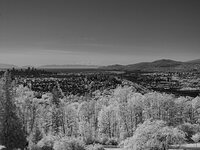
I flip images sometimes. Here is one...
 

Attachments

  • 00010.jpg
    00010.jpg
    42.4 KB · Views: 279
Since I do single transfer carbon prints, my images are always flipped -- but then generally I compose them to be flipped. Easy to do since I see the image already flipped on the ground glass. I have only one 4x5 that I have actually flipped printing silver gelatin...for reasons of compostion.

Vaughn
 
I thought the proper term was "flopped"?
 
Ian...that is why I rarely make carbon prints of famous icons (Half Dome, etc). But for 99% of my work I am documenting my response to the light, so reversing the image does not matter at all. If one is documenting a place (or one's response to a place), then I can see how reversing the image is not an option.

Vaughn
 
Vaughn, is it not possible to reverse the negative when making Carbon prints ?

I guess if you make intermediary/enlarged Digital negative, as I believe Sandy King does then there's no flipping issue :D

Ian
 
Last edited by a moderator:
An old portrait photographers trick was to present clients with proofs that were flipped as that is the way we see ourselves in the mirror.
 
Do you ever deliberately flip a print from the way it appeared in real life, because you thought it looked better? Do you think this is ok to do?

Yes, and yes. Viewers rarely know (or care) about reality... and if they do comment it is easy to explain that that the intent of the image is art rather than documentation (unless the intent really is documentation, in which case a flip would be a bad idea).
 
I thought the proper term was "flopped"?

"Flip" is what one does in the darkroom (or on the computer); "Flopped" is the description of the resulting image. "Flipped" is an acknowleged American alternative spelling. See the dictionary entry for "Lens versus Lense" for further information. :D
 
Flipping & flopping go hand in hand, alternately, but how can you describe American spelling, err PLEASE it doesn't exist, it is just lazy English. After all Kodak say Colour :D Well outside the US anyway, colour prints last, but the cheap nasty miss a bit out color prints fade from memory :smile:

Probably the ONLY American who can spell or use English properly is Loudon Wainright III, and his kids :D But then they can sing as well :smile:
 
Last edited by a moderator:
Vaughn, is it not possible to reverse the negative when making Carbon prints ?

I guess if you make intermediary/enlarged Digital negative, as I believe Sandy King does then there's no flipping issue :D

Ian

A true point UV light source and a vacuum frame might be able to produce as sharp of a print with the negative flopped (or flipped) as one printed emulsion to emulsion. But I have neither a true point UV light source or vacuum frame.

My desire for very sharp prints does not allow me to flip the neg over. In fact, I won't even use a set of BL bulbs to expose carbon prints with because of the loss of sharpness that results from such a diffuse light source.

The reason for this is that the emulsion of the carbon tissue is many times thicker than the emulsion of silver gelatin paper. Diffuse light has the opportunity to spread out within the emulsion and softening the image.

Enlarging negs with film of digitally does give one the opportunity to flip the image before making the carbon print.

I think my prints look (or feel) sharper than the negatives -- due to the additional apparent sharpness gained by the edge effects of having raised relief.

Vaughn
 
"Flip" is what one does in the darkroom (or on the computer); "Flopped" is the description of the resulting image. "Flipped" is an acknowleged American alternative spelling. See the dictionary entry for "Lens versus Lense" for further information. :D

In labs I worked in, when that result was desired, the work order never had anything but "FLOP" scrawled over it. "Flip" may be correct according to some dictionary or another, but I never encountered it in practice.
 
Daguerreotypes were never anything but flipped/flopped. If I'm presenting a history topic to students and there is an image that has been "corrected" I will un-correct it so it can be seen the way it was even if there is text. Makes the point.
 
I reverse negatives in two situations.

The first thing a portrait client sees is a reversed proof. It is the face they see in the bathroom mirror. I sometimes get a response like "You're the only photographer who has ever got me the way I am. All the others seem to get me wrong somehow." The other portraits in the shoot are the right way round so that everyone else will recognise my subject properly.

The other flip involves self portraits when I wear a particular T-shirt on which the words "GUARANTEED NO DIGITAL" are stenciled backwards. By flipping the negative the positive shows street signage reversed, cars on the wrong side of the road, shirts buttons wrong, wrist watches on the right, and so on. In effect I create a Bizarro world in which everything is awry except the message on the T-shirt!
 
Photrio.com contains affiliate links to products. We may receive a commission for purchases made through these links.
To read our full affiliate disclosure statement please click Here.

PHOTRIO PARTNERS EQUALLY FUNDING OUR COMMUNITY:


Ilford ADOX Freestyle Photographic Stearman Press Weldon Color Lab Blue Moon Camera & Machine
Top Bottom