
• Welcome to Photrio!
    Registration is fast and free. Join today to unlock search, see fewer ads, and access all forum features.
    Click here to sign up

Distance & Exposure times....

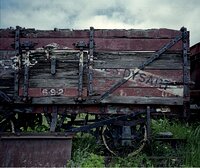
A coal wagon

A
A coal wagon

  • 1
  • 0
  • 15
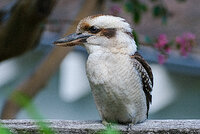
Morning Birdie

D
Morning Birdie

  • 0
  • 2
  • 16

Forum statistics

Threads
203,142
Messages
2,850,471
Members
101,692
Latest member
eviosl
Recent bookmarks
0
I was able to print an 8x10 using a #3 filter at 3 seconds exposure, around f/5.6 I think, and produce something that I like.

Last night I was thinking about trying a 16x20 of the same print.... I want to try and have an idea of how the distance may change my exposure time, before I start wasting 16x20 sheets...

Kodak enlarging dial in the Kodak B+W Dataguide says: 8X 3sec f/5.6 becomes 16X 10.5sec f/5.6
 
Not relevant as we were referring to moving lights, not the focus (well, I was anyway!) and inverse square rule in general. But yes, on an enlarger the re-focussing will affect it a bit. but only because it will also change the coverage so the inverse square rule will still apply.


Steve.

You can think of re-focusing as thing that changes the effective aperture. As the lens gets racked out the effective aperture changes. Otherwise you could easily calculate the exposure changes based on conservation of energy and the spread of the light. The change in aperture screws up the simple equation.
 
The inverse square rule applies to enlargement the same way it does to studio lighting - double the distance, lose a stop, halve the distance, gain a stop. So going up to a 16x20 from an 8x10 is roughly 4x the distance, or two stops. If your base exposure is 3 seconds at f5.6, then give it 12 seconds as a starting point on your test strip (still do test strips!). you'll probably want to go up at least one grade in filtration, maybe a grade and a half. So you'll have to add another half to whole stop for the filter grade increase too. Try starting at grade 4, 24 seconds, and give your test strips three exposures at 12, 24, 36 and 48 seconds to see where the truth lies.

sorry but itdoes not
Exposure Height and Exposure Correction Whenever the enlarger head is raised or lowered, and the negative magnification is changed, print exposure must be corrected. in the attached pdf on page 511 you will find a chart to determine the magnification of your enlargement and another to estimate the exposure compensation required to accommodate a change in enlarger height. Strictly speaking, projected print exposures fail to follow the inverse-square law, but they follow the inverse square of the lens-to-paper distance if the paper reciprocity failure is ignored, in which case, a new theoretical exposure time (t2) is given by:
 
Not relevant as we were referring to moving lights, not the focus (well, I was anyway!) and inverse square rule in general. But yes, on an enlarger the re-focussing will affect it a bit. but only because it will also change the coverage so the inverse square rule will still apply.


Steve.

noit doesn't!!!!
Exposure Height and Exposure Correction Whenever the enlarger head is raised or lowered, and the negative magnification is changed, print exposure must be corrected. In ‘Tables and Templates’, you will find a chart to determine the magnification of your enlargement and another to estimate the exposure compensation required to accommodate a change in enlarger height. Strictly speaking, projected print exposures fail to follow the inverse-square law, but they follow the inverse square of the lens-to-paper distance if the paper reciprocity failure is ignored, in which case, a new theoretical exposure time (t2) is given by:
 
Photrio.com contains affiliate links to products. We may receive a commission for purchases made through these links.
To read our full affiliate disclosure statement please click Here.

PHOTRIO PARTNERS EQUALLY FUNDING OUR COMMUNITY:


Ilford ADOX Freestyle Photographic Stearman Press Weldon Color Lab Blue Moon Camera & Machine
Top Bottom
