
• Welcome to Photrio!
    Registration is fast and free. Join today to unlock search, see fewer ads, and access all forum features.
    Click here to sign up

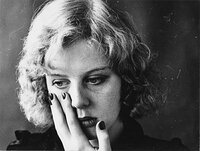
Discuss a Lee Friedlander photograph

1972

A
1972

  • 13
  • 7
  • 141

Forum statistics

Threads
202,592
Messages
2,842,819
Members
101,394
Latest member
Marketa
Recent bookmarks
0
David H. Bebbington said:
This I think is one of those rare instances where the kind of camera you use has major creative repercussions. I do portraits only occasionally, but when I do I try to use a twin-lens reflex every time. This kind of camera allows you to view the subject AT the moment of exposure, with this I always know when I have got the result I want, with any SLR this is much harder, and with an SLR without an instant-return mirror (such as the Mamiya RB/RZ67, which so many pros use for portraiture) you cannot know what the hell you've got and will feel you need to burn 100 frames of film as insurance!

Most portrait photographers that use a tripod aren't looking in the viewfinder when they trip the shutter. However the magic doesn't last more than millisecond, and you still don't know how great it was until you see it on film. The reason that movie makers and some photographer "tested" their subject/actors was to see if they had that magic. It may appear in the viewfinder and not on the film and vise versa.

Also I photograph a lot of kids. That expression can change in a heartbeat. I can have frames less than a second apart that are nuanced very differently.

Michael
 
blansky said:
Also I photograph a lot of kids. That expression can change in a heartbeat. I can have frames less than a second apart that are nuanced very differently.
If you're familiar with Paul Ekman at Univ of SF, they've shown that facial expressions change even faster than that -- they've had to use high-speed movie cameras, and they train people to watch for these fleeting changes. The training is aimed at detecting lies, though I've been tempted to try and take it for application in portraiture (fortunately, no one ever lies to me).
 
blansky said:
Most portrait photographers that use a tripod aren't looking in the viewfinder when they trip the shutter. However the magic doesn't last more than millisecond, and you still don't know how great it was until you see it on film. The reason that movie makers and some photographer "tested" their subject/actors was to see if they had that magic. It may appear in the viewfinder and not on the film and vise versa.

Also I photograph a lot of kids. That expression can change in a heartbeat. I can have frames less than a second apart that are nuanced very differently.

Michael
Michael, all I can say is - it works for me! And I never shoot more than one roll of film on a portrait session (8 or 10 frames) - two or three frames just to let the subject get used to the studio environment, three or four of which I know one will be the final shot used, and the rest slightly experimental to finish the film. What's more, I always look through the camera while shooting if I want the subject to look at the lens (which I do) - this removes a further major uncertainty! If you can hear the shutter click and see the subject's eyes and mouth at the same time, you can't miss!
 
blansky said:
Most portrait photographers that use a tripod aren't looking in the viewfinder when they trip the shutter.

I've generally worked this way as well. Even when I used to use 35mm for everything, I used a motor drive and long electric cable release for portraits, so I could pay attention to the subject instead of the camera.
 
Photrio.com contains affiliate links to products. We may receive a commission for purchases made through these links.
To read our full affiliate disclosure statement please click Here.

PHOTRIO PARTNERS EQUALLY FUNDING OUR COMMUNITY:


Ilford ADOX Freestyle Photographic Stearman Press Weldon Color Lab Blue Moon Camera & Machine
Top Bottom
